
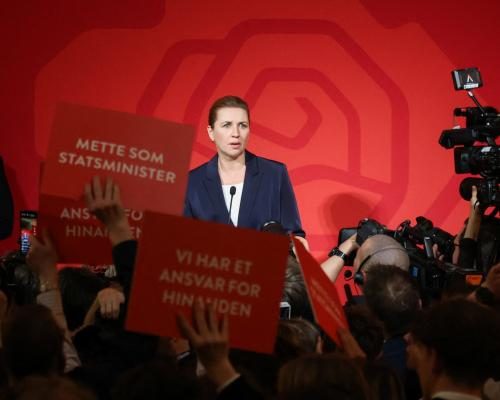
Denmark's Prime Minister Mette Frederiksen expressed her desire to continue leading the country following an inconclusive parliamentary election held late last night. Despite her Social Democrats losing ground, they remain the largest party in the new parliament, positioning Frederiksen to navigate complex coalition discussions as she seeks to form a stable government.
Election Results and Immediate Reactions
In the wake of the election results, which were announced just after midnight local time, Frederiksen addressed her supporters, signaling her readiness to accept the challenges ahead. "I am ready to take on the responsibility of serving as Denmark's prime minister again for the next four years," she stated. This declaration underscores her commitment to her party, which has consistently been a favored choice among Danish voters despite the setback in this election. Originally reported by The Guardian.
According to initial reports, the Social Democrats secured approximately 24% of the vote, a decrease from previous elections, but still making them the most significant player in parliament. Frederiksen acknowledged the less-than-ideal results, yet remained optimistic about her party's enduring popularity. "There is nothing today that can make me sad about the fact that the Social Democrats are once again the Danes' absolute favourite political party," she remarked, hinting at her confidence in her party's resilience.
Challenges Ahead: Coalition Negotiations
The road to forming a new government is likely to be fraught with negotiation challenges as Frederiksen will have to engage multiple parties to secure a coalition majority. The most crucial discussions are expected to be with the Moderates, led by former Prime Minister Lars Løkke Rasmussen, who now serves as Foreign Minister. His party holds significant influence and could be key to any coalition deal.
Political analysts predict that coalition talks will begin promptly, with many watching closely to see how Frederiksen balances the interests of her potential partners. The complexity of Denmark's political landscape means that finding common ground could prove challenging, particularly given the differing priorities of various parties. Engaging with the Moderates may offer a path forward, but it will require careful maneuvering on Frederiksen's part to ensure all parties feel represented in the negotiations.
Public Sentiment and Future Prospects
The election results reveal a divided electorate, with various parties gaining traction while others, including Frederiksen's Social Democrats, faced declines. This shift indicates a potential change in public sentiment, which could impact future policy directions. Voter priorities are evolving, and it remains to be seen how Frederiksen will address these shifts in her administration.
Frederiksen's ability to maintain her position hinges not only on her party's largest share of votes but also on her skill in steering coalition talks. With the Danish electorate becoming increasingly diverse in its political preferences, she may need to adopt more inclusive policies to appease various factions. This situation emphasizes the importance of collaboration and compromise in the current political climate.
The Royal Briefing: A Traditional Step
In a traditional move following the election, Denmark's King Frederik is set to meet with Frederiksen to discuss the election results and the subsequent political environment. This meeting, scheduled for shortly after the election results were confirmed, is an essential part of Denmark's political protocol. It reflects the constitutional monarchy's role in the democratic process and provides a platform for the Prime Minister to outline her vision for the upcoming term.
The Palace announced that this briefing would take place within the hour following the election outcome. It marks a significant moment in Denmark's political history, as the monarch listens to the Prime Minister's plans and insights regarding the future of governance in the country.
As coalition discussions unfold, all eyes will be on Mette Frederiksen and her ability to navigate this complex political landscape. The coming days will be critical as she seeks to solidify her leadership and address the evolving demands of Danish voters. With coalition talks beginning immediately, the political future of Denmark hangs in the balance, and Frederiksen's leadership skills will be tested as she works to forge a stable government.
Originally reported by The Guardian. View original.