
Moldova has declared a state of emergency in its energy sector following the disconnection of a key power line that links the country to Europe. This declaration, which comes in response to Russian military strikes in Ukraine, will take effect on Wednesday and remain in place for 60 days. Prime Minister Alexandru Munteanu has urged citizens to conserve energy, particularly during peak hours, emphasizing the need for national unity during these challenging times. The energy crisis stems from the disruption of a crucial power cable that runs through southern Ukraine, which Moldova relies on for electricity imports from Romania, an EU member state.
Impact of Russian Attacks on Moldova's Energy Supply
The recent escalation in hostilities has had a direct impact on Moldova's energy infrastructure. Reports indicate that drones downed in Ukraine near the power line necessitate demining operations before repairs can begin. Energy Minister Dorin Junghietu has informed local media outlet Ziarul de Garda that restoring the power line could take up to seven days. The urgency of the situation has prompted the Moldovan government to act swiftly, recognizing the potential for significant energy shortages if the crisis is not managed effectively. Originally reported by The Guardian.
"Russia alone bears responsibility," Moldovan President Maia Sandu declared on X, condemning the strikes that have disrupted the power supply. The foreign ministry echoed this sentiment, denouncing the Russian attacks that have become increasingly frequent since the invasion of Ukraine commenced in February 2022. The reliance on external sources for energy makes Moldova particularly vulnerable to such geopolitical tensions.
Escalating Violence in Ukraine
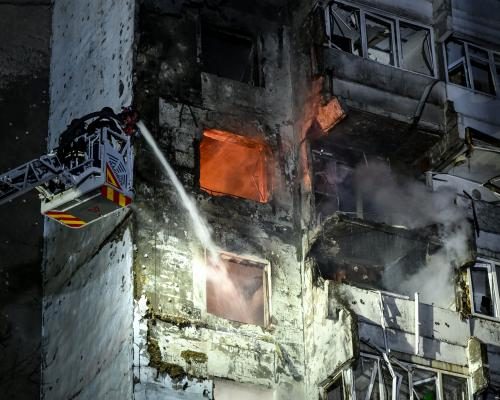
The conflict in Ukraine has intensified, with Ukrainian President Volodymyr Zelenskyy condemning a recent barrage of Russian strikes as an act of "absolute depravity." During a daytime assault, Moscow launched an unprecedented attack involving nearly 400 long-range drones and 23 cruise missiles, resulting in the deaths of at least seven individuals. The strikes targeted multiple cities across western Ukraine, including Lviv, where a drone hit the Bernardine monastery, causing significant damage.
President Zelenskyy's remarks highlight the destructive nature of these assaults, particularly as they strike at historical and cultural landmarks. He characterized the attack on the church in Lviv, a UNESCO World Heritage site, as indicative of Russia's disregard for civilian life and cultural heritage. The Ukrainian leader vowed that the country would respond decisively to any further attacks, signaling a commitment to defend its sovereignty amid ongoing aggression.
International Reactions and Support for Russia
In a show of solidarity, North Korean leader Kim Jong-un expressed unwavering support for Russia in a recent letter to President Vladimir Putin. This correspondence highlighted the strengthening ties between Pyongyang and Moscow since the onset of the war in Ukraine. Kim's message emphasized a commitment to cooperation in defending the sovereignty of both nations, asserting that North Korea would stand firmly with Russia.
Reports from South Korean and western intelligence agencies suggest that North Korea has sent thousands of troops, along with artillery shells and missile systems, to support Russia's military efforts. This collaboration appears to be a strategic alignment, with both nations benefiting from shared military resources amid growing international isolation.
As the conflict escalates, the implications for Moldova and its energy security become increasingly pronounced. The state of emergency is a clear indication of the challenges the country faces as it navigates the consequences of the war next door. With its energy imports now at risk and the prospect of further Russian aggression looming, Moldova's government is under pressure to secure its energy supply and ensure the stability of its infrastructure.
Looking ahead, Moldova will need to strengthen its energy resilience and explore alternative sources to mitigate the impact of ongoing geopolitical tensions. The situation serves as a stark reminder of how interconnected energy security is with international relations and the ongoing conflict in Ukraine. As Moldova grapples with the current crisis, its ability to adapt and respond effectively will be crucial in ensuring the welfare of its citizens during these turbulent times.
Originally reported by The Guardian. View original.