
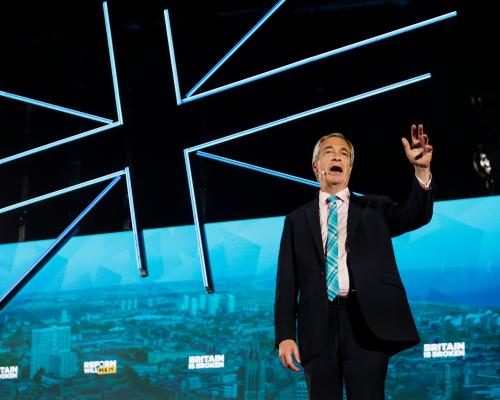
Kemi Badenoch, the leader of the Conservative Party, has accused Nigel Farage of being an opportunist following his recent comments urging Scottish nationalists to support Reform UK in the upcoming Holyrood elections. Farage's remarks have sparked a significant political debate in Scotland, as the region prepares for a crucial vote on May 7.
Farage's Call to Scottish Nationalists
Earlier this week, Nigel Farage expressed his belief that "genuine nationalists" should not back the Scottish National Party (SNP) in its endeavor to rejoin the European Union. Instead, he encouraged them to vote for Reform UK, a party he leads, which he claims offers a viable alternative to the SNP. In an interview with the Scotsman, Farage stated that while he supports the UK's unity, he found it "probably quite reasonable" to consider a second independence referendum if the issue resurfaces in the political landscape. Originally reported by The Guardian.
Farage's comments come at a time when the SNP is anticipated to secure a significant victory in the upcoming election, with polls indicating they could potentially achieve a majority in the Scottish Parliament. This prospect raises questions about the future of Scottish independence and the broader implications for UK politics.
Badenoch's Response and Allegations
In response to Farage's statements, Kemi Badenoch firmly criticized him during a press conference in Edinburgh. She asserted that only the Conservative Party truly embodies centre-right and unionist values. "Nigel Farage doesn't really believe in anything except Nigel Farage. He tells everybody what they want to hear," Badenoch remarked, emphasizing her view that Farage tailors his political stance to suit his audience. She highlighted instances where Reform UK has appeared inconsistent, referencing their simultaneous support and opposition to the two-child benefit cap.
Badenoch's accusations reflect a broader concern among Conservative leaders regarding the potential impact of Reform UK on their electoral fortunes. With opinion polls showing the Conservatives trailing behind Labour, Reform, and the Scottish Greens-hovering around 8-13%-Badenoch's party faces a critical challenge in the lead-up to the Holyrood election.
Reform UK's Strategy and Implications
Malcolm Offord, the Scottish leader of Reform UK, has further fueled concerns regarding his party's intentions. In a recent statement, he indicated that Reform UK would not obstruct SNP leader John Swinney's bid for the position of first minister, should it come down to a close vote in the Scottish Parliament. This admission has led to suspicions that Reform's primary aim may be to disrupt traditional British political alignments rather than outright support for unionist values.
The SNP is expected to be a strong contender in the election, with polls suggesting they could win a majority. Swinney has already articulated plans to demand a second independence referendum by 2028, a move that the UK Labour government has stated it will not authorize. This situation sets the stage for a high-stakes election, where the dynamics among anti-independence parties could significantly influence the outcome.
Tactical Voting and Conservative Concerns
As tensions rise, some senior Conservatives are advocating for tactical voting strategies to prevent the SNP from gaining additional seats in Holyrood. David Mundell, a former Scottish Secretary, publicly urged voters to utilize their ballots wisely to block an SNP majority. He emphasized that anyone opposed to Scotland being trapped in a "constitutional cul-de-sac" should consider their voting choices carefully.
This call for tactical voting defies Badenoch's insistence that Conservative supporters should always vote for their party, regardless of the potential benefits of strategic alliances with other anti-SNP factions. The fragmentation of the political landscape in Scotland poses a significant challenge for the Conservatives, as they navigate the complexities of voter sentiment and party allegiance.
As the Holyrood elections approach, the political landscape in Scotland is becoming increasingly polarized. With multiple parties vying for influence and the potential for a significant shift in power dynamics, the outcome remains uncertain. The interactions between Farage, Badenoch, and the various political factions in Scotland will undoubtedly shape the future of both Scottish and UK politics as the electorate prepares to cast their votes.
Originally reported by The Guardian. View original.