
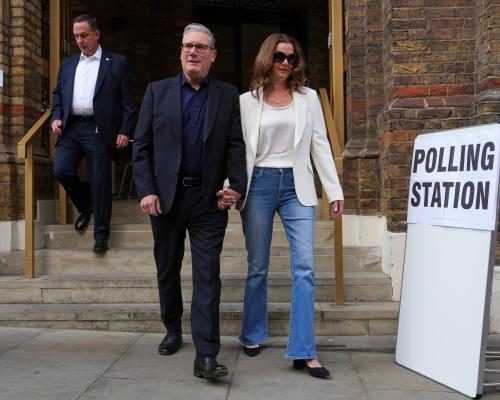
When it comes to major test for labour as polls open in english, scottish and welsh elections, polling opened across England, Scotland and Wales on Thursday in Keir Starmer's biggest electoral test since the 2024 general election. Millions of voters are choosing representatives for two parliaments, 136 English councils and six mayoralties, with results set to measure Labour's standing and the growing challenge from smaller parties nationwide.
Understanding Major Test For Labour As Polls Open In English, Scottish And Welsh Elections
The elections arrive after months of weak polling for Labour and the Conservatives, while Reform UK, the Greens and the Liberal Democrats have gained support. They're a test of an increasingly multiparty system, with consequences for council control and national politics. Originally reported by The Guardian.
Across England, 5,014 seats are being contested. Every seat is up for election on all of London's 32 borough councils, alongside more than a dozen borough councils, six unitary councils, six county councils and three district councils. Another 73 councils are electing half or a third of their members.
Six mayoral races complete the English contests: Croydon, Hackney, Lewisham, Newham, Tower Hamlets and Watford.
The starting position reflects changes after the May 2025 local elections. Labour held 34% of England's council seats, down 2% from 2024, while the Conservatives held 26%, down 4%. The Liberal Democrats rose 1% to 19%.
Other parties' representation increased from 11% to 12%. The Greens remained at roughly 5%, similar to 2024. Reform went from zero to 5%, electing 677 councillors. That breakthrough gives Reform a record against which its latest performance will be judged, while Labour and the Conservatives face pressure from several directions.
Friday Counts Will Stretch Into Saturday
Local election polling stations are open from 7am until 10pm. The first results are expected around 12.30am on Friday, followed by a rush of declarations from about 3am.
About a third of councils should have declared by around 7am. Results from Manchester and Leeds, alongside London borough mayoral contests, are expected to begin arriving around lunchtime.
By Friday's end, about 80 more councils should have declared. But the final council results, including Croydon, Tower Hamlets and Hastings in Sussex, aren't expected until Saturday afternoon.
Mayoral counting begins on Friday. Hackney and Newham are expected to declare at 1pm, followed by Watford at 2pm, Lewisham at 3pm, Croydon at 4pm and Tower Hamlets at 6pm.
Scotland and Wales should have a clear overall picture by about 4pm on Friday, with further local election declarations continuing through late afternoon and early evening. The staggered timetable means early gains or losses won't tell the whole story: parties will have to wait for different areas and types of contest before assessing their performance across Britain as a whole.
Holyrood's 129 Seats and a New Welsh Voting System
Scotland is electing 129 MSPs to Holyrood, whose responsibilities include debating and passing laws on devolved matters such as education, health and transport. Defence, foreign policy and immigration remain matters for Westminster because of their UK-wide or international reach.
At the 2021 Scottish parliament election, the SNP won 64 seats, one short of a majority. The Scottish Conservatives finished second with 31, ahead of Scottish Labour on 22. The Scottish Greens secured eight seats and the Scottish Liberal Democrats four.
Scottish polling stations open from 7am to 10pm. Unlike previous years, counting takes place on Friday morning, with the first declarations expected at lunchtime and most results due by evening.
Welsh voters, meanwhile, will elect 96 representatives across 16 constituencies, each returning six members of the Senedd. Electoral changes introduce a new proportional voting system: voters choose a party rather than an individual candidate.
The six seats in each constituency will be allocated largely according to parties' shares of the vote. That makes the distribution of support central to the outcome, as Wales and Scotland deliver parliamentary verdicts alongside England's local contests.
For Starmer and his rivals, the coming declarations will show whether polling trends translate into seats-and how far competition beyond the two largest Westminster parties is reshaping electoral politics.
Originally reported by The Guardian. View original.