
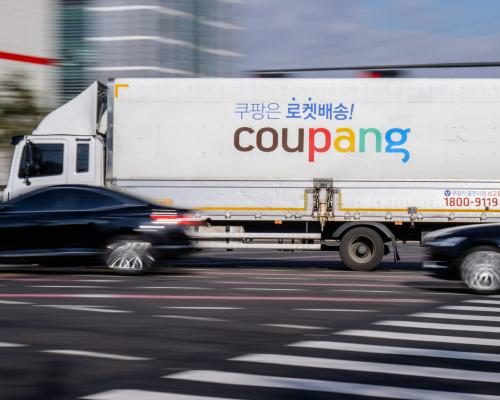
In a shocking turn of events, a data breach at Coupang, South Korea's largest online retailer, has escalated from a corporate issue to a significant diplomatic crisis. Initially disclosed in November 2022, the breach affected 33.7 million customer accounts, prompting a severe backlash against the company and provoking concerns over the implications for US-South Korea relations.
Coupang, often dubbed South Korea's equivalent to Amazon, operates primarily from Seattle and is listed on the New York Stock Exchange. It was founded by Korean-American billionaire Bom Kim, who has faced increasing scrutiny following the breach. The incident involved a former employee stealing an internal security key, which allowed unauthorized access to sensitive customer data. Following the revelation, many users began abandoning the platform, leading to a government crackdown that included police raids on Coupang's headquarters in Seoul and a special audit by tax authorities. Originally reported by The Guardian.
Government Response and Diplomatic Fallout
The South Korean government's vigorous response to the breach has raised alarms in Washington. Following the breach, police conducted raids, and parliamentary hearings summoned Coupang's executives for questioning. However, Kim has refrained from returning to Korea for these hearings, citing his responsibilities as a global CEO. This refusal has led Korean police to request that immigration authorities alert them if he enters the country.
Reports from Korean broadcaster SBS suggest that the strength of South Korea's response has strained relations with the Trump administration. Washington has reportedly indicated it would halt high-level diplomatic and defense consultations until South Korea assures that Kim would not face legal consequences related to the data breach. While the South Korean foreign ministry has not denied these reports, it emphasized that security discussions should continue independently of the Coupang issue.
Impact on US-South Korea Relations
The Coupang data breach is just one of several tensions that have surfaced between South Korea and the United States during the Trump administration. For instance, an immigration raid at a Hyundai-LG battery plant in Georgia detained over 300 South Korean workers, inciting public outcry. Additionally, South Korea's unification minister publicly identified a suspected North Korean nuclear site, leading to reportedly restricted intelligence sharing from the US.
In January 2023, Trump threatened to increase tariffs on South Korean goods from 15% to 25%, further complicating trade relations. Amid this climate, Coupang's lobbying efforts have surged. The company spent over $3 million lobbying the US government in 2025, bringing its total lobbying expenditures since 2021 to more than $11 million. The company doubled its lobbying spending in the first quarter of 2026, intensifying its outreach to key figures in the White House.
Congressional Concerns and Legal Implications
Congress has also taken a keen interest in the Coupang situation. On April 21, 2023, 54 Republican members of Congress addressed a letter to South Korea's ambassador, accusing the government of "discriminatory actions" against US businesses and launching a "whole-of-government assault" on Coupang over a "low-sensitivity data leak." The motivations behind this strong congressional response remain unclear, especially since five US investment firms holding Coupang shares have filed notices of intent to pursue arbitration against South Korea under the US-Korea free trade agreement. They claim that Seoul's enforcement actions have been disproportionate compared to how similar cases involving Korean firms have been handled.
Jaechun Kim, a professor of international relations at Sogang University in Seoul, highlighted that the underlying issue is not about South Korea's legal authority to regulate companies but how such actions are perceived within the context of the US-South Korea alliance. The Trump administration's tendency to intertwine economic and security matters into a singular transactional framework means disputes like the one surrounding Coupang could affect broader agreements on cooperation in nuclear technology, advanced technology sharing, and defense procurement.
As diplomatic tensions rise, the future of US-South Korea relations hangs in the balance. The Coupang incident serves as a poignant reminder of how corporate crises can escalate into national security dilemmas, potentially reshaping the dynamics of this crucial alliance.
Originally reported by The Guardian. View original.