
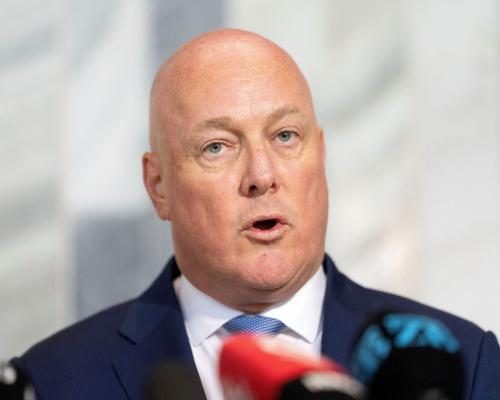
New Zealand Prime Minister Christopher Luxon is experiencing a notable decline in his approval ratings, as recent polling indicates growing dissatisfaction among voters concerning his government's economic management. With the November election approaching, the RNZ-Reid Research poll, released on Monday, reveals that Luxon's popularity has slipped, causing concern within his National Party.
Luxon's Approval Ratings Decline
According to the latest RNZ-Reid Research poll, Prime Minister Christopher Luxon's personal approval rating has dipped to 17.3%, marking a two-point decrease and his lowest score since assuming leadership in 2023. This decline in support comes as the public increasingly expresses a belief that New Zealand is headed in the wrong direction, with half of those surveyed indicating such sentiments. Luxon's net favorability rating has also seen a significant drop, falling from -14 in January to a concerning -20.6, reflecting the mounting challenges his administration faces. Originally reported by The Guardian.
In comparison, Labour leader Chris Hipkins also saw a slight decrease in his ratings, dropping 0.4 points to 20.7%. However, the National Party, led by Luxon, is now trailing nearly five points behind Labour, which is a critical shift as the country gears up for the election. If elections were held today, the results could potentially lead to a hung parliament, a situation that would complicate governance for either bloc.
Economic Concerns Linger
The underlying reasons for Luxon's plummeting ratings appear to center on economic dissatisfaction. The New Zealand economy has struggled to regain its footing after being battered by the COVID-19 pandemic, and recent figures show only a modest growth of 0.2% in the December quarter, below expectations. This lackluster performance is exacerbated by escalating global tensions, particularly in the Middle East, which threaten to disrupt economic recovery further.
Political analysts, including Ben Thomas, have pointed to the current cost-of-living crisis as a significant factor affecting voter sentiment. Thomas noted that this crisis is unique in its widespread impact across the electorate, making economic issues more pressing for voters than in previous years. He stated, "This is the first long-term cost-of-living crisis that we've had for a long time," emphasizing that it affects a broader demographic than past economic downturns.
Shifting Political Landscape
As election day approaches, the political landscape in New Zealand is evolving rapidly. The RNZ-Reid Research poll reveals that support for Luxon's National Party has fallen to 30.8%. Meanwhile, coalition partners such as Act and New Zealand First are polling at 7% and 10.6%, respectively. In contrast, Labour has gained traction, rising to 35.6%, while the Greens and Te Pāti Māori (the Māori party) sit at 10.1% and 3.2%. This shift indicates a growing consolidation of support for the left bloc in New Zealand's political arena.
Luxon's administration had previously campaigned on a platform promising to restore economic stability and growth post-pandemic, introducing measures aimed at attracting foreign investment and reducing public expenditures. Despite some signs of improvement, the overall economic recovery has been sluggish, leading to increased scrutiny of Luxon's leadership and policy effectiveness.
Leadership Pressures Mount
The pressure on Luxon is palpable as he navigates these challenging waters. In a recent interview with RNZ, he attempted to downplay the significance of polling data, stating, "People don't talk about polls. Right now, I'm very much focused on navigating fuel supply challenges and minimizing the impacts on Kiwis." However, with only months until the general election, questions surrounding his leadership and the viability of his government are becoming more pronounced.
Another poll conducted by the Taxpayers' Union Curia in March revealed that only 28.4% support National, raising speculation about Luxon's future as party leader. Analysts have noted that historical trends suggest a first-term government failing to secure a second term is unusual in New Zealand, particularly since the inception of the mixed-member proportional system in 1993. Should current trends hold, it could mark a significant shift in New Zealand's political dynamics.
As the November election draws closer, the pressure mounts for Luxon to address voter concerns effectively. With economic recovery hanging in the balance and public sentiment turning increasingly negative, the coming months will be pivotal for both Luxon and the National Party.
Originally reported by The Guardian. View original.