
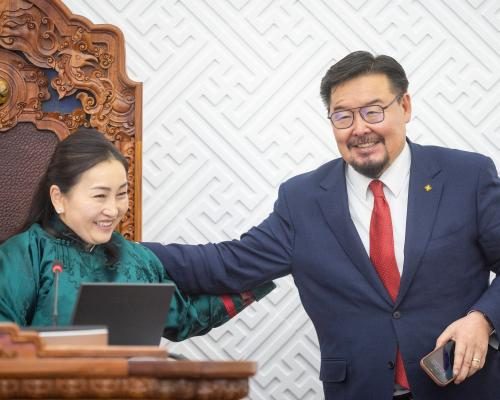
A number of younger politicians in Mongolia, including many women, are facing potential prison sentences as they challenge the current political leadership. These politicians assert that their actions are vital to upholding democracy amid fears of an authoritarian shift. The situation has intensified following a parliamentary vote that called for Prime Minister Zandanshatar Gombojav's resignation, just four months into his tenure.
Political Turmoil and Legal Challenges
The former deputy speaker of the parliament, Yale-educated Bulgantuya Khürelbaatar, is at the forefront of this political crisis. She has been charged with "an organised effort to unlawfully seize or retain state power," facing a potential sentence of 12 to 20 years. Bulgantuya described the charges as "absurd" and unprecedented in Mongolia's political history. Further complicating her situation, she has been barred from leaving the country and subjected to movement restrictions within Mongolia. Originally reported by The Guardian.
These legal actions have reportedly been orchestrated with assistance from the country's state intelligence agency, exacerbating concerns about political repression. The charges stem from Bulgantuya's role in an October parliamentary vote, where a majority of lawmakers supported a motion for the Prime Minister to resign amid a dispute over a tax regime affecting mineral exporters. Critics argue that the proposed changes would disproportionately benefit wealthy mining companies at the expense of state revenue.
Factional Struggles within the Ruling Party
The political landscape in Mongolia is marked by a significant generational divide within the ruling Mongolia People's Party (MPP). A younger faction, consisting of reformists and many who have studied abroad, is actively challenging the traditional leadership. This intra-party struggle has intensified political infighting, particularly as the country grapples with a wealth of mineral resources and allegations of corruption.
After the parliamentary vote to oust Zandanshatar, President Ukhnaagiin Khürelsükh vetoed the decision. Subsequently, the Prime Minister's cabinet secretary filed a complaint with Mongolia's constitutional court, which ruled that the parliamentary vote had utilized an incorrect formula and that the quorum had been improperly counted at the outset. This court decision, which cannot be appealed, has raised further questions about the integrity of the legal process.
Implications for Democracy and Governance
Bulgantuya's legal predicament is indicative of broader concerns about the state of democracy in Mongolia. After being expelled from the MPP and forced to resign as deputy speaker, she has faced a rapid deterioration of her political standing. Her legal team argues that parliamentary supremacy is a cornerstone of Mongolia's constitutional democracy, emphasizing that her actions were in line with established parliamentary procedures.
Enkhbat Bolormaa, another prominent critic of the Prime Minister and Mongolia's first female governor, voiced her concerns, stating, "This is an absolute test case of Mongolia's democracy, its constitution and our ability to practise our rights as parliamentarians." She highlighted that their attempts to hold the Prime Minister accountable for granting tax concessions to powerful mining interests are being met with severe repercussions.
A History of Political Instability
Mongolia's political history has been characterized by frequent leadership changes; only two governments have completed full four-year terms in the past three decades of democracy. The average tenure of a government in Mongolia is just 1.8 years. The recent turmoil echoes similar events from last summer when former Prime Minister Oyun-Erdene Luvsannamsrai resigned following a wave of anti-corruption protests.
Luvsannamsrai raised the question, "What exactly did Kh. Bulgantuya do wrong? If leading a parliamentary meeting turns you into a criminal, do we even need parliamentary democracy?" His comments resonate with many who fear that the current political climate is undermining the principles of governance established in Mongolia's democratic framework.
As the situation unfolds, the implications of these legal actions on Mongolia's democratic integrity remain to be seen. The pressure on reform-minded politicians poses a significant challenge to the country's democratic processes, raising alarms about a potential drift toward authoritarianism.
Originally reported by The Guardian. View original.