
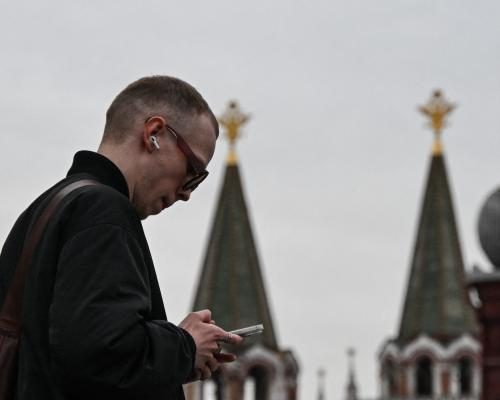
In a disturbing trend, major Russian companies have been enlisted in a state-led initiative to track and target users who utilize virtual private networks (VPNs) to bypass government-imposed internet restrictions. A recent investigation by RKS Global, an advocacy group for internet freedoms, Highlights how banks and web platforms are gathering data on millions of Russians attempting to access the global internet amidst increasing censorship.
Data Collection on VPN Users Intensifies
According to RKS Global's findings, tens of millions of Russians rely on VPNs to navigate around the Kremlin's stringent online controls, particularly following the invasion of Ukraine. The number of VPN users surged dramatically after the government imposed sweeping bans on popular platforms like Facebook and Instagram. As a result, the Kremlin has stepped up its efforts to surveil these users, who now face potential criminal penalties for their online activities. Originally reported by The Guardian.
The investigation assessed 30 popular Russian applications, including those operated by T-Bank, Sberbank, the search engine Yandex, and the social media platform VKontakte. Alarmingly, the research revealed that 22 of these applications actively monitored whether users were on a VPN or had one installed on their devices. Most of these apps retain this data on their servers, making it accessible to security services. RKS Global stated, "The level of intrusion into the device can be very high."
Risks of VPN Usage on the Rise
The situation poses serious risks for millions of Russians. While using a VPN is not officially illegal, the environment is shifting perilously towards criminalization. Russian courts have started treating VPN usage as an aggravating circumstance in legal cases, which adds to the uncertainty surrounding online freedoms. The founder of Amnezia, an open-source VPN company, Mazay Banzaev, pointed out the severity of this surveillance: "It's one thing if Russian IT companies were to 'catch' users the moment they visit a site with a VPN enabled. It is quite another when even a closed application continues scanning the phone for VPN usage."
This invasive monitoring indicates a broader trend of governmental overreach into personal privacy, as users' online behaviors are increasingly scrutinized. As the Kremlin pushes for tighter controls, the options available for Russians to connect with the outside world are dwindling and fraught with danger.
Kremlin's Strategy for Internet Control
The Russian government has pursued a systematic strategy to curb access to the global internet, which has been characterized by a combination of gradual restrictions and technological advancements aimed at surveillance. This campaign began with the implementation of mobile network blackouts across significant portions of the country last year, eventually extending to major cities like Moscow and St. Petersburg. In response, many citizens turned to archaic methods of navigation and communication, such as paper maps and pagers.
Since March, authorities have further escalated their efforts by blocking Telegram, a key messaging app in Russia, which has become essential for communication. The Kremlin appears focused on steering the populace toward a government-sanctioned "superapp" called Max. This application, heavily promoted by state agencies, is believed to possess extensive surveillance capabilities, leaving many users with no choice but to install it on their devices.
Rather than implementing a complete internet shutdown like that seen in Iran, the Kremlin's approach has been more nuanced, employing piecemeal tactics to restrict access. Officials have justified widespread mobile restrictions under the pretext of countering threats from Ukrainian drones, further entrenching their control over information and communication.
Future of Digital Freedom in Russia
The climate of digital censorship in Russia is evolving into a more aggressive form of control. RKS Global emphasized that the transition from passive to active censorship means that little of Russians' private lives will remain beyond the reach of state authorities. The organization's investigation underscores a critical shift in how data gathering and surveillance are woven into the fabric of everyday life in Russia.
As the Kremlin continues to intensify its efforts to monitor and stifle dissent, the implications for digital freedom remain dire. The ongoing crackdown on VPN users represents a significant escalation in the battle for internet freedom in Russia, leaving many to wonder how long they can maintain their connection to the outside world without facing severe repercussions. With the landscape of digital communication becoming increasingly perilous, the future of online privacy and freedom in Russia hangs in the balance.
Originally reported by The Guardian. View original.