
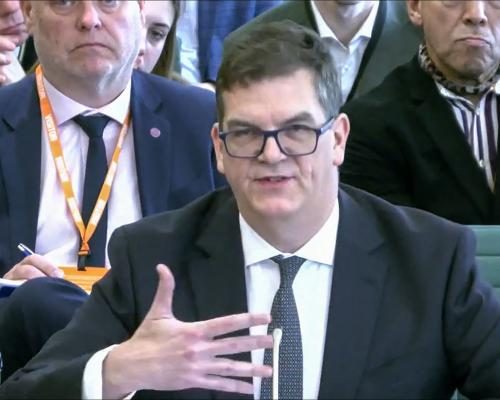
Keir Starmer's leadership is under scrutiny following a revealing session with Olly Robbins, the former civil servant and Brexit negotiator, who defended his actions in front of the Foreign Affairs Select Committee. Robbins' testimony raised serious questions about the processes within the government and the influence of Downing Street on key appointments, particularly concerning Peter Mandelson's controversial ambassadorship to the U.S. The unfolding developments suggest a growing rift between Starmer's public persona and the reality of his governance.
Robbins' Stellar Career and Sudden Downfall
With a career spanning over 25 years, Olly Robbins has served under British Prime Ministers from Tony Blair to Theresa May. His tenure included significant roles in Brexit negotiations, making his recent dismissal by Prime Minister Keir Starmer all the more shocking. Initially sacked by Boris Johnson, Robbins was later brought back by Starmer and appointed as permanent undersecretary in the Foreign Office. However, his reputation took a hit when he was abruptly dismissed, leading many to question the stability of Starmer's leadership. Originally reported by The Guardian.
During his testimony, Robbins painted a picture of a dedicated civil servant, deeply committed to the principles of public service. He described himself as someone who follows protocol to the letter, emphasizing his adherence to civil service codes. Yet, this image was juxtaposed with the intense pressure he faced from No. 10 regarding the appointment of Mandelson, which Robbins claimed was preordained before he arrived at the Foreign Office.
Mandelson's Appointment: A Case of Expediency?
Robbins revealed that by the time he assumed his role, the decision to appoint Mandelson as the U.S. ambassador had already been made, with approval from both No. 10 and the monarchy. "There was intense pressure from No. 10 for the Foreign Office to do the right thing," Robbins stated, implying that the process was more about compliance than due diligence. This admission raises serious concerns about the integrity of government appointments and the extent of political influence over civil service roles.
Committee chair Emily Thornberry underscored this pressure by quoting Robbins' recollection of instructions from Downing Street: "Morgan McSweeney told you to 'just fucking approve it.'" This clear directive suggests a troubling disregard for the vetting process, especially for someone with Mandelson's controversial history, including previous breaches of the ministerial code. Robbins defended his actions, insisting that he acted within the rules, although he acknowledged that Mandelson had not fully passed the vetting process.
The Fallout: Starmer's Leadership in Question
Robbins' testimony has raised critical questions about Starmer's effectiveness as Prime Minister. His seemingly detached approach to leadership, where he appears less involved in key decisions, has led to speculation about his grip on power. Observers noted that Starmer seemed more focused on the title of Prime Minister than on the operational details of governance.
The fallout from Robbins' defense may have broader implications for Starmer. His credibility is now at stake, as the public and political commentators scrutinize his leadership style and the decisions made under his watch. Robbins, while presenting himself as a dedicated civil servant, inadvertently cast a shadow on Starmer's ability to manage his team and the civil service effectively. The Prime Minister's response to this testimony will be crucial in shaping public perception moving forward.
Looking Ahead: The Path for Starmer and Robbins
The implications of Robbins' testimony extend beyond immediate political drama. If Starmer cannot effectively address the concerns raised about his leadership and the integrity of his appointments, he might find himself facing serious challenges as he navigates the political landscape. As for Robbins, his future remains uncertain, but his commitment to the civil service and its protocols may not shield him from the consequences of this fallout.
Ultimately, the events surrounding Robbins and Starmer serve as a reminder of the complexities of governance in the UK. As questions linger about accountability and the influence of political pressures on civil service functions, the public will be watching closely to see how these leaders respond to the challenges ahead.
Originally reported by The Guardian. View original.