
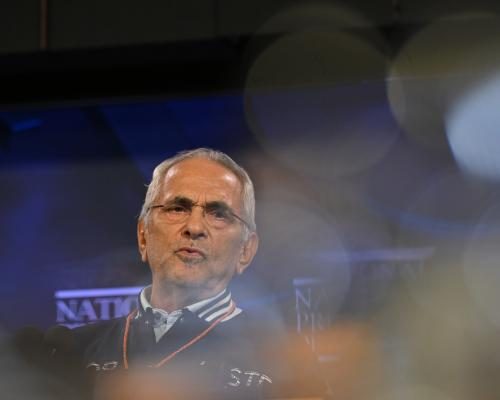
Timor-Leste's parliament is embroiled in controversy as opposition members question the legitimacy of a proposed cryptocurrency resort linked to alleged scams. During a session in Dili on Monday, Fretilin MP Florentino Ximenes da Costa raised critical concerns over how foreign investors secured prime beachfront property in the capital and the issuance of a diplomatic passport to Chinese entrepreneur Lin Xiaofan.
Concerns Raised Over Foreign Investment
The proposed AB Digital Technology Resort has sparked a heated debate among lawmakers, particularly after a months-long investigation by the Guardian and the Organized Crime and Corruption Reporting Project (OCCRP). The report unearthed alleged ties between key individuals involved in the resort and the Prince Group, a Cambodian conglomerate accused by U.S. authorities of orchestrating large-scale scams. Originally reported by The Guardian.
Ximenes da Costa urged President José Ramos-Horta to clarify why Lin Xiaofan was granted diplomatic status, as this raises doubts about the integrity of the investment process. "We all know that it is not easy to get a large piece of land on the beachfront, and a major decision has to be made, which would involve some government institutions," Ximenes da Costa said. His remarks highlight a growing mistrust among opposition members regarding the motivations behind such foreign investments.
Diplomatic Passport Under Scrutiny
Lin Xiaofan, who has positioned himself as the face of the resort initiative, was appointed as a special adviser to the president on economic and commercial affairs last July. This unusual diplomatic passport issuance has drawn scrutiny, with Ximenes da Costa demanding accountability from both Ramos-Horta and Foreign Affairs Minister Bendito dos Santos Freitas. The Timorese Foreign Ministry has yet to issue a statement regarding the matter, leaving the public in the dark about the decision-making process.
Ramos-Horta previously defended the passport grant, asserting that he hoped Lin could attract much-needed investments to Timor-Leste, one of the world's newest and poorest nations. However, experts have noted that such a move is highly unusual and potentially damaging to the country's reputation. Ximenes da Costa pointed out, "Therefore, we believe AB Digital Technology Resort Lda is working together with some VIPs in Timor-Leste." This assertion raises critical questions about the intersection of politics and business in the region.
Investigation Demanded to Uncover Local Links
The opposition is calling for an in-depth investigation into local actors who may have facilitated the acquisition of the beachfront property next to the airport, a prime location for the resort. Ximenes da Costa emphasized, "An investigation was necessary to ensure Timor-Leste is free from transnational criminal operations, and free from corrupt politicians and high-ranking people who are destroying the economy and image of this country in the eyes of the international community." His comments underscore the urgency felt by some lawmakers to combat potential corruption within the government.
Following revelations from the Guardian's report, President Ramos-Horta acknowledged the ongoing threat of transnational crime but asserted that he had not seen conclusive evidence of such groups infiltrating the country. He stated, "Together with the government and our entire society, we remain alert to the dangers of organized crime." This statement reflects a balance between vigilance and skepticism regarding media reports, which Ramos-Horta described as potentially misleading.
Future Implications for Timor-Leste
The controversy surrounding the AB Digital Technology Resort encapsulates broader concerns about foreign investment in Timor-Leste, especially in light of the country's vulnerability to corruption and organized crime. As the debate unfolds, it will be crucial for the government to demonstrate transparency in its dealings with foreign entities.
Ultimately, the situation raises significant questions about the governance structures in place to protect Timor-Leste's interests. The parliament's inquiries may lead to more stringent regulations regarding foreign investments and diplomatic privileges, potentially reshaping the landscape for future projects in the country. As Timor-Leste seeks to enhance its economic prospects, the scrutiny of such initiatives will likely intensify, making accountability and integrity more vital than ever.
Originally reported by The Guardian. View original.