
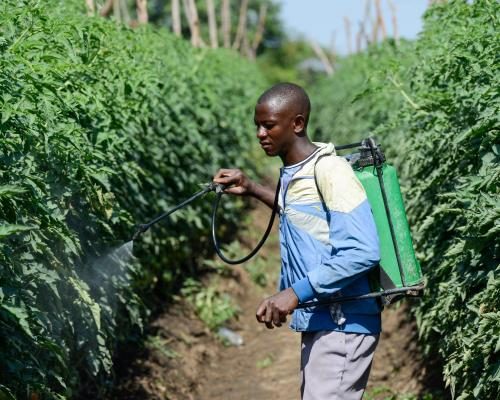
Africa's agricultural sector is bracing for significant challenges as the ongoing conflict in the Middle East disrupts critical supply chains, particularly affecting fertilizer imports. Experts warn that the disruption in trade through the strait of Hormuz, a key shipping route, is poised to exacerbate food insecurity across the continent. Many African nations, where farmers heavily rely on imported fertilizers, are already feeling the economic strain as prices soar.
Impact of Conflict on Fertilizer Supply
The war in the Middle East has severely impacted trade routes vital for the transportation of not just oil and gas but also fertilizers produced in the Gulf region. According to a report by the United Nations Conference on Trade and Development (Unctad), 54% of Sudan's fertilizer is imported via sea routes that pass through the critical strait of Hormuz. This dependency is mirrored in other countries, with Somalia and Kenya relying on maritime imports for 30% and 26% of their fertilizer needs, respectively. Originally reported by The Guardian.
Approximately one-third of the global seaborne fertilizer trade transits through this narrow passage. The Gulf's abundant reserves of fossil gas, essential for manufacturing nitrogen-based fertilizers like urea, and its production of high levels of sulfur, a byproduct used in phosphate fertilizers, make this region pivotal for agricultural inputs. As the conflict disrupts these supply lines, experts anticipate a significant increase in fertilizer prices, further straining households already grappling with high food costs.
Rising Costs and Economic Pressures
Since the onset of the conflict last month, fertilizer prices have surged, with Unctad warning that this trend could lead to increased food prices and heightened cost-of-living pressures for vulnerable populations across Africa. The ripple effect of rising oil and gas prices will compound these challenges, impacting economies that are already fragile. African nations are particularly susceptible to economic shocks due to their heavy reliance on foreign markets, volatile commodity exports, elevated debt levels, and inadequate infrastructure.
"Any disruptions, any shocks really affect all of us," said Jervin Naidoo, a political analyst at Oxford Economics Africa. He highlights the precarious nature of the continent's economic stability, which is further jeopardized by ongoing global crises. With many households dedicating a large portion of their income to food, the potential for increased prices poses a serious threat to food security.
Government Responses and Preparations
Governments across Africa are taking measures to mitigate the potential fallout from these supply disruptions. In Kenya, Energy Minister Opiyo Wandayi announced that the country had secured petroleum product imports scheduled for delivery until the end of April, aiming to ensure an uninterrupted supply. Similarly, Tanzanian President Samia Suluhu Hassan has directed her energy ministry to bolster the nation's strategic fuel reserves.
In Ethiopia, the government has introduced a special fuel subsidy intended to help citizens cope with the economic fallout from rising global oil prices. Meanwhile, Zambia has issued warnings to fuel retailers against hoarding, seeking to stabilize the market. These actions, while necessary, may not fully address the long-term impacts of sustained high oil prices on the continent.
Long-term Outlook and Trade Dynamics
The African continent has faced similar challenges in the past, notably during the disruptions caused by Russia's invasion of Ukraine in 2022. While some nations have implemented subsidies to cushion their populations from rising costs, experts like Naidoo express concern that these measures may not be sufficient for long-term relief.
Furthermore, the conflict is also hindering African exports to the Middle East. Kenya's Agriculture Minister Mutahi Kagwe recently stated that the ongoing war has disrupted the export of key products, including meat and tea, to Middle Eastern markets, further complicating the economic landscape.
On a brighter note, rising crude oil prices might translate into increased revenues for oil-exporting nations such as Nigeria, Algeria, and Angola, as these countries become more attractive suppliers amid global shortages. However, the broader agricultural sector's reliance on imported fertilizers poses a significant hurdle that could undermine food production across the continent.
As the situation evolves, African nations must navigate the complexities of global supply chains and economic instability, ensuring that measures are in place to protect their most vulnerable populations from the ramifications of rising prices and food insecurity.
Originally reported by The Guardian. View original.