
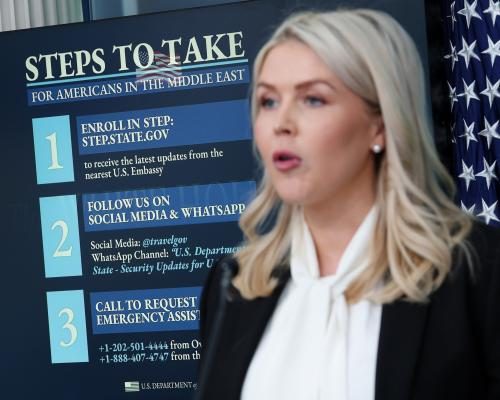
In the wake of Escalating Tensions following the US-Israel attack on Iran, American citizens residing In The Middle East have expressed deep frustration toward the US State Department. Many feel abandoned, alleging that the Trump administration failed to implement any contingency plans to facilitate their safe evacuation from the region.
Emotional Fallout from Government Inaction
As conflict erupted on February 28, 2023, US citizens like Dylan, a 31-year-old teacher stationed in Bahrain, found themselves in precarious situations with little guidance from their government. "I was on edge and constantly checking the news," Dylan recalled, recounting the moment he first heard the explosions. "After I saw the smoke, it was like I was staring into the face of death, and I knew I needed to do something immediately." Unable to reach the embassy and finding the US State Department's phone line full, Dylan had to rely on personal connections to navigate the crisis. Originally reported by The Guardian.
He described days filled with anxiety, sheltering in a school while explosions reverberated nearby. Ultimately, he decided to leave Bahrain for Saudi Arabia, opting for a lengthy bus ride to Jeddah after feeling unsafe about flying out. Dylan's journey epitomizes the chaos many Americans faced amid governmental uncertainty.
Claims of Betrayal and Abandonment
Ashley, another American caught in the turmoil, shared her family's harrowing experience. Traveling from France to Abu Dhabi for a month-long break, she described the moments following the attack as a desperate scramble for information. "The US State Department continued to say online that their number one priority was the safety of American citizens," she recounted. Yet, when they called for assistance, they found no one available to help. "There was no way to depart. So it just became this mess of the US government saying all these things that were impossible."
Despite the State Department's assurances, Ashley and her family struggled for days to get basic information on evacuation options. It was not until March 3 that they received a form to request assistance, but by then, the situation had devolved into confusion and frustration.
Official Response Amidst the Chaos
A State Department official defended the agency's actions, stating that approximately 32,000 Americans affected by the crisis were provided with security guidance and travel assistance. "Most Americans who have requested assistance have declined seats when offered, opting to remain in [the] country or take commercial flight options," the official said. However, many citizens like Dylan and Ashley felt that the support was inadequate, and that the government's response was both slow and ineffective.
With reports of US citizens feeling like an afterthought, the official's statement did little to assuage the concerns of those who felt abandoned during a critical time. The stark contrast in responsiveness from foreign consulates, particularly the British consulate, further fueled their disappointment.
The Broader Implications for American Citizens
For many Americans in the region, the lack of a clear evacuation strategy raised serious questions about the government's commitment to the safety of its citizens abroad. Dylan's experience resonated with others who felt they were left to fend for themselves. He reflected, "The US initiated this whole thing with Israel, and in doing so, was not only putting civilians in Iran in harm's way, but putting their own US civilians in the region at risk without a backup plan."
With ongoing conflicts and shifting geopolitical landscapes, the need for a robust action plan for citizens living abroad has never been more apparent. As tensions continue to rise, many wonder how future administrations will prioritize the safety of Americans in crisis zones.
As the dust settles from this crisis, affected individuals like Dylan and Ashley hope for a more proactive and effective response from their government in the future. Their experiences highlight a critical gap in emergency planning that could leave citizens vulnerable in times of conflict. For now, they remain hopeful yet wary, contemplating their next steps in an uncertain world.
Originally reported by The Guardian. View original.