
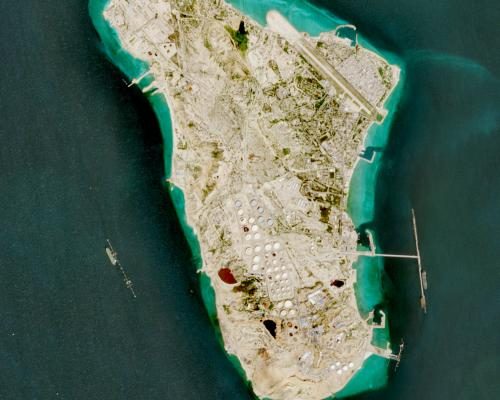
Oil prices surged on Monday as fears of supply disruptions mounted following U.S. military strikes on Iran's strategic Kharg Island oil export hub. Brent crude, the international benchmark for oil, rose 1.8% to $104.98 per barrel during early trading. This increase comes amid escalating violence across the Middle East, raising concerns over the broader implications for global energy markets. Former President Donald Trump claimed on Saturday that U.S. strikes had "totally demolished" much of Kharg Island and urged allies to assist in reopening the vital Strait of Hormuz.
U.S. Strikes and Regional Instability
Kharg Island, located approximately 27 miles from Iran's mainland, serves as a crucial processing point for the country's oil exports, handling about 90% of Iran's output. The U.S. military had initially refrained from targeting this key infrastructure during its operations but shifted its approach over the weekend. President Trump noted the strikes were aimed exclusively at military targets, claiming he had avoided hitting energy infrastructure "for reasons of decency." However, the assault on Kharg Island has not alleviated market anxieties, which have been exacerbated by ongoing violence and uncertainty in the Middle East. Originally reported by The Guardian.
The Strait of Hormuz, a critical waterway through which approximately one-fifth of the world's oil supply is transported, has faced significant disruptions since the conflict escalated. Trump suggested that multiple countries would join efforts to reopen the strait, though he did not specify which nations would participate. He specifically called on allies, including France, Japan, South Korea, and the UK, to collaborate in a "team effort" to ensure the safety of shipping routes.
Global Reactions and Market Impacts
Reactions from these nations have been cautious. South Korea's foreign ministry stated it was "exploring various measures from multiple angles" to secure energy transport routes. Meanwhile, UK officials are reportedly considering deploying minesweeping drones to the strait as they assess the potential escalation of the crisis resulting from Trump's demand for naval assistance.
Market analysts have observed that oil prices have not only surpassed $100 per barrel but also reached their highest levels since the onset of Russia's invasion of Ukraine. This surge in prices has contributed to rising fuel costs worldwide, and shares of major oil companies have hit record highs. The average fuel price in the United States reached $3.70 per gallon on Sunday, reflecting a 62-cent increase from just a month earlier. Frustration among consumers is palpable, with many expressing discontent over rising prices.
Public Sentiment Amid Rising Costs
The impact of soaring fuel prices on American families is becoming increasingly evident. For instance, Kevin Dass, a father living in Detroit, expressed his frustration after paying $3.49 per gallon. "I don't give a shit about Iran. I don't want to pay higher gas," he told a reporter, highlighting the growing disconnect between geopolitical events and everyday life for many citizens.
Despite the escalating situation, Trump attempted to reassure the public by suggesting that fuel prices might decline soon. "I think they'll go lower than they were before," he stated in an interview, asserting that there is an abundance of oil and gas available, although he acknowledged that supply chains are currently "clogged". His comments reflected a desire to calm market fears and restore confidence among consumers.
Energy Strategies Across Asia
Countries in Asia are also grappling with the challenges posed by the energy crisis. In response to rising fuel costs, nations like Thailand are implementing fuel subsidies, while Bangladesh has introduced rationing measures. The urgency to secure energy supplies is palpable, with various governments exploring strategies to mitigate the impact on their economies.
As the situation continues to unfold, the global energy landscape remains precarious. The interconnectedness of geopolitical tensions and energy markets has never been more evident, and stakeholders are keenly watching for any developments that could further disrupt supply chains or escalate military actions in the region.
Originally reported by The Guardian. View original.