
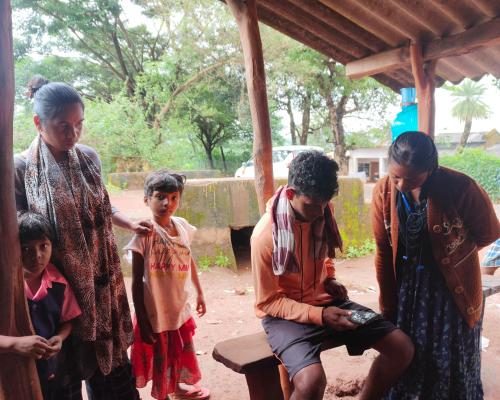
In a bid to connect India's vast yet largely undocumented migrant workforce with essential services, a WhatsApp chatbot named Bandhu is making waves in Odisha. The chatbot aims to assist migrant workers in staying in touch with their families during emergencies, a significant step in addressing the communication gap that has plagued this population for years.
Understanding the Challenge of Migrant Workers
India is home to an estimated 140 million migrant workers, but data on their numbers and locations remain sparse, leading to inadequate responses during emergencies. During the Covid-19 pandemic, the plight of these workers became painfully evident as many were forced to walk hundreds of kilometers to return home after a nationwide lockdown was imposed. More than a million migrants returned to Odisha during this time, yet the lack of reliable data hindered effective coordination of their return. Originally reported by The Guardian.
As Raja Pradhan, a migrant from Odisha, sits in his village scrolling through his phone, he is hesitant to engage with Bandhu, the chatbot designed to gather information about migrant workers. He expresses concern over the potential misuse of shared data, reflecting a common apprehension among workers. A field worker from the nonprofit organization Gram Vikas, which developed the chatbot, reassures him that the information is strictly for emergency assistance.
Bandhu: A Lifeline for Migrants
Bandhu, which translates to 'friend' in Hindi, aims to bridge the information gap between migrant workers and their families. The chatbot collects vital details such as names, source districts, dates of birth, emergency contacts in Odisha, and current locations via Google Maps. This initiative is particularly important in a state like Odisha, where half of the 30 districts are known for significant migration.
Liby Johnson, executive director at Gram Vikas, emphasizes the importance of having accurate information during crises. "Families often know only the state to which a worker has travelled. Precise details are rarely available," he explains. This lack of information can have dire consequences during disasters such as cyclones or industrial accidents, which disproportionately affect mobile populations.
Expanding Reach and Future Prospects
Over the past two months, Gram Vikas has worked to engage migrants in Petumaha village, where Raja resides, assisting them in completing the digital registration form. The initiative has already seen 1,196 registrations across 22 districts in Odisha, with ongoing efforts to include more workers. Migrants can also update their locations as they frequently change workplaces, especially in sectors like construction and hospitality.
Looking ahead, Bandhu may evolve further to allow workers to seek assistance directly through the chatbot, enabling them to register grievances against employers or report emergencies. Gram Vikas plans to expand the initiative to three additional districts in the coming year, with hopes of eventually formalizing the migrant registry as a state program.
Addressing Technological Barriers
While the initiative has made significant strides, it faces challenges related to technology access. Approximately 64% of rural households in Odisha own smartphones, according to the 2022 Annual Status of Education Report (Rural). However, younger migrants tend to be more likely to own smartphones compared to older generations, who also migrate but may lack digital literacy or access.
To address these hurdles, Gram Vikas is focusing on community engagement and education about the chatbot, hoping to increase participation among all age groups. "Our experience will also suggest what tech platforms can help with the scaling up," Johnson notes, indicating a proactive approach to developing a sustainable model for migrant data collection.
As Bandhu continues to gain traction, it holds promise not just for improving communication during emergencies but for laying the groundwork for a more structured approach to understanding and supporting India's migrant workforce. The initiative showcases how technology can be harnessed to fill critical gaps in data and service delivery, ultimately fostering a safer environment for millions of workers.
Originally reported by The Guardian. View original.