
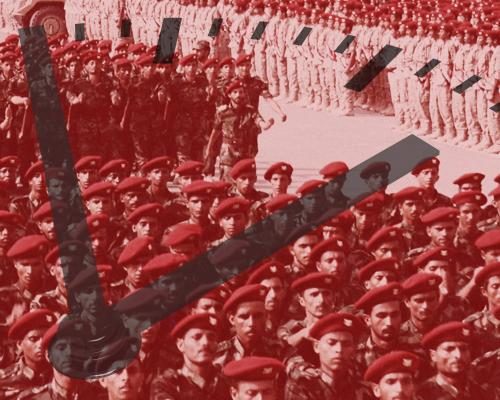
The Houthis, a militant faction in Yemen, have risen to prominence amid a prolonged civil conflict, marking their territory as a force capable of disrupting global trade through their control of strategic maritime routes. With an estimated 20,000 fighters, they represent the Zaidi branch of Shia Islam, drawing significant support from discontented Shia Yemenis who have long opposed corruption and authoritarian governance. This comprehensive guide covers who are the houthis – explained in 30 seconds in detail.
Understanding Who Are The Houthis – Explained In 30 Seconds
Emerging from years of civil unrest, the Houthis gained traction in the early 2000s, appealing to the Zaidi Shia community's frustration with Yemen's corrupt political landscape. Their influence surged as they capitalized on widespread dissatisfaction with the ruling elite. In September 2014, the group captured the capital, Sana'a, marking a pivotal moment in Yemen's political history. The following year, they overthrew the internationally recognized government led by President Abd-Rabbu Mansour Hadi, forcing him to flee the country. Originally reported by The Guardian.
In response to the Houthis' ascendance, Saudi Arabia, backed by the UAE and Western allies, initiated a military intervention in March 2015, aiming to restore Hadi's government. This intervention sparked a brutal civil war that has led to catastrophic humanitarian consequences, resulting in an estimated 377,000 deaths and displacing around 4 million people by the close of 2021. The conflict has drawn in regional powers, further complicating an already volatile situation.
International Implications and Maritime Security
Strategically located near a vital shipping corridor at the entrance of the Red Sea, the Houthis have the capacity to impact international trade dramatically. Their ability to disrupt maritime routes poses a significant threat to global supply chains, with implications that extend far beyond Yemen's borders. This capability has been especially evident following their recent military activities, which intensified after the October 7, 2023 attack on Israel by Hamas.
The Houthis' targeting of international shipping in the Red Sea is a crucial component of their strategy, showcasing their determination to assert themselves as a regional power. The escalation of these attacks led to chaos in global supply chains, raising concerns among international stakeholders. However, following a US-brokered ceasefire between Israel and Hamas in October 2025, these maritime assaults ceased, at least temporarily.
Relationship with Iran and Regional Dynamics
The Houthis have often been described as an Iranian proxy, a claim they deny, asserting instead that they share a political affinity with Tehran. The United States has accused Iran of providing the Houthis with arms, funding, and training, which has further strained relations in the region. Analysts argue that the Houthis are part of Iran's broader "axis of resistance," which opposes US and Israeli influence in the Middle East.
Despite their initial silence during the early stages of the ongoing US-Israel war on Iran, the Houthis re-emerged into the spotlight on March 28, 2025, when they launched missiles at Israel. Their leadership vowed to sustain military operations until Israel ceases its "attacks and aggression." This declaration not only marks a significant escalation in their military posture but also underscores the interconnectedness of regional conflicts, where local grievances can have international repercussions.
The Humanitarian Crisis and Prospects for Peace
The ongoing civil war in Yemen has precipitated one of the world's most severe humanitarian crises. Millions face dire shortages of food, clean water, and medical care, with the United Nations warning of widespread famine. The humanitarian situation is exacerbated by continuous military engagements and blockades, which hinder the delivery of essential aid.
In April 2022, a UN-brokered truce offered a glimmer of hope by halting hostilities between the warring factions. This ceasefire has largely held, providing a much-needed respite for the beleaguered population. However, the prospects for a lasting peace remain uncertain as the underlying political and sectarian tensions continue to simmer.
Looking ahead, the Houthis' role in Yemen and their interactions with regional powers will be critical in shaping the future of the country and the broader Middle East. As the international community grapples with the complexities of the conflict, the need for a comprehensive and inclusive peace agreement becomes increasingly urgent.
Originally reported by The Guardian. View original.