
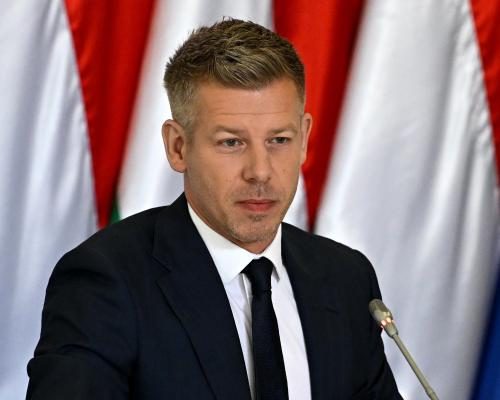
Hungarian Prime Minister Péter Magyar has signaled a notable shift in his government's stance toward Russia, condemning a recent drone attack on Ukraine that occurred near Hungary's border. Following the massive strike, which involved over 800 drones targeting multiple regions in Ukraine, Magyar announced that his administration has summoned the Russian ambassador to express its strong disapproval of the actions taken by Moscow. This marks a clear departure from the previous government's more conciliatory approach towards the Kremlin.
Condemnation of Russian Aggression
On Wednesday, Magyar stated, "The Hungarian government strongly condemns the Russian attack on Transcarpathia," underscoring a newfound assertiveness in Hungary's foreign policy. The drone assault, which struck approximately 20 regions in Ukraine, was part of a broader wave of aggression from Russia, with Kyiv's critical infrastructure being a significant target. This situation comes in the context of shifting political dynamics in Hungary, as Magyar's government was recently elected, replacing officials who had previously blocked aid to Ukraine and attempted to impede its European Union accession efforts. Originally reported by The Guardian.
In a direct response to the recent attacks, Magyar indicated that Hungary's Foreign Minister will engage with the Russian ambassador, asking, "when Russia and Vladimir Putin plan to finally end this bloody war." This inquiry reflects a growing impatience with Moscow's ongoing military operations in Ukraine and signals a willingness to align more closely with Western allies.
Ukrainian Response and International Implications
Ukrainian President Volodymyr Zelenskyy expressed gratitude for Hungary's shift in stance, thanking Magyar for his "compassion and strong position" through a post on X. This acknowledgment highlights the importance of solidarity among nations facing Russian aggression, as Ukraine Continues to navigate the complexities of international support.
The drone strikes themselves were part of a broader campaign by Russia, which also included a massive bombardment early Thursday, launching 675 drones and 56 missiles at various Ukrainian locations. The Ukrainian air defense reportedly intercepted 652 drones and 41 missiles, yet damage from debris and direct hits has been recorded across numerous sites. The ongoing conflict has raised alarms across Europe, prompting neighboring nations like Poland to scramble fighter jets in a preemptive measure amid fears of spillover effects from the war.
Political Fallout in Russia
Amidst the turmoil of the drone attacks, the Kremlin announced the resignation of two governors from regions bordering Ukraine. Vyacheslav Gladkov of the Belgorod Region and Alexander Bogomaz of the Bryansk Region stepped down at their own request, with the Kremlin indicating that this was part of a larger response to the challenges posed by the conflict. Their replacements, Alexander Shuvaev, a decorated military veteran, and Yegor Kovalchuk, a legal and administrative expert, have already met with President Vladimir Putin, signaling a potential shift in local governance strategies in response to the ongoing conflict.
Meanwhile, the Russian government has tightened controls over media coverage of the war, prohibiting the publication of images and videos depicting the aftermath of drone strikes. This is aimed at curbing what officials describe as unreliable information, as the government's narrative seeks to maintain a firm grip on public perception amidst the chaos of war.
U.S. Legislative Moves for Ukraine Support
In the United States, lawmakers are making strides toward securing additional support for Ukraine. A coalition has reached a pivotal threshold to bypass Republican leadership and force a vote in the House on legislation that would deliver more than $1 billion in security aid and an additional $8 billion in loans. This development comes as part of a broader effort to solidify U.S. assistance for Ukraine, especially as the country faces increased military pressures from Russia.
While the passage of this measure remains uncertain, it highlights a growing bipartisan recognition of the need for active support of Ukraine. Advocates have called upon former President Donald Trump to take a more decisive stand against Russia, stressing the urgency of bolstering Ukraine's defenses amidst ongoing aggression.
As the conflict continues to evolve, the implications of Hungary's policy shift and the broader international response will be critical in shaping the future of the region. The actions taken by Magyar's government could not only redefine Hungary's role in Eastern Europe but also influence the dynamics of support for Ukraine in its ongoing struggle against Russian aggression.
Originally reported by The Guardian. View original.