
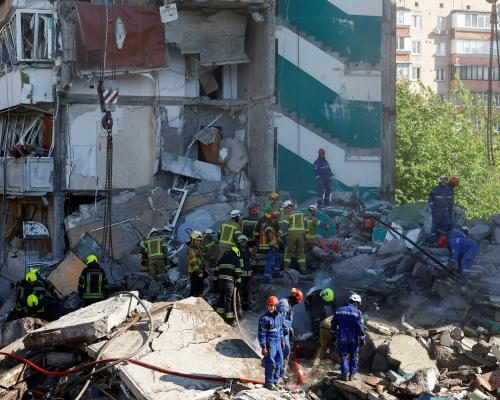
As the conflict in Ukraine escalates, a recent wave of intense Russian strikes has resulted in one fatality and over 40 injuries in the capital city, Kyiv. This overnight assault targeted civilian infrastructure, signaling a troubling continuation of hostilities amid ongoing concerns over regional security. Ukrainian President Volodymyr Zelenskyy has condemned the attacks, emphasizing the need for international acknowledgment and support.
Latest Attacks and Casualties in Kyiv
Following a day of heightened tension on Wednesday, Russia launched a barrage of strikes on Ukraine, leading to significant damage in Kyiv. Reports indicate that at least one individual was killed while 40 others sustained injuries. Among the injured, 31 required hospitalization due to the severity of their conditions. The strikes directly hit residential areas, with Kyiv's Mayor Vitali Klitschko revealing that at least 18 apartment buildings were destroyed. Additionally, critical infrastructure suffered, causing water supply issues in the left bank areas of the city. Originally reported by The Guardian.
These attacks are part of a broader pattern of aggression, as Ukrainian officials have noted that over the past 30 hours, Russia deployed more than 1,500 drones targeting various locations across Ukraine. This sustained offensive raises alarms about the potential for further escalation in the ongoing conflict, which has already brought immeasurable suffering to civilians.
Zelenskyy Calls for Global Attention
In response to the strikes, President Volodymyr Zelenskyy expressed his deep concern, stating, "These are definitely not the actions of those who believe the war is coming to an end." His comments reflect a growing frustration with the international community's response to ongoing violence. Zelenskyy urged allied nations to speak out against these attacks and to provide support to Ukraine as it faces continued military aggression.
The president's call for action comes amid a backdrop of complex geopolitical dynamics. As the war in Ukraine drags on, Zelenskyy's remarks highlight the critical need for solidarity among Western allies. The continuous bombardment not only threatens Ukraine's sovereignty but also raises questions about the efficacy of diplomatic efforts aimed at reaching a peaceful resolution.
Impact on Civilians and Infrastructure
The recent attacks underscore the harsh reality faced by ordinary Ukrainians living in conflict zones. With each strike, the risk to civilian life increases, and infrastructure suffers devastating blows. The damage to residential buildings in Kyiv highlights the indiscriminate nature of the assaults, leaving families displaced and in dire need of assistance.
Moreover, the water supply disruptions in left bank Kyiv further compound the crisis, affecting thousands of residents. Local officials are working to assess the extent of the damage and to restore essential services, but the scale of destruction poses significant challenges. As humanitarian needs grow, organizations on the ground are mobilizing efforts to provide relief to those affected by the violence.
Regional and International Reactions
While the situation in Ukraine remains dire, other parts of Europe are observing significant political activities. On the same day as the attacks, notable events included a ceremony in Germany commemorating Charlemagne, and a meeting between the Finnish and Lithuanian presidents focused on regional security concerns. These discussions indicate that Europe is grappling with its own set of security challenges, exacerbated by the ongoing conflict in Ukraine.
There were also reports regarding potential movements of U.S. troops from Poland, a claim that has been denied by the Polish government. Such developments reflect the intricate web of military strategies and alliances in play as nations respond to Russia's aggression. In the midst of these discussions, cultural events like the upcoming Eurovision semi-final serve as a reminder of the resilience and spirit of communities in Europe, even in times of crisis.
As the situation unfolds, the international community watches closely. The urgent need for a cohesive response to Russia's military actions remains paramount. Continued dialogue and support for Ukraine are crucial in the face of relentless attacks that threaten to destabilize the region further.
The recent escalation of violence in Ukraine illustrates the ongoing unpredictability of the conflict and the pressing importance of diplomatic engagement. With the lives of countless civilians at stake, the calls for action from leaders like Zelenskyy serve as a crucial reminder of the need for solidarity and support in these challenging times.
Originally reported by The Guardian. View original.