
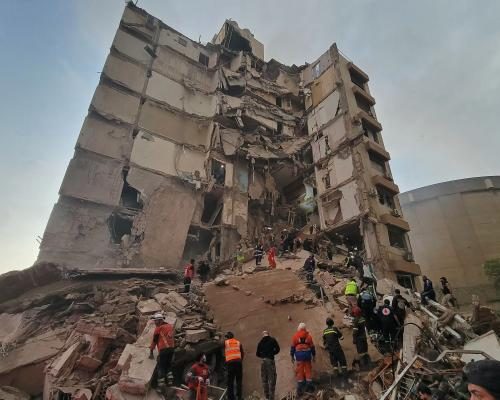
In a harrowing display of military force, Israel launched a relentless bombing campaign on Wednesday that resulted in the deaths of at least 254 people in Lebanon, making it one of the most devastating attacks since the end of the Lebanese Civil War in 1990. The strikes, which targeted over 100 locations across the country within just ten minutes, have left countless families in mourning and raised significant concerns over civilian safety in the region.
Scenes of Destruction in Beirut's Barbour Neighborhood
The aftermath of the airstrikes was catastrophic. Omar Rakha, a resident of the Barbour neighborhood in central Beirut, recounted the moment the bombs fell. "I heard the war planes but did not feel the explosions; it was only when I woke up face down on the street, bleeding, that I understood what had happened," he said. The building next door had been obliterated by two Israeli bombs, prompting him to rush through the wreckage in search of his sister. Originally reported by The Guardian.
Shaden Fakih, a 24-year-old calisthenics trainer, faced a similar ordeal. He sprinted towards the impact site, desperate to locate his friend Mahmoud, who was trapped inside the now-collapsed building. The once-safe neighborhood now resembled a war zone, filled with screams and chaos. Fakih began rescuing people from neighboring apartments, carrying an injured elderly woman to safety.
Emergency Response Strained by Influx of Casualties
As the wounded flooded into hospitals, the medical community braced for an overwhelming surge of casualties. Dr. Ghassan Abu-Sittah, a surgeon at the American University of Beirut Medical College (AUBMC), described the grim scene. "The youngest was an 11-month-old. I had to operate on him just to relieve some pressure in the head," he stated, emphasizing the urgency and scale of the crisis.
According to Lebanon's civil defense, the total wounded exceeded 1,165, with many suffering from severe injuries. Dr. Firass Abiad, another surgeon and former health minister, detailed the toll: "There was a 90-year-old who I just left a bit ago. He passed away from his wounds.. There was nothing we could do." The sheer number of injured, many critically, overwhelmed the healthcare system, leading to comparisons with mass casualty events witnessed in Gaza.
Targeting Civilians Amid Claims of Military Objectives
The Israeli military labeled the operation "Operation Eternal Darkness," claiming it targeted Hezbollah command and control centers. However, local officials and residents expressed outrage, asserting that the strikes predominantly harmed civilians. Prime Minister Nawaf Salam condemned the attacks, accusing Israel of violating international law by targeting densely populated areas.
Dr. Abu-Sittah also voiced concern about the intent behind the strikes, suggesting that the rapid influx of casualties aimed to overwhelm healthcare resources. "Most of the people were wounded in a very short period of time, which was intentional to flood the health system," he remarked, recalling the similar chaos he witnessed in Gaza during previous conflicts.
A Community in Shock and Grief
As first responders worked tirelessly to locate survivors amid the rubble, the community grappled with a sense of disbelief. The Barbour neighborhood, which had opened its doors to shelter families fleeing violence, never expected to become a target itself. "I really didn't think something like this would happen here," Rakha reflected, his head bandaged from his injuries. The area had been seen as a refuge from the violence that had plagued Lebanon for decades.
Israel has accused mixed neighborhoods of harboring Hezbollah fighters, claiming that the militant group has begun repositioning away from its strongholds. Avichay Adraee, an Israeli military spokesperson, stated, "Recently, the IDF observed the terrorist group Hezbollah began leaving the Shiite strongholds in the suburbs and repositioning itself towards northern Beirut." This shift in military strategy has raised alarms among residents who believed their neighborhoods were safe.
This tragic escalation in violence has left countless families shattered and underlines the fragility of peace in Lebanon, where the specter of conflict looms large once again. As rescue efforts continue, the true scale of the tragedy remains uncertain, with fears that the death toll could rise further in the coming days.
Originally reported by The Guardian. View original.