
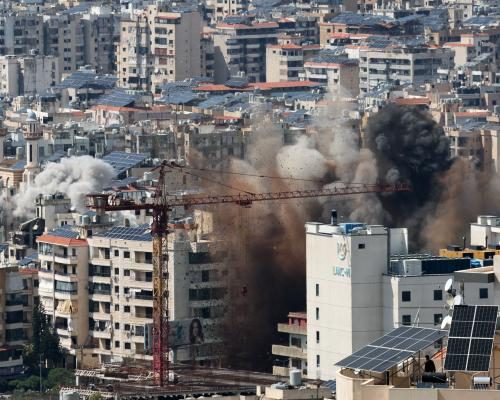
The two-week ceasefire in the ongoing conflict involving Iran faced a critical juncture on Wednesday, as escalating actions by both sides raised serious doubts about its future. Israel ramped up its bombing campaign in Lebanon, while Iran retaliated by halting oil tanker passage, alleging that Israel had breached the ceasefire agreement. This situation unfolded against the backdrop of contradictory statements regarding the ceasefire, which was brokered by Iran and Pakistan.
Contradictory Claims Complicate Ceasefire Agreement
As the situation developed, Israeli Prime Minister Benjamin Netanyahu asserted that the ceasefire did not encompass Lebanon, a claim that directly contradicts statements from Iran and Pakistan, who facilitated the last-minute truce. In a show of military might, Israeli forces conducted their heaviest bombardment of the conflict thus far, targeting over 100 sites in Lebanon, resulting in at least 112 casualties. The intensity of the assault has raised fears that the fragile ceasefire may collapse entirely, further exacerbating regional instability. Originally reported by The Guardian.
Impact on Oil Tankers and Global Markets
In a significant response, Iran's Fars news agency reported that the Islamic Republic had ceased allowing oil tankers to transit through the Strait Of Hormuz, citing an alleged Israeli breach of the ceasefire. This development emerged shortly after oil prices had dipped below $100 per barrel, stimulating a surge in global stock markets following the announcement of the truce. However, the halt in tanker movement has left hundreds of vessels stranded in the Gulf, waiting for approval from insurers before they can navigate the waters. Many of these vessels have reported ongoing interference with their satellite navigation systems, complicating the situation further.
Iran's Military Actions and Regional Tensions
Adding to the turmoil, the United Arab Emirates announced that its air defenses intercepted 17 ballistic missiles and 35 drones launched from Iran on the day following the ceasefire declaration. Additionally, reports emerged that Iran had targeted a Saudi oil pipeline to the Red Sea shortly after the ceasefire was announced. The Islamic Revolutionary Guard Corps (IRGC) claimed responsibility for multiple missile and drone strikes across the region, including attacks on oil facilities belonging to U.S. companies in Yanbu, a key Saudi port and pipeline terminal. These aggressive maneuvers by Iran reflect the rising tensions and the potential for further conflict in an already volatile landscape.
Diplomatic Challenges Ahead
On the diplomatic front, former U.S. President Donald Trump presented conflicting interpretations of the ceasefire agreement. In his initial announcement, Trump described Iran's 10-point proposal as a "workable basis on which to negotiate," emphasizing the reopening of the Strait of Hormuz. However, by Wednesday morning, he suggested that the ceasefire was based on a separate 15-point proposal from the U.S., claiming that many of the points had "already been agreed to." His assertion that there would be no uranium enrichment and a joint effort to dismantle Iran's stockpile of highly enriched uranium further complicated the dialogue.
Trump's warning that "a whole civilization" would perish without an agreement by the end of Tuesday drew widespread condemnation, seen as a threat of potential war crimes. Meanwhile, Iran has published differing versions of the agreement, with the Farsi version acknowledging its right to enrich uranium, while the English translation omitted this point. Iranian Foreign Minister Abbas Araghchi confirmed Trump's statement regarding the potential reopening of the Strait of Hormuz but indicated that tankers would still need to coordinate with Iran's armed forces for safe passage.
Looking ahead, Pakistan is set to host discussions on Friday aimed at solidifying the ceasefire into a more permanent peace agreement. However, the White House has yet to confirm its participation, raising concerns about the feasibility of any long-term resolution. U.S. Vice President JD Vance described the situation as a delicate truce and urged Iran to engage in sincere negotiations. The Pentagon's defense secretary, Pete Hegseth, hinted at possible military action should agreements regarding Iran's uranium stockpile fail, underscoring the high stakes involved. Amid all this, the dynamics of the conflict remain precarious, with U.S. forces remaining poised for action, should the situation deteriorate further.
Originally reported by The Guardian. View original.