
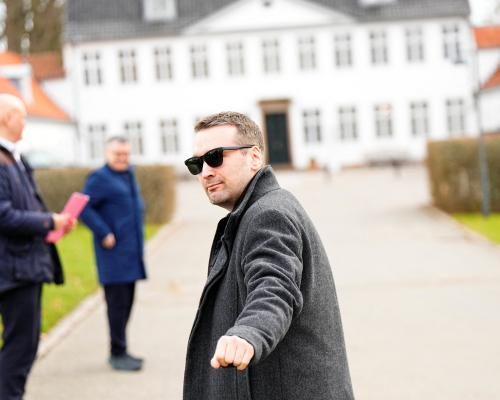
Qarsoq Høegh-Dam, the newly elected member of the Danish parliament representing Greenland's pro-independence Naleraq party, has an unusual ambition: to make himself obsolete. Elected last month, Høegh-Dam is determined to advocate for Greenland's full autonomy, envisioning a time when the island's governance will rest solely in the hands of its own parliament in Nuuk, rather than in Copenhagen.
A Bold Vision for Greenland
Upon his election, Høegh-Dam declared, "I want to make myself as obsolete as possible," emphasizing his goal for Greenland to assume full responsibility for its governance. His vision aligns with a growing sentiment among Greenlanders for Independence, a sentiment that has gained traction particularly since the geopolitical tensions surrounding the Arctic have intensified. This includes the controversial comments made by former U.S. President Donald Trump regarding the potential purchase of Greenland, which drew international attention and concern. Originally reported by The Guardian.
Høegh-Dam sees his role as a stepping stone towards a future where Greenland is no longer represented in Copenhagen, but instead has its governance consolidated in Nuuk. "Greenland and the Greenlandic people are to be the responsibility of the Greenlandic parliament and the Greenlandic government," he stated. "So the primary objective is: I will have succeeded if I am no longer relevant."
Geopolitical Pressures and Historical Context
The context of Høegh-Dam's ambitions is steeped in a complex history. Greenland's relationship with Denmark has evolved significantly since the 18th century, when Danish colonization began. The Inuit people have inhabited Greenland for thousands of years, yet modern governance has been largely dominated by Denmark. Though Greenland gained home rule in 1979 and has since received greater autonomy, Denmark still controls foreign and security policy.
The recent geopolitical climate has further highlighted the importance of Greenland's autonomy. Tensions flared when Trump suggested buying the island, prompting Denmark to prepare for potential military escalations. Reports indicated that Denmark readied itself for a possible U.S. attack by transporting medical supplies and explosives. Høegh-Dam warned that such geopolitical maneuvers necessitate Denmark's commitment to supporting Greenlandic governance and infrastructure, particularly in light of international interests in the Arctic region.
Unity Among Parties for Independence
While Høegh-Dam's Naleraq party is the most vocal about seeking independence, all major political factions in Greenland share this ultimate goal. Naleraq has seen a surge in popularity, nearly doubling its representation in the Greenlandic parliament, the Inatsisartut, during the last election. Høegh-Dam emphasized the importance of a smooth transition to autonomy, adhering to the established laws from the Danish parliament, including a 2009 act that recognizes the right to self-determination for Greenland's people.
In stark contrast to Naleraq's urgency for independence, other parties, such as the Inuit Ataqatigiit (IA), represented by Naaja Nathanielsen, advocate for reforming the 1953 constitution before pursuing full autonomy. Nathanielsen argues that the existing framework limits Greenland's ability to manage its own foreign and security policies, underscoring the challenges that lie ahead.
A Family Legacy in Politics
Høegh-Dam is part of a politically active family, with a legacy of political involvement in Greenland. His sister, Aki-Matilda Høegh-Dam, recently switched from the Siumut party to Naleraq, and his late uncle, Thue Christiansen, was integral in establishing Greenland's first cabinet and creating the national flag. This familial connection to politics has shaped Høegh-Dam's aspirations, stating, "Of course politics is a topic of discussion at the holiday table and over a cup of coffee. I hope I can contribute just a small fraction in the same way."
As he steps into his role, Høegh-Dam's commitment to Greenland's independence resonates with both the challenges and opportunities that lie ahead. With a changing political landscape and increasing global interest in the Arctic, he aims to navigate these complexities while advocating for a future where Greenlanders govern themselves.
Originally reported by The Guardian. View original.