
The United States and Iran struck a conditional ceasefire agreement on Tuesday evening, allowing for a two-week pause in hostilities. The deal, which includes a temporary reopening of the strategic Strait of Hormuz, came just hours before a deadline set by President Donald Trump, who had threatened military action against Iran. This diplomatic breakthrough was largely facilitated by Pakistan, which has been actively engaged in mediating tensions between the two nations.
Ceasefire Details and Diplomatic Intervention
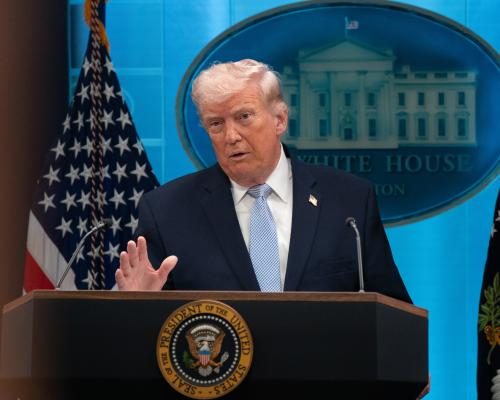
President Trump announced the ceasefire less than two hours before an 8 PM Eastern time deadline he had imposed, during which he threatened to target Iranian infrastructure, including power plants and bridges. Legal experts and international leaders had warned that such actions could lead to accusations of war crimes. Prior to the announcement, Trump conveyed on Truth Social his dire predictions, stating, "A whole civilization will die tonight, never to be brought back again. I don't want that to happen, but it probably will." As tensions escalated, American B-52 bombers were reportedly en route to Iran. Originally reported by The Guardian.
However, the situation shifted dramatically when Pakistani Prime Minister Shehbaz Sharif intervened, advocating for a ceasefire to allow for diplomatic negotiations. In a post on social media, Trump stated, "Subject to the Islamic Republic of Iran agreeing to the COMPLETE, IMMEDIATE, and SAFE OPENING of the Strait of Hormuz, I agree to suspend the bombing and attack of Iran for a period of two weeks." This conditional ceasefire was a significant relief amid growing fears of a wider conflict.
Regional Reactions and Uncertainty
The announcement was met with a mixed response in the region. Israeli Prime Minister Benjamin Netanyahu confirmed Israel's support for the ceasefire but clarified that it did not extend to hostilities involving Hezbollah in Lebanon. Netanyahu's office emphasized that Israel would continue to back U.S. efforts to eliminate threats posed by Iran's nuclear and missile capabilities. Pakistan's Prime Minister had earlier mentioned that the ceasefire agreement aimed to encompass all areas of conflict, including Lebanon, increasing hopes for broader peace.
Despite the ceasefire, uncertainty loomed as Iran released two differing versions of a proposed 10-point plan for negotiations. The Farsi version included a phrase concerning the "acceptance of enrichment" for Iran's nuclear program, a term missing from the English translations provided to journalists. This discrepancy raised questions about Iran's stance and the sincerity of their commitment to negotiations. Meanwhile, Pakistan extended an invitation for further talks in Islamabad this Friday, which Iran has accepted, but the U.S. has yet to confirm its participation.
Market Impact and Military Actions
In the wake of the ceasefire announcement, financial markets reacted positively. Oil prices dropped significantly as investors expressed relief over the potential resumption of oil and gas flows through the Strait of Hormuz, a crucial waterway for global energy supplies. Stocks surged, and the U.S. dollar faced a decline, reflecting a renewed optimism among traders.
Nonetheless, military actions persisted in the region even after the ceasefire was declared. Reports indicated that airstrikes targeted military infrastructure in Iran, including a key oil hub on Kharg Island, as well as two bridges and a train station. The ongoing skirmishes brought into question the effectiveness of the ceasefire and whether it could hold amid such aggressive posturing from both sides. Trump, who previously dismissed the 10-point plan as "not good enough," expressed optimism that the ceasefire could lead to a comprehensive agreement, claiming, "We have already met and exceeded all Military objectives.. concerning Longterm PEACE with Iran, and PEACE in the Middle East."
Looking Ahead: Challenges and Opportunities
As the U.S. and Iran navigate this fragile ceasefire, the path toward lasting peace remains fraught with challenges. The complexities of regional dynamics and the conflicting interests of involved parties, including Israel and Hezbollah, add layers of difficulty to any potential negotiations. The provisional nature of the ceasefire and the uncertainties surrounding Iran's nuclear ambitions will require careful diplomatic efforts to avoid a return to conflict.
The upcoming talks in Islamabad may serve as a pivotal moment for both nations. The world watches closely as these diplomatic discussions unfold, hoping for a sustainable resolution that could ease tensions in the Middle East and stabilize global energy markets.
Originally reported by The Guardian. View original.