
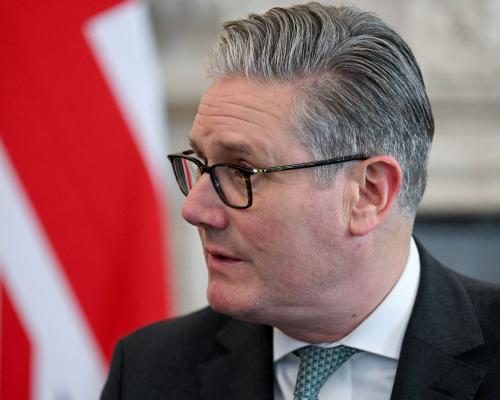
As tensions rise in the Middle East, UK Prime Minister Keir Starmer faces mounting pressure to maintain his position on allowing US military operations from UK bases. Starmer has affirmed that any authorisation for such use would strictly pertain to "defensive" strikes against Iranian military targets. Meanwhile, US President Donald Trump has escalated his rhetoric, threatening to target civilian infrastructure and dismissing concerns over potential war crimes.
Starmer's Calculated Position on Military Aid
In light of the ongoing conflict, Starmer's cautious stance has aimed to portray the UK as a responsible ally focused on regional security, while simultaneously avoiding direct involvement in the hostilities. This approach has allowed the British government to assert its commitment to supporting its allies without being perceived as engaging in offensive military actions. Originally reported by The Guardian.
However, Trump's recent comments have ignited concerns about the legality and ethical implications of the UK's position. Trump stated on Monday that he was "not at all" worried about committing war crimes, hinting at a shift toward more aggressive military tactics that could include strikes on non-military targets. The juxtaposition of Starmer's defensive framework against Trump's increasingly belligerent stance raises questions about the UK's ability to maintain its legal and moral boundaries in such a complex situation.
Legal Scrutiny of Defensive Versus Offensive Operations
Starmer's government has attempted to clarify its legal stance by asserting that UK support for US operations is rooted in the collective self-defense of regional allies who have requested assistance. This legal justification has been met with skepticism by legal experts, who warn that distinguishing between defensive and offensive strikes could prove difficult as the conflict evolves.
Susan Breau, a professor of international law, expressed concerns about the UK's ability to uphold its defensive claims, especially given Trump's shifting military strategy. "How do you distinguish what's defensive from what's offensive? It will be extremely complicated for the UK to maintain that distinction, given what Trump has said - his whole battle plan is changing," Breau noted. She highlighted the potential for civilian infrastructure to become targets under the current US administration, complicating the UK's position further.
The Dilemma of Allowing US Military Access
The key issue at the heart of the UK's legal dilemma involves the use of British bases by US forces. Observers like Breau argue that while the UK might justify the presence of its forces in the region for defensive purposes, allowing US forces to operate from British bases raises significant legal concerns. "I could see the UK still having bases and having ships there to defend its Gulf neighbours, but it's allowing the US to use their bases that's problematic," she added.
In contrast, Victor Kattan, an assistant professor of public international law, believes the UK could still defend its legal position even if Trump's threats are actualized. He emphasizes that the UK could argue its support is limited to intercepting attacks aimed at its allies, rather than participating in punitive strikes against Iran. However, he acknowledges that this is a nuanced distinction that may be increasingly difficult to maintain.
Implications of Trump's Threats on UK Foreign Policy
As the situation develops, the UK government is likely to face increased scrutiny regarding its legal and moral obligations. Both Breau and Kattan agree that the UK will need to constantly re-evaluate its legal standing in the face of evolving US military strategies. While Kattan asserts that the UK can manage its position, Breau emphasizes the need for a reassessment of the legal framework guiding UK support for US actions.
The broader implications of Trump's aggressive military rhetoric could force the UK to confront uncomfortable truths about its participation in international conflicts. As the US shifts its focus, the UK must navigate its role carefully to maintain its reputation as a responsible global actor. With the potential for civilian targets to be included in US military operations, the UK's position may soon face its most significant test yet.
Looking ahead, Starmer's commitment to a defensive strategy will be challenged as the complexities of international law and ethical considerations come into play. The UK government must weigh its obligations to regional allies against the risks of complicity in actions that contradict its stated principles.
Originally reported by The Guardian. View original.