
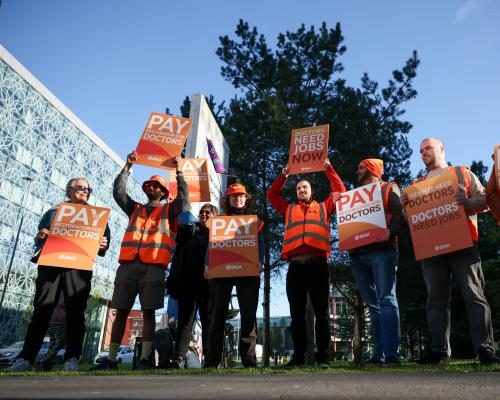
Resident doctors in England have officially commenced their longest strike to date, a six-day action starting at 7am today. The protest, involving a significant number of these healthcare professionals, is poised to disrupt hospital operations and patient care across the nation. This marks the 15th strike since the resident doctors, formerly known as junior doctors, initiated their campaign in 2023 to restore their pay to pre-austerity levels established before the 2008 financial crisis.
Impact on Healthcare Services
The ongoing strike is expected to have notable repercussions on the delivery of healthcare services in England. While many resident doctors will continue to work, a sufficient number joining the strike will strain hospital capacity and potentially delay patient care. This escalation comes as the doctors demand a pay rise commensurate with the rising cost of living and inflation, citing that their salaries have not kept pace with economic changes over the past decade. Originally reported by The Guardian.
Wes Streeting, the UK Health Secretary, has been vocal about the financial implications of the strikes. He stated that the ongoing protests by resident doctors have already cost the country around £3 billion. This figure was reported in a recent article by the Daily Mail, which highlighted the significant economic burden these strikes have imposed on the National Health Service (NHS). Streeting emphasized, "We think that strikes cost £50 million a day," underlining the ongoing financial strain on public resources.
Government's Stance on Pay Demands
During his appearance on the Today programme, Streeting addressed the demands put forth by the British Medical Association (BMA), the union representing the striking doctors. He challenged the BMA's assertion that the £3 billion cost of the strikes corresponds to the amount required to meet the doctors' pay demands. "What is true is that in order to deliver a full pay restoration back to 2008 levels, using the RPI account of inflation, it would cost in the order of £3 billion a year," Streeting remarked.
He further illustrated the broader implications of such a pay restoration, suggesting that if other NHS staff were to demand similar increases, the annual cost could balloon to approximately £30 billion. For context, this figure exceeds the entire operational budget of the Ministry of Justice for the criminal justice system. Streeting's comments reflect a continued resistance to the doctors' demands, framing the situation as a matter of fiscal responsibility.
Political Reactions and Campaign Events
The strike coincides with a busy day in UK Politics, where various leaders are addressing different public issues. John Swinney, the leader of the Scottish National Party (SNP), is holding a campaign event focused on fuel prices, while Anas Sarwar, the Scottish Labour leader, is discussing pothole policies. Meanwhile, Russell Findlay, the leader of the Scottish Conservatives, will launch his manifesto later in the day.
In Downing Street, a lobby briefing is scheduled, which may touch upon the ongoing strikes and their implications for public health. Additionally, Ed Davey, leader of the Liberal Democrats, is campaigning in Newcastle, and Nigel Farage of Reform UK is set to hold a press conference in Warwickshire. The intersection of healthcare issues with political campaigning highlights the significance of these strikes in the broader context of public policy and governance.
Future of Resident Doctors' Campaign
As the strike unfolds, both sides remain entrenched in their positions. The BMA continues to advocate for fair pay, arguing that years of underfunding and austerity have eroded the value of medical salaries. The doctors' campaign reflects a growing frustration within the NHS, where staff burnout and retention challenges are increasingly prevalent.
The outcome of this strike could set a precedent for future negotiations between healthcare professionals and the government, with implications for the entire public sector. As the situation develops, the focus will likely shift to potential resolutions and whether any compromise can be reached to ensure the sustainability of healthcare services in England.
Originally reported by The Guardian. View original.