
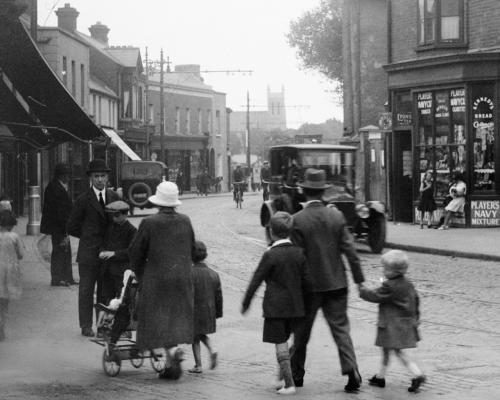
The release of the 1926 census data is set to fundamentally alter perceptions of early independent Ireland, long viewed as a bastion of parochialism and homogeneity. The National Archives of Ireland has announced that, on April 18, a comprehensive dataset comprising over 700,000 pages will be made publicly available, illuminating the lives of 2.9 million people from that era. Historians and researchers anticipate that these records will challenge the entrenched view of the Irish Free State as a mono-ethnic society.
Shattering the Monocultural Myth
For decades, the years following Ireland's independence have been characterized as a dull period marked by conservative values and isolationism. However, historian John Gibney from the Royal Irish Academy emphasizes that the 1926 census reveals a much more complex reality. "Immigrants could be found in every corner of the Irish Free State at that time," Gibney stated. "It bucks the image we have of this dour, conservative society." The census data highlights the presence of a variety of nationalities, including British, American, French, Italian, and Egyptian individuals living in Ireland, adding a cosmopolitan flavor to the country. Originally reported by The Guardian.
Despite a small foreign population, the census shows that no town or village was devoid of diverse accents and backgrounds. This rich tapestry of cultural influences adds depth to the understanding of a nation still grappling with its identity after gaining independence from Britain. The 1920s were not merely a period of insularity; they were also marked by global cultural exchanges that permeated Irish society.
A Snapshot of Life in 1926
The upcoming release marks a significant achievement for the National Archives, which has digitized and cataloged the census with €5 million in government funding. A dedicated team of 50 workers spent considerable effort extracting records from 1,344 boxes, restoring damaged pages, and making the data freely accessible online. Unlike the UK's 1921 census, which is behind a paywall, the Irish census will be available without charge, an effort that Orlaith McBride, director of the National Archives, describes as "a phenomenal undertaking."
Each census entry comprises 21 topics, encompassing a range of personal details such as age, sex, marital status, occupation, religion, housing conditions, and language abilities. These records were compiled from diverse Locations, including households, hotels, hospitals, and even ships-offering a comprehensive overview of the population on April 18, 1926.
Interestingly, the census also includes annotations made by the 2,000 gardaí who collected the information, revealing personal details that might not have been disclosed otherwise. For example, one garda noted that a supposed daughter was actually a granddaughter, a detail likely included to cover up an illegitimate birth. In another instance, a widowed farmer's marriage to his housekeeper was omitted from the census form, highlighting the intricate social dynamics of the time.
Insights into Demographic Changes
Scholars are particularly interested in the census as a tool to investigate one of the most pressing questions about the period: the significant decline of the Protestant population in the 26 counties of the Irish Free State. Between 1911 and 1926, the non-Catholic demographic dropped by 32%, a trend attributed to various factors, including First World War casualties, the influenza pandemic, and the withdrawal of British forces.
However, these explanations do not fully account for the drastic change. Historians are keen to explore whether the Protestant community felt unwelcome in a predominantly Catholic society, contributing to their emigration. Gibney expressed hope that the census returns would provide valuable insight into this demographic shift, stating, "The census returns would hopefully provide some kind of answers."
Celebrating a Century of History
The release of the 1926 census data is set to be commemorated with various events, including exhibitions, documentaries, theater productions, and the publication of a book titled *The Story of Us: Independent Ireland and the 1926 Census*. Authorities are even seeking "centenarian ambassadors" from among the estimated 1,200 people aged 100 and older, urging them to share their unique stories and experiences. McBride noted, "You get such a mix of people. It's fascinating."
As Ireland prepares to unveil its historical census, the intrigue surrounding the lives and experiences of nearly three million individuals promises to enrich the narrative of a nation still defining its identity. The findings are likely to reshape how we view Ireland's past, revealing a vibrant society that defies simplistic categorizations.
Originally reported by The Guardian. View original.