
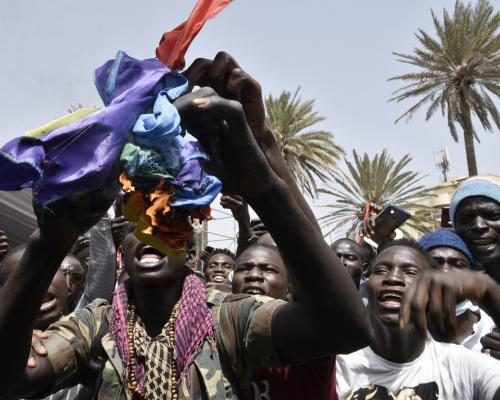
In Senegal, the recent enactment of a stringent anti-gay law has sent shockwaves through the nation, threatening decades of progress in HIV prevention efforts. Amadou Ndiaye, secretary-general of the Union des Jeunes Engagés pour Notre Communauté (UJEC), has witnessed a disturbing trend of members from his organization disappearing, either fleeing the country or being arrested. Ndiaye himself fled to the Gambia after being attacked by neighbors and family members, highlighting the escalating violence against the LGBTQ+ community. Since his return to Dakar, UJEC has halted all operations, a move indicative of the rising fears and dangers faced by those who identify as LGBTQ+ in Senegal.
Escalating Violence and Legal Repression
The situation in Senegal took a drastic turn on March 27, when President Bassirou Diomaye Faye signed a new law that doubled the maximum prison sentence for same-sex sexual acts to 10 years and criminalized the "promotion" of homosexuality. Alice Bordaçarre, from the International Federation for Human Rights (FIDH), warned that this legislation could label any organization advocating for fundamental rights, including HIV prevention, as promoting LGBTQ+ rights. "It risks criminalizing legitimate human rights activities," she stated, underscoring the dire implications for health workers, NGOs, and journalists. Originally reported by The Guardian.
In February, authorities arrested at least 12 men in Dakar under Article 319 of the penal code, which defines same-sex relations as "acts against nature." The arrests followed the detention of television presenter Pape Cheikh Diallo at a hotel, where police used his phone to trace connections to others. According to the HIV Justice Network, over 60 individuals have been detained since early February under Article 319, with 42 cases tied directly to Diallo's arrest.
Public Health Crisis Looms
The impact of these arrests on HIV healthcare has been immediate and alarming. A rapid assessment by Senegal's National Council for the Fight Against Aids (CNLS) from February 26-28 revealed a staggering 34.5% decrease in consultations across 22 treatment sites. Notably, 44% of men who have sex with men (MSM) reported experiencing anxiety or depression following the arrests. Dr. Safiatou Thiam, executive secretary of CNLS, confirmed that the fear stemming from these legal actions has caused significant distress within MSM communities.
Cécile Kazatchkine of the HIV Legal Network emphasized that the new law creates an even more hostile environment, making it increasingly difficult for MSM patients to seek treatment or testing. She pointed out that the legal requirements for proving intentional transmission of HIV are strict, yet forced testing remains a troubling trend, with individuals testing positive facing enhanced penalties. This contradiction raises concerns about how the law will be applied in practice.
Health Data and Community Response
HIV prevalence in Senegal's general adult population is below 0.5%, but among MSM, that figure dramatically increases to 27.6%, with some areas in Dakar reporting rates as high as 49.6%. A 2024 study published in the journal Aids noted male key populations accounted for up to 79% of HIV transmissions in Senegal between 2012 and 2021. The forced testing of those arrested, coupled with the automatic application of intentional transmission charges for individuals who test positive, poses a significant threat to the progress made in combating HIV.
In response to the heightened risks, Renapoc, another NGO focused on supporting high-risk populations, was advised by CNLS to cease in-person operations and shift to remote work. Some peer mediators, who play crucial roles in supporting fellow patients through treatment, have stopped their activities entirely due to fears of arrest. Dr. Thiam articulated the growing concern within the community, stating, "We fear that the epidemic will return."
This crisis is unfolding against a backdrop of increasing hostility toward LGBTQ+ individuals in Senegal, jeopardizing hard-earned advancements in public health. As the country grapples with these legal changes and their ramifications, the potential for a resurgence in HIV cases looms large, threatening not only the health of marginalized communities but the overall public health landscape in Senegal.
Originally reported by The Guardian. View original.