
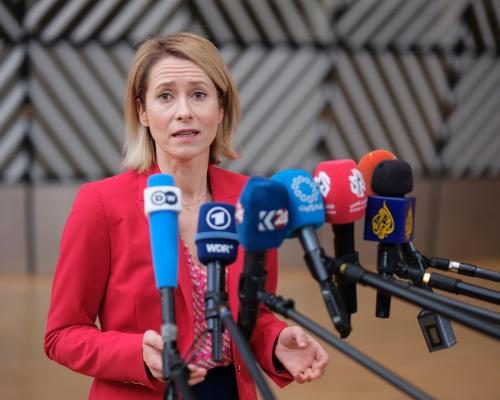
European Union foreign ministers convened in Brussels today, focusing on the pressing issues surrounding Ukraine, the Middle East, and the Western Balkans. As the discussions commenced, Ukraine's Foreign Minister Andrii Sybiha expressed optimism, citing what he termed a "new feeling of momentum" in Ukraine's ongoing conflict with Russia. Sybiha remarked upon his arrival, "We have a new reality on the battlefield. Ukraine became stronger after the most difficult winter.. We stabilized the front and we are also in the position that we closed the sky.. [can] shoot down up to 90% of aerial objects by which Russians attack us."
These comments come as the situation in Ukraine evolves, with reports indicating that Ukrainian forces have managed to maintain their positions despite the harsh conditions of winter. Sybiha also noted that Ukraine is observing interesting developments within Russia, hinting at changes beyond just the economic realm. He emphasized that Ukraine will continue to monitor these shifts closely. However, there is skepticism among EU leaders about Russian President Vladimir Putin's claims regarding the potential end of the conflict. Originally reported by The Guardian.
Increased Skepticism Towards Putin's Claims
Latvia's Foreign Minister Baiba Braže articulated a common sentiment among her counterparts, stating, "We believe that when we see it in action. For now, even during the so-called ceasefire that he begged for, we have not really seen the cessation of hostilities. So, it's premature to really suggest something like that." This caution reflects a broader wariness within the EU regarding Putin's intentions and the reality on the ground in Ukraine.
Sweden's Maria Malmer Stenergard echoed this perspective, asserting that Russia is experiencing a decline in military capability. She remarked on the challenges Russia faces in recruiting soldiers and described a recent military parade in Russia as lackluster, saying, "We saw their 'big victory parade' that was a very small victory parade, and there was no military hardware display at all, because the Kremlin was afraid of Ukrainian drones." Such observations point to a weakening position for Russia in contrast to Ukraine's resilience.
Ongoing Diplomatic Efforts and Meetings
Aside from the discussions in Brussels, Ukrainian officials are engaged in various diplomatic efforts elsewhere, reinforcing their international presence and gathering support. Foreign Minister Sybiha is set to attend talks at NATO and a separate forum focusing on Ukrainian children abducted by Russia. Additionally, Germany's Defense Minister Boris Pistorius is expected to visit Kyiv, signaling continued support from Germany in Ukraine's defense against Russian aggression.
The EU ministers' meeting also encompasses broader geopolitical concerns, including the Middle East and the Western Balkans. This diverse agenda underscores the EU's commitment to addressing multiple crises simultaneously, reflecting the interconnected nature of global security challenges today. As the ministers engage in talks, the outcomes could have significant implications for the EU's foreign policy stance moving forward.
Future Outlook and Continued Vigilance
As discussions continue in Brussels, the situation remains fluid, with various developments unfolding on multiple fronts. The EU's foreign ministers are poised to address not only the immediate concerns regarding Ukraine but also the ripple effects these conflicts have on regional stability in the Middle East and the Western Balkans.
The ongoing war in Ukraine has transformed the landscape of European security, prompting a reassessment of defense strategies and alliances. With the potential for further escalations or shifts in the conflict, EU ministers are likely to emphasize the need for a unified approach in supporting Ukraine while remaining vigilant about the broader implications of Russia's actions.
As the day unfolds, updates regarding the EU's stance on Ukraine and other pressing matters will be closely monitored, reflecting the evolving dynamics of European diplomacy. With the challenges ahead, the emphasis on solidarity and strategic support appears more critical than ever.
Originally reported by The Guardian. View original.