
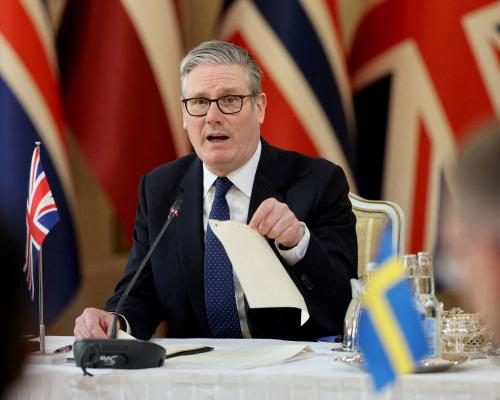
The ongoing G7 meeting near Paris has intensified discussions on the geopolitical implications of the conflicts in Iran and Ukraine, with UK Prime Minister Keir Starmer warning these wars could significantly alter the global order. His remarks come as foreign ministers gather to address pressing security concerns affecting international trade and stability.
On the second day of the G7 discussions in Vaux-de-Cernay, Foreign Secretary Yvette Cooper emphasized the need for immediate action regarding the Middle East crisis, particularly the situation surrounding the Strait of Hormuz. This crucial maritime corridor, vital for global oil shipments, has been under severe strain since the US-Israeli conflict with Iran escalated in late February. Cooper stated, "Iran cannot be able to just hold the global economy hostage as a result of a strait which is about international shipping routes and the freedom of navigation that has been so strongly supported at the United Nations, but also by countries across the world." With the strait effectively closed, oil and gas prices have surged globally, causing significant economic ramifications, especially in Asia. Originally reported by The Guardian.
G7 Foreign Ministers Unite on Middle East Resolution
As Cooper arrived in France, she highlighted the urgent need for a swift resolution to the ongoing conflicts. She expressed her commitment to achieving regional stability and security, while also underscoring the importance of reopening the Strait of Hormuz. The closure of this vital shipping route has not only disrupted oil supplies but has also pushed prices to unprecedented levels. The crisis is already affecting daily life in Asia, where rising energy costs are exacerbating economic challenges.
Cooper is expected to engage in discussions with US Secretary of State Marco Rubio, who is likely to appeal for collaborative efforts to restore navigational freedom in the strait. The G7 leaders are acutely aware that the situation in the Middle East poses a direct threat to global economic stability and security. In her remarks, Cooper also voiced her concerns over the long-standing ties between Russia and Iran, particularly in light of allegations that Russia has been supporting Iran's military capabilities.
Starmer Warns of Long-term Global Implications
Prime Minister Keir Starmer weighed in on the broader implications of both the Iran and Ukraine wars, suggesting that their outcomes could define international relations for years to come. Speaking to Sky News, Starmer stated, "How they end and on what terms could well define us for a generation." This assertion reflects a growing sentiment among Western leaders that the current conflicts may reshape alliances and power dynamics on a global scale.
Starmer's comments come as the UK government grapples with the ramifications of these crises, including the potential for increased military and economic cooperation between Russia and Iran. As international tensions escalate, the UK is faced with the challenge of navigating its foreign policy amid shifting alliances and rising threats. The Prime Minister's warning underscores the urgency for G7 leaders to forge a unified response to these conflicts, ensuring that the principles of freedom and security are upheld.
Domestic Issues Amidst International Turmoil
While the G7 meeting focuses on international crises, domestic politics in the UK also demand attention. Starmer visited a London school this morning, where new government guidelines were announced, advising parents to limit screen time for children under five to one hour per day. This initiative reflects a growing concern about children's mental health and well-being in an increasingly digital world.
Additionally, reports have surfaced indicating that former Labour Cabinet Minister Peter Mandelson may be required to submit messages from his personal phone as part of a government inquiry into his appointment as the UK ambassador to the US. Starmer acknowledged that Mandelson's appointment was a mistake he regretted, stating, "I beat myself up over Mandelson's appointment, saying it was a mistake I would never repeat." This admission speaks to the challenges Starmer faces as he strives to navigate both international pressures and domestic scrutiny.
The outcomes of the G7 discussions will not only influence international relations but also shape the UK's approach to pressing domestic issues. As the world watches, the decisions made in the coming days could have lasting effects on both global stability and national policy.
Originally reported by The Guardian. View original.