
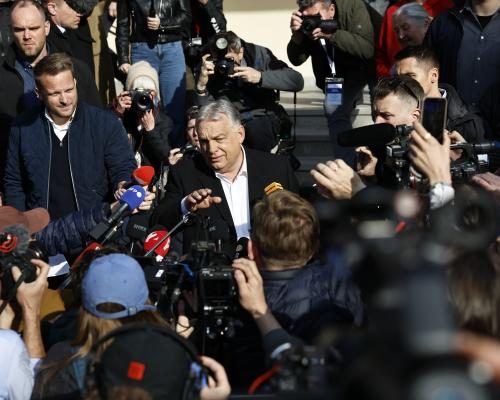
As Hungarians head to the polls on April 12, they face a crucial decision that could mark the end of Viktor Orbán's 16-year rule. Polls indicate a strong desire for change, with 77% of voters supporting EU membership and a significant portion demanding a new approach to Hungary's relationship with Brussels. This election is not just about party allegiance; it's a referendum on the nation's identity and its commitment to European values.
Strong Support for EU Membership Amid Discontent
Despite Viktor Orbán's years of anti-EU rhetoric, a recent survey by the European Council on Foreign Relations (ECFR) reveals an overwhelming 77% of Hungarians still back their country's membership in the European Union. Surprisingly, even among Orbán's own Fidesz party, 65% of voters support remaining in the EU, with 64% expressing trust in the bloc. In a notable shift, 68% of respondents are calling for at least some changes in Hungary's engagement with the EU. Originally reported by The Guardian.
This growing desire for recalibration is evident as Orbán has consistently positioned the EU as an adversary. His administration has faced backlash over multiple issues, including judicial independence, migration policies, LGBTQ+ rights, and support for Ukraine, leading to the suspension of billions in EU funding. This has led to an unprecedented mobilization among voters, with long lines reported at polling stations.
A Historic Election Moment
April 12 marks 23 years since Hungary's citizens voted to join the EU, drawing parallels between the two pivotal moments in the nation's history. Anita Orbán, a key figure in the opposition Tisza party, articulated the stakes, saying, "Now, on 12 April, once again, voters are not simply choosing between parties, but deciding the direction, identity, and future of Hungary." This sentiment underscores the election's potential to redefine Hungary's political landscape.
While the desire for change is most pronounced among supporters of Péter Magyar, the centre-right candidate whose Tisza party has overtaken Fidesz in polls, even 45% of Fidesz voters are calling for a shift. The election thus presents a unique opportunity to challenge Orbán's dominance and question the trajectory he has set for Hungary since he first took office in 2010.
The Legacy of Viktor Orbán
Viktor Orbán has become a controversial figure, often described as Europe's longest-serving leader and a champion of "illiberal democracy." Since taking power, he has systematically dismantled checks and balances, manipulating election laws and consolidating control over media and judiciary. His governance style has drawn criticism for eroding the rule of law, as he has appointed loyalists to key positions, effectively transforming Hungary into a state where dissent is often silenced.
Additionally, Orbán's alignment with far-right movements across Europe has positioned Hungary as a significant player in a broader nationalist agenda. His administration has fostered ties with leaders like Slovakia's Robert Fico and France's Marine Le Pen, amplifying Hungary's influence beyond its size within the EU. With accusations of sharing confidential EU information with Russia emerging, Orbán's foreign policy has increasingly come under scrutiny, particularly as he continues to resist sanctions against Moscow.
The Global Implications of Hungary's Vote
As the election unfolds, its ramifications extend far beyond Hungary. Orbán's governance style and anti-EU stance have captured the attention of international observers, making this election one of the most consequential within the EU this year. With Hungary contributing only 1.1% of the EU's GDP and 2% of its population, its political climate has nonetheless resonated throughout the continent.
As voters cast their ballots, the world watches closely. This election could either cement Orbán's legacy or signal a significant political shift. Whatever the outcome, the results will undoubtedly shape Hungary's future relationship with the EU and influence broader trends within European politics.
With early turnout suggesting a robust voter engagement, Hungary stands at a crossroads. The decision made today will echo throughout the nation for years to come, as citizens weigh their desire for change against the legacy of a leader who has defined their country for over a decade.
Originally reported by The Guardian. View original.