
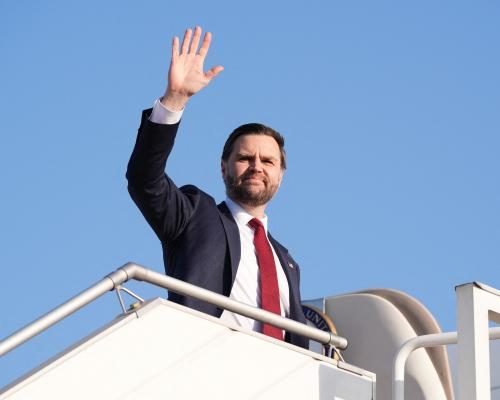
High-stakes negotiations aimed at resolving the ongoing conflict between the United States and Iran have collapsed following marathon talks in Islamabad. After a lengthy 21-hour session, U.S. Vice President JD Vance announced that the U.S. delegation would be leaving Pakistan without reaching a peace agreement with Iranian officials. This marks a significant setback in efforts to end the violence that has gripped the region.
Trump's Naval Blockade Strategy Suggested
While President Donald Trump has not formally addressed the breakdown of the peace talks, he shared an article on his Truth Social platform proposing a naval blockade as a possible strategy against Iran. The article, authored by veteran journalist John Solomon and published on the conservative Just the News website, suggests that Trump could leverage U.S. naval forces to counter Iran's influence over the critical Strait of Hormuz. The article cites experts who advocate for this approach, emphasizing the strategic importance of the strait, through which approximately one-fifth of the world's oil supply passes. Originally reported by The Guardian.
Australia's Foreign Affairs Minister, Penny Wong, expressed disappointment over the failure of the talks, urging all parties to return to negotiations as a priority. "It is disappointing that the Islamabad talks between the United States and Iran have ended without agreement. The priority now must be to continue the ceasefire and return to negotiations," Wong remarked. She emphasized the need for a swift resolution to prevent further human suffering and economic repercussions globally.
Iran's Response and Future Negotiations
The Iranian foreign ministry characterized the discussions in Islamabad as occurring in an atmosphere of mistrust, with officials expressing skepticism about the feasibility of reaching an agreement in a single session. An Iranian spokesperson stated that further contact and consultations with Pakistan and other regional allies would continue, highlighting the complex dynamics at play. The Iranian perspective suggests that as long as the U.S. maintains what they consider unreasonable demands, there will be no advancement in negotiations.
Pakistan's Foreign Minister, Ishaq Dar, underscored the importance of upholding the ceasefire agreement that currently exists between the two nations. "It is imperative that the parties continue to uphold their commitment to ceasefire," he stated, reflecting Pakistan's role as a facilitator in the dialogue process. The breakdown of talks represents a critical juncture, as both nations have previously agreed on the necessity for a ceasefire to prevent further escalation of the conflict.
Calls for Peace from Religious Leaders
In light of the failed negotiations, Pope Leo XIV entered the international discourse, advocating for an end to war and criticizing the leaders' pursuit of what he termed the "delusion of omnipotence." During evening prayers at St. Peter's Basilica, he implored for peace, emphasizing the human cost of continued conflict in the region.
Cardinal Robert McElroy, the Archbishop of Washington and a close ally of the pope, urged Catholics to take civic action against the war on Iran. He called upon his congregation to advocate for peace with their representatives and leaders, stressing that mere prayer isn't sufficient. "We must also act. For it is very possible that the negotiations will fail because of recalcitrance on both sides, and the president will move to re-enter this immoral war," McElroy warned, urging a collective response against further military intervention.
Implications for Global Oil Supply
The Strait of Hormuz remains a vital chokepoint for global oil shipments, making the situation even more precarious. The U.S. has indicated that the reopening of this strait is a primary condition for ceasing hostilities in the region. Reports suggest that Iran is in no rush to negotiate further, as long as the U.S. does not offer a "reasonable deal." This ongoing stalemate raises concerns over the potential for renewed hostilities that could further destabilize the region and disrupt global oil markets.
As the situation unfolds, the international community watches closely. With both sides entrenched in their positions, the prospect of renewed negotiations appears uncertain. The collapse of the Islamabad talks signifies a crucial moment in U.S.-Iran relations, and how both nations navigate this impasse may shape the geopolitical landscape in the coming months.
Originally reported by The Guardian. View original.