
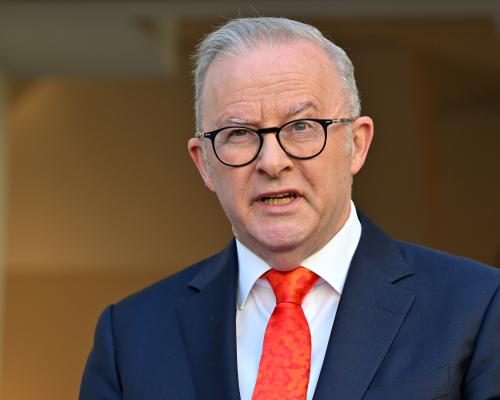
Australian Prime Minister Anthony Albanese has called for an urgent resumption of peace negotiations to quell the escalating Middle East conflict, emphasizing the critical need for the full reopening of the strait of Hormuz to ensure free navigation for all nations. His comments come just hours after U.S. President Donald Trump announced plans to implement a blockade of the strategic waterway, which is crucial for global oil transport.
Albanese's Call for Peace Talks
In a statement made earlier today, Albanese stressed the importance of diplomatic discussions aimed at de-escalating the situation in the Middle East. "We want to see the strait of Hormuz opened and with freedom of navigation taking place, so obviously, the lack of a resolution in the negotiations that took place on the weekend were disappointing," he remarked. The Prime Minister's comments followed a failed round of talks in Pakistan, facilitated by U.S. Vice President J.D. Vance. Originally reported by The Guardian.
Albanese's call to action highlights Australia's position on the conflict, as he urged both Washington and Tehran to return to the negotiating table to find a peaceful solution. He expressed hope for a diplomatic path forward, stating, "We want to see de-escalation and we want to see those negotiations resumed." This reflects Australia's broader commitment to international stability and peace in the region.
Escalating Military Threats
The urgency of Albanese's plea comes Amid Escalating Tensions, as President Trump threatened military action against Iran should the country refuse to abandon its nuclear program. Trump announced that the U.S. Navy would begin blockading all vessels attempting to navigate the strait beginning Tuesday morning, Australian time. The strait is a vital shipping route, with approximately 20% of the world's oil supplies passing through it.
Iran's Revolutionary Guard swiftly responded to Trump's statements, warning that any attempts to enforce a blockade would be considered a violation of the existing ceasefire. They asserted that the strait remains under Iranian control, further complicating the situation. As the potential for conflict looms, global oil markets are on high alert, with many fearing disruptions in supply due to Iranian drone strikes and underwater mines.
Australia's Military Readiness
Amid these rising tensions, Albanese announced the appointment of Vice Admiral Mark Hammond as the new chief of the Australian Defence Force, set to take over in July. Hammond asserted that the Australian Navy is prepared to contribute to international efforts aimed at reopening the strait, should the government decide to take action. "The navy is ready as it ever has been," he stated, highlighting that eight out of ten major combatant ships are currently deployed and equipped with advanced radar and missile systems.
Despite Trump's remarks singling out Australia as not contributing to the U.S. efforts, Albanese reiterated that the Australian government is focused on diplomatic solutions rather than military engagement. The Prime Minister remains clear that any military response should only be considered if a formal request is made, which has not yet occurred.
Humanitarian Concerns Amid Conflict
Albanese also expressed his sympathies for the humanitarian impact of the ongoing conflict, particularly on the Lebanese population affected by the fighting between Israel and Hezbollah militants. "I feel for grieving families who have lost innocent relatives and friends, wherever that occurs," he said, underscoring the broader implications of the conflict on developing nations reliant on fuel for essential needs.
In a move towards diplomatic resolution, Lebanon and Israel are scheduled to hold their first discussions at the U.S. State Department on Tuesday, focusing on a possible ceasefire and broader peace talks. Meanwhile, Australian Energy Minister Chris Bowen announced that 57 fuel shipments, including crude oil and jet fuel, are currently en route to Australia. The government is taking steps to ensure fuel supply stability without relying on the reopening of the strait.
As the situation in the Middle East continues to evolve, Albanese and Foreign Minister Penny Wong are set to visit Brunei and Malaysia later this week, reinforcing Australia's commitment to securing future fuel supplies. The Australian government remains vigilant as it navigates the complex geopolitical landscape and the pressing need for peace in the region.
Originally reported by The Guardian. View original.