
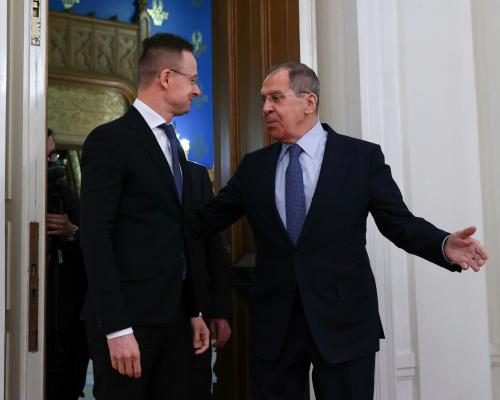
France has voiced strong criticism against Hungary, accusing it of undermining the unity essential for European Union member states. This condemnation follows the emergence of leaked audio recordings featuring Hungary's Foreign Minister Péter Szijjártó discussing potential collaboration with Russian officials regarding Ukraine's EU accession. French Foreign Minister Jean-Noël Barrot stated this behavior reflects a "betrayal of the solidarity required between countries of the European Union," highlighting the critical nature of unity as global powers shift.
Leaked Recordings Spark Outrage
The controversy erupted when investigative reporters released recordings in which Szijjártó appeared to offer to send a document to Russian Foreign Minister Sergei Lavrov about Ukraine's EU accession process. Szijjártó reportedly assured Lavrov, "I will send it to you. It's not a problem," after Lavrov expressed interest in obtaining a document concerning minority languages in Ukraine's EU negotiations. The implications of these discussions have raised alarms in Brussels, where EU officials are already wary of Russian influence in Eastern Europe. Originally reported by The Guardian.
Barrot emphasized the necessity of solidarity among EU states, stating, "If we want to be strong in a world where new empires are rising, then we must be united and we must stand in solidarity." This sentiment resonates particularly in light of ongoing tensions between the EU and Russia, especially following the invasion of Ukraine. The French minister's remarks come as Hungary's relationship with the Kremlin continues to be called into question, especially within the wider context of European security.
Orbán's Stance Amid Criticism
In the face of rising discontent, Hungarian Prime Minister Viktor Orbán has pushed back against allegations of closeness to Russia. During a recent rally, he stated that it was not the Russians but U.S. Vice President Kamala Harris who endorsed him, suggesting that Hungary remains committed to Western alliances. Orbán, serving his fourth consecutive term, has cultivated a narrative that aligns closely with certain factions of the U.S. Republican Party, particularly concerning immigration policies.
Orbán also expressed disappointment at the shifting political landscape in Western Europe, claiming that traditional allies like the German Christian Democrats have become increasingly left-leaning. He declared, "Today our strongest anchor to the western world is not our sister parties in Germany, but the Republicans in the U.S., with whom we are cooperating." This statement underscores Hungary's pivot toward a more right-leaning coalition beyond its European partners.
Regional Reactions and Broader Implications
The fallout from these revelations extends beyond France. Poland's Prime Minister Donald Tusk described the leaked recording as "really beyond shocking," further complicating Hungary's diplomatic relations within the EU. Tusk's comments reflect a growing frustration among member states over Hungary's perceived deviations from EU collective norms and its flirtation with Russian influence.
This emerging rift raises critical questions about the future of EU cohesion. As the bloc faces challenges from rising authoritarianism and external pressures, the need for a united front becomes paramount. Critics argue that Hungary's actions jeopardize not just its own standing within the EU but also the integrity of the alliance as a whole.
Looking Ahead: Hungary's Political Landscape
As Hungary gears up for its upcoming elections, the atmosphere is charged with uncertainty. Polls indicate that Orbán may face significant challenges, with opposition parties gaining traction amid public discontent regarding various domestic issues. The extent to which the leaked recordings and subsequent fallout will influence the electorate remains to be seen.
Political analysts are closely watching whether Hungarian voters will continue to support Orbán, whose administration has relied on a populist narrative that has resonated with many citizens. However, with increasing scrutiny from fellow EU nations and the potential ramifications of foreign policy decisions, the political landscape in Hungary could be on the brink of significant change.
Originally reported by The Guardian. View original.