
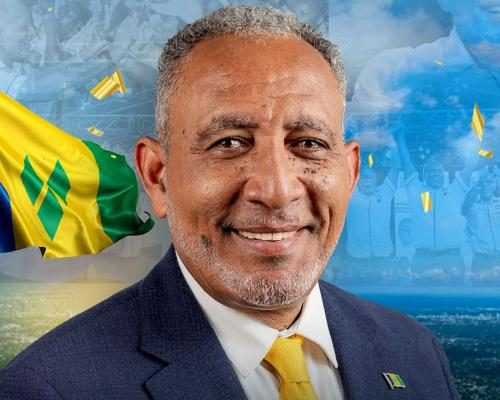
The government of St Vincent and the Grenadines has postponed a contentious plan to amend the constitution, specifically a section that raises questions about the eligibility of certain parliament members. This decision follows significant public discontent, including protests and online backlash, against the proposed changes aimed at clarifying citizenship eligibility for members of parliament. The amendments were particularly scrutinized as they were seen as potentially shielding current officials from legal challenges regarding their dual citizenship status.
Public Outcry Prompts Government Reconsideration
On Tuesday, the government announced that it would delay two constitutional amendment bills scheduled for debate in parliament. The proposed amendments were intended to address a section of the 1979 constitution that defines the citizenship criteria for parliament members. The bills were introduced after the opposition filed election petitions questioning the eligibility of Prime Minister Godwin Friday and MP Dwight Fitzgerald Bramble, both of whom hold Canadian citizenship alongside their Vincentian nationality. Originally reported by The Guardian.
Amid mounting public dissatisfaction, including demonstrations near the parliament where protesters displayed placards with slogans such as "constitutional change without the voice of the people" and "Friday and Bramble protecting their Canadian passports," Prime Minister Friday acknowledged the need for further public dialogue. He stated, "We will not be proceeding any further now at this point until we have had these full responses from the public debate on these two very important matters."
Legal Concerns Over Constitutional Amendments
The core of the controversy revolves around a specific provision in the constitution that could disqualify individuals from being elected or appointed as members of parliament if they have acknowledged allegiance to a foreign power. This issue gained traction following a high-profile case involving Denzil Douglas, the former prime minister of St Kitts and Nevis, who was ordered to vacate his parliamentary seat in 2020 after acquiring a Dominican diplomatic passport.
Legal representatives for the petitioners, including former Trinidad and Tobago Prime Minister Stuart Young, expressed confidence in the merits of the election petitions, arguing they rest on a sound interpretation of constitutional law. The proposed amendments sought to retroactively limit the definition of "foreign power or state" specifically to non-Commonwealth nations, thereby allowing dual citizens from Commonwealth countries to serve in public office without disqualification.
Political Ramifications and Expert Opinions
The debate over these amendments has sparked fears of a potential constitutional crisis. Former Prime Minister Ralph Gonsalves warned that the government's actions could undermine the rule of law and judicial independence. He emphasized the importance of maintaining electoral trust within the democratic framework of the country.
Legal expert Adrian Odle raised significant concerns regarding the timing of the amendments, suggesting that altering the legal meaning of the constitution while a related case is pending poses serious ethical questions. "When a government tries to change the legal meaning of the constitution while a case on that very issue is already before the court, the public is entitled to ask whether this is genuine law reform or an attempt to resolve a political problem after the fact," he articulated.
In response to the criticisms, government senator Jemalie John defended the amendments as necessary clarifications of the term "foreign power." He asserted that it is the responsibility of parliament, rather than the judiciary, to address ambiguities to protect the democratic choices of voters.
Regional Context and Ongoing Controversies
The dual citizenship debate is not unique to St Vincent and the Grenadines; it reflects a broader regional tension regarding citizenship laws in the Caribbean. Last year, during Jamaica's national elections, opposition leader Mark Golding faced scrutiny over his dual citizenship status, prompting him to relinquish his British citizenship amid concerns about his commitment to Jamaican sovereignty.
Calistra Farrier, a seasoned journalist and president of the Media Workers Association of Grenada, commented on the ongoing debates surrounding citizenship. She noted, "How do small states reconcile these constitutional frameworks inherited from our independence period? There's been very little constitutional reform in the islands over the years. How do we reconcile that with the changing realities, the modern realities that we now live in - for instance, dual citizenship, that is very common now?"
As the government of St Vincent and the Grenadines takes a step back to reassess its approach to these constitutional amendments, the public awaits further discussions that may shape the future of citizenship and parliamentary eligibility in the nation.
Originally reported by The Guardian. View original.