
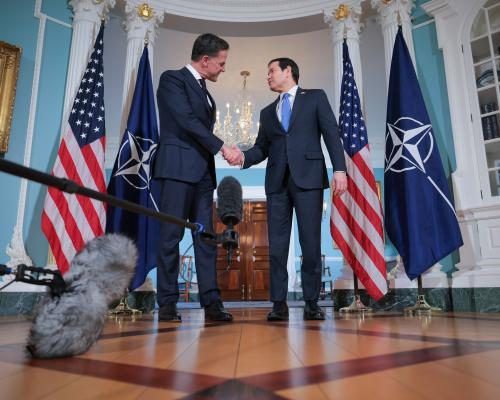
In a revealing discussion following a private meeting in Washington, NATO Secretary General Mark Rutte disclosed that former President Donald Trump expressed clear disappointment over the refusal of U.S. allies to join the military campaign against Iran. The meeting, which took place on Wednesday, comes at a critical juncture, with tensions between the U.S. and Iran escalating sharply.
Rutte, who spoke to CNN after the meeting, described the dialogue as "very frank, very open" between two leaders who share a cordial relationship. However, he refrained from confirming whether Trump specifically mentioned his threat to withdraw from NATO over the lack of support regarding the Iran conflict. "He clearly told me what he thought of what happened over the last couple of weeks," Rutte said, indicating the gravity of Trump's sentiments while stressing that the conversation was nuanced. Originally reported by The Guardian.
Fragile Ceasefire Agreement Heightens Tensions
The meeting followed the announcement of a fragile Two-week Ceasefire between the U.S. and Iran, which includes provisions for the reopening of the strategic Strait Of Hormuz. The ceasefire was reached after Trump issued stern warnings to Iran, threatening to target its civilian infrastructure if it failed to comply with U.S. demands for safe passage through the strait by a Tuesday evening deadline. This diplomatic maneuver underscores the precarious nature of the situation, especially given that the closure of the strait has contributed to a significant spike in global oil prices.
Trump's escalating rhetoric against NATO has been a consistent theme throughout his presidency, particularly as he expressed dissatisfaction with the alliance's response to the Iran conflict. Just prior to meeting with Rutte, Trump referred to NATO as a "paper tiger" and suggested that he might consider withdrawing the U.S. from the alliance if member countries continued to ignore his calls for military assistance in the region. The frustration stems not only from the Iran conflict but also from historical grievances, such as NATO's lack of support for his controversial proposal to purchase Greenland.
Political Backlash and Legislative Constraints
While Trump's sentiments were aired during his meeting with Rutte, it remains uncertain whether he discussed his potential withdrawal from NATO in detail. White House Press Secretary Karoline Leavitt acknowledged that the topic was on the agenda but did not elaborate on the specifics. During his first term, Trump hinted at the possibility of leaving NATO unilaterally, but legislation passed in 2023 prohibits any U.S. president from withdrawing without congressional approval. This law was notably championed by Trump's current Secretary of State, Marco Rubio, who met separately with Rutte earlier in the day.
Senator Mitch McConnell, a prominent Republican voice and member of the committee overseeing defense spending, issued a statement reaffirming the importance of NATO. He reminded critics that following the September 11 attacks, NATO allies had sent troops to fight alongside American forces in Afghanistan and Iraq. McConnell urged Trump to be "clear and consistent" regarding the alliance, emphasizing that nurturing grudges with allies could hinder efforts to deter adversaries like Iran and Russia.
International Response and Future Implications
The international response to the Iran conflict has been mixed, with several NATO allies, including Spain and France, restricting the use of their airspace and military facilities for U.S. operations. However, a coalition of nations has indicated a willingness to support international efforts to secure the Strait of Hormuz once the conflict subsides. British Prime Minister Keir Starmer, who has often been at odds with Trump, is scheduled to visit the Gulf region to support the ceasefire, indicating the UK's commitment to diplomatic solutions.
Trump's ongoing criticisms of NATO, particularly in the context of the Iran war, highlight a broader narrative of discontent with international alliances. His insistence that securing the Strait of Hormuz is not solely the U.S.'s responsibility reflects a transformative approach to American foreign policy, where multilateralism is often questioned. As the situation evolves, the future of NATO and U.S. military engagements abroad will remain critical discussions among American lawmakers and their international counterparts.
Originally reported by The Guardian. View original.