
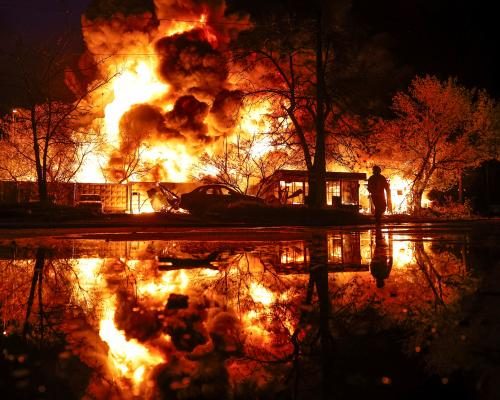
In a shocking escalation of violence, Ukraine endured a series of deadly strikes overnight, leading to the death of 16 individuals and injuries to over 100 others. The attacks, which targeted major cities such as Kyiv, Dnipro, Odesa, and Kharkiv, were carried out using a barrage of nearly 700 drones and 19 ballistic missiles. Ukrainian President Volodymyr Zelenskyy responded with a firm condemnation of Russia's actions, stating that the nation "does not deserve any easing.. or lifting of sanctions" amidst this ongoing conflict.
European Leaders React to the Attacks
European Council President António Costa characterized the strikes as "horrendous," emphasizing that they were not only indiscriminate but also targeted first responders arriving at the scene to provide aid. Costa pointed out, "As people slept in their homes, the cities of Kyiv, Dnipro, Odesa, and Kharkiv were struck by dozens of ballistic missiles and hundreds of drones." He accused Russian forces of conducting deliberate follow-up attacks aimed at emergency services, complicating rescue efforts and increasing civilian casualties. Originally reported by The Guardian.
In his statement, Costa underscored the importance of international solidarity with Ukraine, declaring that Russia's military aggression has ultimately failed and now resorts to terrorizing civilians. He urged that the international community must stand united in demanding an end to this "war of terror" unleashed by Russia.
Zelenskyy Calls for Stronger Defensive Measures
President Zelenskyy expressed deep concern over the Russian strategy, which he described as a relentless bet on war. "Russia is betting on war, and the response must be exactly that: we must defend lives with all available means, and we must also apply pressure for the sake of peace with the same full force," he stated. The Ukrainian leader reiterated the necessity of maintaining and even intensifying sanctions against Russia, insisting that any normalization of relations would only embolden further aggression.
The nighttime assault was particularly devastating, striking critical infrastructure and civilian areas, which has raised alarm internationally. Zelenskyy pointed out the scale of the attack, indicating that nearly 700 drones were deployed alongside the missiles, primarily aiming at the capital, Kyiv, and other significant urban centers. This level of military engagement underscores a shift in Russia's tactics, moving from strategic military targets to civilian populations.
International Response and Future Implications
As the situation unfolds, NATO Secretary-General Jens Stoltenberg is set to meet with European Commission President Ursula von der Leyen, while Germany's Friedrich Merz will host Ireland's Micheál Martin in discussions about the ongoing crisis. The meetings are expected to further solidify the stance of European nations against Russia's escalating military operations.
The international community is closely monitoring the situation, with many nations reaffirming their commitment to support Ukraine through military and humanitarian means. Sanctions against Russia remain a critical tool for exerting pressure, as leaders in Europe recognize that any easing of these measures could lead to further acts of aggression.
In light of the recent strikes, there's a growing consensus that stronger defensive measures and continued sanctions must be prioritized. Experts argue that only through sustained international pressure can peace be pursued effectively, emphasizing that a united front is crucial to countering Russia's military ambitions.
Humanitarian Crisis Deepens as Violence Escalates
The humanitarian implications of the recent attacks are significant, as local hospitals face overwhelming numbers of casualties and injuries. The attacks have exacerbated an already dire situation for many Ukrainians, who have been living under the threat of violence for an extended period. Emergency services are stretched thin, struggling to respond to the immediate needs of the affected population.
Furthermore, the psychological toll on civilians is profound, with many enduring the trauma of repeated attacks and living in constant fear. The international community's response to this crisis will play a crucial role in determining the future stability of the region.
As the world watches, the call for accountability and justice for the victims of these attacks grows louder. Zelenskyy's assertion that "pressure on Russia must work" resonates deeply as Ukraine navigates this turbulent period, striving for peace while preparing for continued conflict.
Originally reported by The Guardian. View original.