
The Netherlands has announced a significant investment of 248 million euros ($293 million) aimed at producing drones to bolster Ukraine's defense against ongoing Russian aggression. Dutch Defence Minister Dilan Yesilgoz-Zegerius made the announcement on Wednesday during a meeting with NATO counterparts and Secretary General Mark Rutte in Berlin. "Drones play a crucial role on the modern battlefield. Ukrainians deploy them with incredible skill to repel the incessant Russian attacks," she stated, emphasizing the importance of this technology in the current conflict.
Strategic Collaboration with Ukraine
Minister Yesilgoz-Zegerius highlighted the collaborative efforts between the Netherlands and Ukraine, underscoring that this partnership not only strengthens Ukraine's defense capabilities but also provides opportunities for Dutch businesses. "Thanks to the good cooperation with Ukraine, we are learning directly from this. This also offers opportunities for our business community," she noted. The drones are set to be manufactured in both the Netherlands and Ukraine, reflecting a joint commitment to enhancing military capabilities. Originally reported by The Guardian.
During the Berlin meeting, Rutte and other key allies reiterated their commitment to supporting Ukraine amid concerns that international attention might wane due to escalating conflicts elsewhere, such as the U.S.-Israel tensions with Iran. As the war in Ukraine approaches its four-year mark, the urgency of sustaining military assistance has never been more critical.
Russia's Response to Increased Drone Support
In reaction to the Netherlands' announcement, the Russian defense ministry issued a warning regarding the European Union's plans to boost drone supplies to Ukraine. Officials indicated that this escalation would further entrench European nations in the conflict, suggesting that the production and supply of drones to Ukraine could be viewed as a provocative step. The ministry released a list of factories across several European countries-including the UK, Germany, Spain, Italy, Israel, and Poland-accusing them of manufacturing drone components, thereby broadening the scope of the conflict.
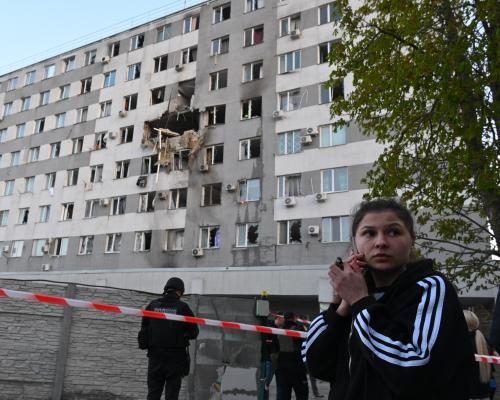
Meanwhile, ground realities in Ukraine remain dire, with Russian forces conducting missile strikes on civilian areas. The mayor of Kyiv, Vitali Klitschko, reported that a recent strike resulted in the tragic death of a 12-year-old child, along with injuries to ten others, including emergency responders. He described the destruction, which included a large fire in the Obolon district and debris scattered across the city.
Advancements in Ukrainian Military Strategy
Amid the ongoing violence, Ukraine's defense ministry announced a new operational model that integrates drone warfare with infantry tactics. This innovative approach has reportedly led to successful territorial gains against Russian forces. Top commander Oleksandr Syrskyi stated that Ukrainian troops regained control of nearly 50 square kilometers (19 square miles) in March, building on earlier successes achieved since the beginning of the year.
Drones have proven to be effective tools in this conflict, with both Ukrainian and Russian forces investing in technologies to enhance their aerial capabilities and defenses. A Ukrainian unit recently disclosed that it has executed over 100 attacks on the front lines utilizing ground-based robotic systems. These operations have not only targeted enemy personnel but also dismantled command posts and other vital infrastructure.
International Commitment Amid Broader Conflicts
The commitment from the Netherlands and other NATO allies comes at a time when broader geopolitical tensions are affecting global security dynamics. The recent outbreak of violence in the Middle East has raised concerns about the potential for diminished international support for Ukraine. As the U.S. has grappled with its own foreign policy challenges, including a focus on Iran, observers worry that the momentum behind support for Ukraine might falter.
Despite these challenges, the resolve among NATO allies remains strong, with calls for increased military aid resonating in recent discussions. The commitment to drone production exemplifies a focused effort to maintain operational advantages on the battlefield. As the situation evolves, the importance of coordinated international support for Ukraine cannot be overstated, especially as both sides adapt to the changing landscape of modern warfare.
Originally reported by The Guardian. View original.