
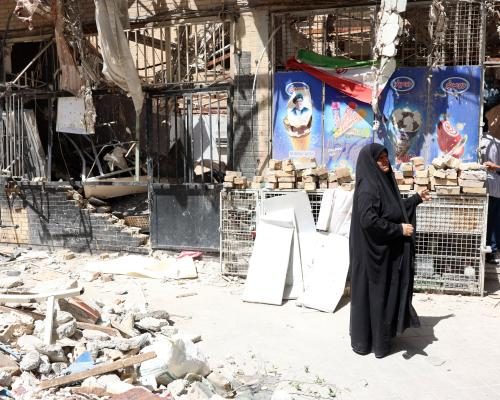
As the Middle East grapples with ongoing tensions, former U.S. President Donald Trump announced a significant diplomatic development, stating that Israel and Lebanon will engage in face-to-face talks on Thursday. This marks the first formal negotiations between the two countries in over three decades, raising hopes for a potential ceasefire in the region's escalating conflict. Amid this backdrop, the U.S. has imposed new sanctions on Iran's oil sector, further complicating an already volatile situation.
Historic Talks Between Israel and Lebanon
In an unexpected move, President Trump revealed on Truth Social that the leaders of Israel and Lebanon will meet for talks, describing it as an effort to create "a little breathing room" between the nations. This development comes after more than 34 years of no direct communication, highlighting the significance of this diplomatic initiative. While Trump did not disclose the identities of the leaders involved, the Financial Times reported that a ceasefire announcement could be imminent, backed by Lebanese officials. Originally reported by The Guardian.
Israeli Prime Minister Benjamin Netanyahu is reportedly considering a truce with Lebanon, pressured by U.S. diplomatic efforts. The U.S. has played a vital role in facilitating these discussions, seeking to alleviate tensions that have escalated amid the ongoing war with Iran. The Israeli military continues its operations, having conducted strikes in southern Lebanon, where four rescue workers were tragically killed in recent attacks.
U.S. Sanctions Target Iran's Oil Industry
In tandem with the diplomatic talks, the U.S. has tightened its sanctions against Iran's oil sector. The Treasury Department announced that it would target over two dozen individuals, companies, and vessels linked to the petroleum shipping network of Mohammad Hossein Shamkhani, a prominent figure in Iran's oil transport infrastructure. This move aims to further restrict Iran's ability to export oil amidst the ongoing conflict.
White House Press Secretary Karoline Leavitt emphasized that negotiations between the U.S. and Iran remain "productive and ongoing," dismissing reports that the U.S. sought an extension of its ceasefire agreement with Iran, which is set to expire next week. Leavitt expressed optimism about the potential for a deal, indicating that a second round of U.S.-Iran negotiations could take place in Islamabad.
Global Economic Impacts and Jet Fuel Supply Concerns
The ongoing conflict in the Middle East has had significant repercussions on global markets, particularly concerning jet fuel availability. European airlines are facing warnings of imminent jet fuel shortages, with some airlines predicting disruptions to travel as the war continues to impact supply chains. The European Union is actively drafting measures to address a looming fuel crisis, given that approximately 75% of Europe's jet fuel is sourced from the Middle East.
Officials within the EU are working to maximize refinery output and develop strategies to mitigate the impacts of potential shortages. The Commission is set to introduce mapping of refining capacities across the EU and implement measures to ensure optimal utilization of existing facilities. With jet fuel prices soaring due to the blockade of the Strait of Hormuz, the aviation industry is feeling the pressure, leading to concerns over price hikes, flight cancellations, and grounded planes in the coming weeks.
Market Reactions and Broader Economic Outlook
On the financial front, Asian stock markets showed positive trends amid growing optimism about a ceasefire in the Iran conflict and potential diplomatic resolutions. Tokyo's Nikkei 225 surged by 2.4%, while South Korea's Kospi gained 2%, reflecting investor confidence in the evolving geopolitical landscape. However, caution remains as analysts warn that the broader global economic implications of the Iran war could impact China's substantial export-driven economy in upcoming months.
Despite the positive market reactions, concerns linger over the potential consequences of prolonged conflict in the Middle East. As the situation develops, the international community watches closely, hoping for a resolution that could stabilize both regional tensions and global economic repercussions. With the scheduled U.S.-Israel press conference on Operation Epic Fury set for Thursday morning, more insights into the military and diplomatic strategies may soon emerge.
As the Middle East stands on the brink of a potential diplomatic breakthrough, the outcomes of these negotiations could reshape the landscape, impacting not only regional stability but also global economic dynamics. The world is waiting to see whether these talks will yield lasting peace or if tensions will continue to escalate.
Originally reported by The Guardian. View original.