
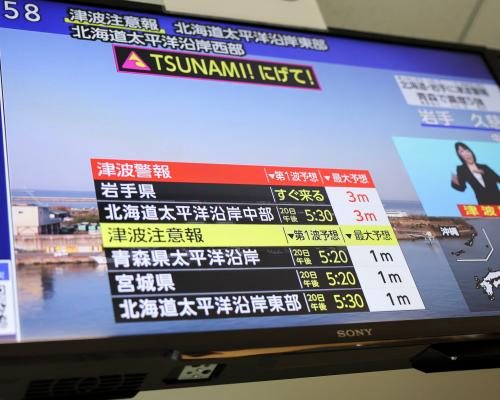
A powerful earthquake struck off the northern coast of Japan on Saturday, prompting a tsunami alert for several prefectures. The Japan Meteorological Agency reported the quake registered a preliminary magnitude of 7.5 and occurred at approximately 4:53 p.m. local time, with its epicenter located about 10 kilometers beneath the sea surface off the coast of Sanriku. Authorities warned that waves reaching up to 3 meters (10 feet) could impact the coastal regions of Iwate, Aomori, and Hokkaido.
In response to the natural disaster, Japanese Prime Minister Sanae Takaichi announced the establishment of an emergency task force to coordinate rescue and evacuation efforts. Takaichi urged residents in affected areas to prioritize their safety. "People in the coastal regions must evacuate to higher ground immediately," she said during a press conference aimed at reassuring the public amid rising concerns. Originally reported by The Guardian.
Broadcaster NHK showed footage of ships leaving Hachinohe port in Hokkaido as the tsunami warning flashed across screens. The urgency of the situation was palpable, as local authorities emphasized the importance of swift action. Many residents were seen rushing to evacuate, while others monitored updates on the situation via mobile devices. This proactive response illustrates the heightened awareness of tsunami risks in Japan, a nation that has experienced devastating tsunamis in the past.
Transportation Disruptions Across Northern Japan
As the earthquake rattled the northern region, bullet train services in Aomori were suspended due to the tremors. Kyodo News reported that the disruptions affected passengers looking to travel within the area and beyond. Train operators are working to assess the situation and ensure safety before resuming services. Travelers are advised to remain informed about the status of train operations as authorities handle the aftermath of the quake.
The suspension of rail services is a significant inconvenience, particularly for commuters and tourists alike. Many individuals rely on Japan's extensive rail network for timely transportation. Given the country's commitment to safety, it's expected that train services will hold off until thorough inspections confirm the integrity of the tracks and infrastructure.
Historical Context of Japan's Earthquake Preparedness
Japan is no stranger to seismic activity and has implemented rigorous building codes and emergency response protocols to mitigate the impacts of earthquakes. The nation's geographical position along the Pacific Ring of Fire makes it prone to frequent earthquakes and volcanic activity. The 2011 Tōhoku earthquake and tsunami tragedy remains fresh in the collective memory of Japan, leading to heightened awareness and preparedness for such events.
In light of this history, the government's immediate response to the recent quake reflects Japan's ongoing commitment to disaster readiness. Emergency management drills and public education campaigns have become integral to community resilience against natural disasters. Schools and local governments regularly conduct drills to prepare citizens for potential evacuations during seismic events.
Public Response and Community Resilience
The community response to the earthquake and tsunami alert illustrates the resilience of the Japanese people. Many individuals have taken to social media to share their experiences and to offer support to those in need. Local emergency services are mobilizing to assist vulnerable populations, including the elderly and individuals with disabilities, to ensure their safety during this critical time.
As the situation unfolds, local governments are coordinating with national authorities to provide timely information and resources to those affected. Community centers have been activated as shelters for evacuees, providing a safe space for individuals and families seeking refuge from potential tsunami waves. Volunteers are stepping up to assist in relief efforts, showcasing the spirit of solidarity that often emerges in times of crisis.
Looking ahead, authorities will continue to monitor the situation closely and issue updates as necessary. Citizens are encouraged to remain vigilant and to heed official warnings as they prioritize their safety. The interplay between natural disasters and human resilience is a profound aspect of Japan's identity, and this incident serves as yet another reminder of the importance of preparedness.
Originally reported by The Guardian. View original.