
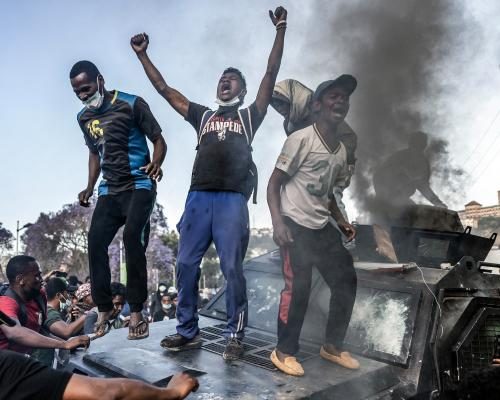
The recent arrests of four young activists in Madagascar have intensified fears among the nation's Gen Z protesters that the military government installed after last year's upheaval may not differ significantly from the regime it replaced. The activists-Herizo Andriamanantena, Miora Rakotomalala, Dina Randrianarisoa, and Nomena Ratsihorimanana-were detained on April 12 following their participation in a protest demanding a timeline for upcoming elections.
According to their lawyer, Aliarivelo Maromanana, the activists face serious accusations related to undermining state security and criminal conspiracy, which they all vehemently deny. "There's no evidence whatsoever," Maromanana asserted. The military regime, led by Colonel Michael Randrianirina since its coup in October 2025, has faced backlash from the very demographic that initially supported its rise to power. Randrianirina assumed leadership after widespread protests under the banner of Gen Z Madagascar, which called for an end to the previous government. Originally reported by The Guardian.
Protests and Arrests Raise Alarm
The unrest began escalating after two local councillors in the capital city of Antananarivo were arrested for protesting against the persistent water and electricity outages plaguing the region. Following the coup, these essential services have not improved significantly, leading to widespread dissatisfaction among young citizens. Elliot Randriamandrato, a leader in Gen Z Madagasikara, a group formed from the original protests, expressed the frustration felt by many: "For the moment, there's no real reforms that have been implemented by the government. That's maybe why everyone is so frustrated, because we don't see anything clear and visible."
On April 14, two of the arrested activists were released but required hospitalization shortly after their release, according to Maromanana. As of Friday, only Herizo Andriamanantena remained in custody. Local media have reported that the national police stated the activists were not harmed during their detention. However, the arrests have stirred worry among the youth, who had previously celebrated the departure of former President Andry Rajoelina as a victory for their movement.
Disillusionment with the New Regime
Initially, young protesters were jubilant when Rajoelina fled in October 2025, but many have since expressed disappointment with Randrianirina's administration. They feel that the new government has appointed officials from the old regime, perpetuating the cycle of corruption that they had fought to dismantle. Concerns have also been raised over the regime's growing ties to Russia, particularly following Randrianirina's visit to Moscow in February, where military support was reportedly discussed.
Ketakandriana Rafitoson, a board member of Transparency International Madagascar, voiced her concerns: "It is a pattern we saw under the previous administration and one that many hoped would be broken with the transition. So last Friday's protests were a test for this regime and they failed it." The growing discontent is palpable, with many young people feeling that the revolution they fought for has not yielded the promised changes.
Call for Constitutional Reforms
In light of the recent upheaval, many activists are now prioritizing constitutional reforms over the timeline for elections. Randriamandrato pointed out the need for clarity regarding constitutional consultations, emphasizing that it's during this process that crucial issues, such as electoral reform, need to be addressed. "It's currently a system that only permits people with more money to win," he remarked, stressing the necessity for a more equitable political framework.
The president's spokesperson, Harry Laurent Rahajason, has defended the regime's actions, stating that the presidency has no influence over police matters. He also mentioned ongoing investigations into corruption amounting to 3,811 billion ariary (approximately £679 million), which he linked to threats against the president. Rahajason further claimed that the recent unrest involved plots to set the national parliament on fire, showcasing the tensions underlying the current political climate.
International Concerns Over Military Support
Amidst these developments, international observers have raised alarms about Madagascar's growing dependence on foreign military aid. Reports indicate that the regime has received substantial donations of military equipment from Russia. Shely Andriamihaja, another member of Gen Z Madagasikara, expressed her group's apprehensions regarding the potential for foreign influence to undermine Madagascar's sovereignty. "We're very worried about the risk of new state capture from foreign countries," she stated.
As Madagascar navigates these turbulent times, the outlook remains uncertain. The initial enthusiasm surrounding the military's rise to power has dimmed, with many Gen Z activists demanding accountability and genuine reform. The future of Madagascar's political landscape hinges on whether the government can address these rising concerns or risk further disillusionment among its youth.
Originally reported by The Guardian. View original.