
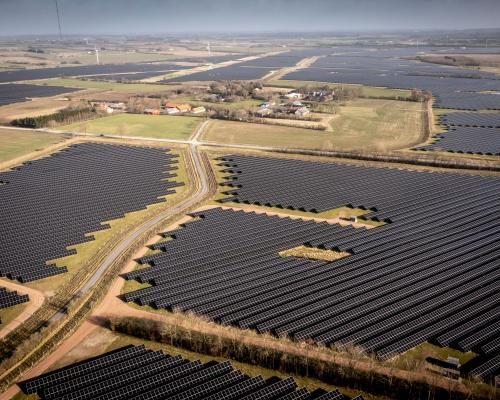
As Denmark gears up for national elections, a growing resistance to solar energy is emerging, particularly in rural areas where farmers fear industrial encroachment on their land. The narrative has shifted from a green revolution to a battle over farmland, with right-wing populist parties capitalizing on these sentiments. Inger Støjberg, the leader of the Denmark Democrats, encapsulated this sentiment in her 2024 speech, saying, "We say yes to fields of wheat and no to fields of iron!"
This backlash against solar energy, marked by the term jernmarker-meaning iron fields-was recognized as Denmark's word of the year. The opposition to solar projects has gained traction, prompting some municipalities to halt or cancel planned installations. This trend is particularly pronounced in areas where solar farms threaten to overshadow traditional farming landscapes. Originally reported by The Guardian.
Rising Opposition to Solar Power
Despite Denmark's reputation as a leader in renewable energy, generating 90% of its electricity from renewables, the rapid expansion of solar power has raised concerns among locals. As solar capacity tripled from 4% in 2021 to 13% in 2025, some rural communities found themselves encircled by solar panels, igniting fears of an aesthetic and economic crisis.
Critics argue that solar installations are unsightly, disrupt the natural environment, and contribute to declining property values in rural areas. Drone footage showing isolated farmhouses surrounded by solar fields has become a powerful image in the ongoing debate, symbolizing what many see as urban overreach and a disregard for rural livelihoods.
The Political Landscape Shifts
The political ramifications of this backlash are significant. Right-wing populist parties, notably the Denmark Democrats, have identified climate policy as a critical electoral issue, particularly among their rural voter base. Lukas Slothuus, a climate politics researcher, noted that the far right has recognized climate action as a potent battleground, focusing their messaging on the perceived threat to rural aesthetics and economic stability.
Recent municipal elections have reflected this shift, with voters increasingly siding against solar projects. In January, the Køge municipality canceled a planned renewable energy park, while Viborg's council opted to halt a solar farm project in Iglsø. Even in Samsø, known as the world's first island powered entirely by renewables, local councillors voted against a proposed solar park, signaling a broader discontent with solar energy's rapid expansion.
Support for Clean Energy Remains Strong
While there's mounting opposition to solar energy in rural regions, public support for a clean economy remains robust overall. A November poll indicated that 77% of respondents influenced by green energy projects supported them, although the numbers are drastically different among right-wing populist voters, where over 80% oppose solar developments.
Denmark Democrats politician Mads Fuglede argues that while the party supports the transition to a clean economy, they advocate for solar panels to be installed in urban areas rather than on farmland. "You can get your solar panels, but put them up where you live in the cities. There's no need to cover farmland," he stated, reflecting a growing sentiment among rural voters that they are being overlooked in the green transition.
Balancing Clean Energy with Local Concerns
The backlash against solar energy raises significant questions about how to integrate renewable energy projects with the interests of local communities. Henrik Stiesdal, an inventor known for his contributions to Denmark's wind energy sector, emphasized the need for developers to engage with rural populations more effectively. "The thing that has changed is that the rural areas feel that they are not part of the decision-making process," he remarked.
Some municipalities have chosen a quieter approach to advancing solar projects, opting for less public fanfare to avoid stirring local opposition. Camilla Holbech of Green Power Denmark noted that some politicians have been "green hushing," quietly pushing forward projects even as public sentiment turns against them.
The Danish solar landscape is rapidly evolving, but as the national elections approach, the tension between urban elites favoring renewable energy and rural communities guarding their landscapes will likely intensify. With the far right actively courting discontent over solar expansion, the outcome could significantly influence Denmark's energy future.
Originally reported by The Guardian. View original.