
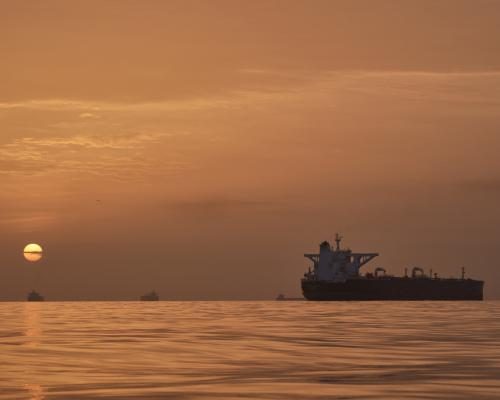
Oil prices surged on Monday as tensions in the Middle East escalated following Iran's recent closure of the Strait of Hormuz, just a day after reopening it. Brent crude jumped 5.8% to $95.64 per barrel, while West Texas Intermediate rose 6.4% to $87.90 per barrel. The renewed hostilities come amid a fragile ceasefire that faces increasing pressure from both sides.
Market Reactions to Hostilities
The rapid increase in oil prices reflects the market's response to the re-escalation of conflict in the region. As trading opened on Monday, Brent crude oil surged to $95.64 per barrel, marking a 5.8% increase. West Texas Intermediate also saw significant gains, rising 6.4% to reach $87.90 per barrel. In contrast, S&P 500 futures fell approximately 0.6%, while European futures declined by 1.1%. Despite these declines, equity markets in Asia displayed resilience, with Seoul, Taipei, and Tokyo indices posting gains. Notably, Taiwan's shares reached a record high, and Japan's Nikkei index climbed 1%. South Korea's Kopsi followed suit with a 1.4% increase. Originally reported by The Guardian.
However, caution looms over the markets. The National Australia Bank, the country's largest business lender, flagged a $500 million impairment charge, citing concerns that the ongoing conflict could lead to increased bad debts. This highlights the broader economic impact of the escalating situation.
Diplomatic Efforts Amid Rising Tensions
As the conflict continues, diplomatic efforts are underway. Reports indicate that Pakistan is preparing for a new round of talks between the US and Iran, despite the deteriorating situation. On Sunday afternoon, two giant US C-17 cargo planes landed at an airbase in Pakistan, carrying security equipment and vehicles for the US delegation's arrival. In Islamabad, municipal authorities have suspended public transport and heavy goods traffic in anticipation of the talks, while security measures have intensified near the Serena Hotel, the venue for last week's discussions.
Bahrain's King Hamad bin Isa Al Khalifa has ordered a review of citizenship for individuals deemed threats to the kingdom, reflecting the government's intensified crackdown on dissent during the ongoing conflict. The king emphasized the need for immediate action against those considered to have betrayed national security, including the potential revocation of citizenship. Bahrain, hosting the US Navy's 5th Fleet, has been one of the nations most affected by Iranian missile and drone attacks during the war.
Ceasefire Under Pressure as Hostilities Continue
The current ceasefire between the US and Iran, which has lasted for about two weeks, is increasingly at risk. Early on Monday, the US announced it had seized an Iranian cargo ship attempting to breach its blockade, prompting a stern warning from Iran of potential retaliation. Iranian state media reported that Tehran would not participate in further negotiations in Pakistan, citing the US's excessive demands and ongoing naval blockade as major obstacles. This statement reflects a growing frustration with Washington's approach.
President Donald Trump, in response to the developments, has threatened to destroy vital infrastructure in Iran if Tehran does not comply with US terms. He specifically mentioned that US negotiators would arrive in Islamabad on Monday evening amidst rising tensions. Leading the delegation are Vice President JD Vance, Middle East envoy Steve Witkoff, and Trump's son-in-law Jared Kushner.
Humanitarian Toll of the Ongoing Conflict
The humanitarian consequences of the conflict are severe and escalating. As the war enters its eighth week, it has claimed over 5,000 lives across several countries, with Iran suffering the highest casualties at more than 3,000 deaths. Additionally, Lebanon has reported over 2,290 deaths, while the toll in Israel stands at 23. Gulf Arab states have reported more than a dozen fatalities, including 15 Israeli soldiers in Lebanon and 13 US service members across the region. The ongoing violence underscores the urgent need for a lasting resolution to the crisis.
In summary, the geopolitical landscape in the Middle East remains fraught with tension as the US and Iran grapple with their respective positions. The potential for a meaningful peace agreement appears dim as each side's demands and retaliatory threats mount. The coming days will be crucial in determining whether diplomatic efforts can overcome the challenges posed by the current ceasefire.
Originally reported by The Guardian. View original.