
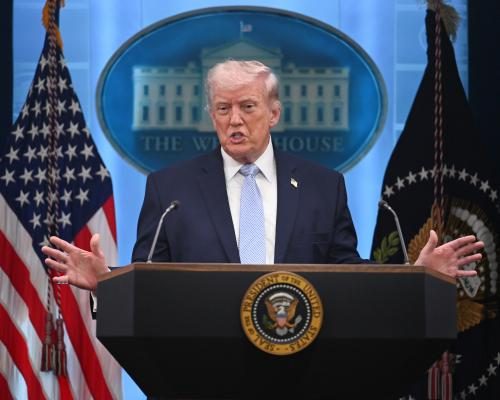
Donald Trump finds himself in a precarious position as the US-Israel military campaign in Iran stretches into its eighth week. Initially predicted to last just four weeks, the conflict has surpassed expectations, revealing the complexities of military engagement without a clear political outcome. US warplanes and Israeli forces initiated strikes aimed at dismantling Iran's leadership and military capabilities, yet Iran has not only survived but has retaliated, closing the Strait of Hormuz, a critical chokepoint for global oil trade.
Escalation of Conflict and Economic Repercussions
As the conflict drags on, the economic implications are becoming increasingly severe. The closure of the Strait of Hormuz has blocked around 20% of the world's oil supply, prompting a US blockade that is estimated to cost Iran approximately $500 million daily. This economic warfare has raised petrol prices in the US to nearly a four-year high, just as critical midterm elections approach. Analysts warn that these rising costs could bolster Democratic efforts to regain control of Congress, placing additional pressure on the Trump administration. Originally reported by The Guardian.
Aaron David Miller, a senior analyst at the Carnegie Endowment and former US diplomat, remarked, "This has gone from being a war of choice to a war of necessity." He emphasized that the ongoing conflict has escalated into a "global economic crisis which shows no signs of abating." The situation reflects a shift in the administration's focus from military objectives to economic constraints, complicating the path forward.
Negotiation Deadlock and Diminished Options
Despite the dire circumstances, finding a resolution remains elusive. One potential strategy could involve negotiating a temporary reopening of the Strait of Hormuz while postponing discussions regarding Iran's nuclear program, including the contentious issue of its highly enriched uranium stockpile. However, reports indicate that Trump is "unsatisfied" with Iran's recent proposals, which suggest that Tehran ties the reopening of the strait to monetary compensation for transit-a move that may set a troubling precedent.
The Trump administration's reluctance to engage in a deal that highlights its shortcomings in Iran complicates the diplomatic landscape. Previous negotiations have ended without resolution, and efforts to dispatch envoys such as Steve Witkoff and Jared Kushner were abruptly halted. Trump's public optimism, claiming that Iran is in a "state of collapse," contrasts sharply with the realities on the ground, where Iran's defiance continues to undermine US strategy.
Military Escalation: A Slippery Slope
With diplomatic avenues narrowing, Trump faces the daunting prospect of military escalation. One option would be to lead a military operation to reopen the Strait of Hormuz. This would likely involve deploying US naval forces to protect commercial shipping, echoing tactics used during the tanker wars of the 1980s. However, experts warn that modern conditions could make such operations significantly more perilous.
Dennis Blair, a former head of US Pacific Command, outlined a potential strategy in which US naval vessels would escort oil tankers, supported by destroyers and air power. Yet, he acknowledged the risks involved, stating that "a small number of the weapons fired by IRGC forces would penetrate the layered convoy defenses, inflicting damage and some casualties." The stakes are high, and any military engagement could lead to further entanglement.
The Path Ahead: A Dilemma for Trump
The Trump administration is now confronted with two troubling paths: either escalate military action or settle for a diplomatic agreement that may expose its failures regarding Iran. A full-scale assault on Iran's civilian infrastructure or an invasion could provoke retaliation and further destabilize the region, an outcome that many in Washington fear.
As Trump navigates this complex situation, the vacuum of leadership in Iran has compounded the challenges facing the US and its allies. The stakes are high, with potential repercussions not just for Iran and the US, but for global stability at large. With midterm elections looming and petrol prices rising, the administration's ability to forge a path forward remains uncertain.
Originally reported by The Guardian. View original.