
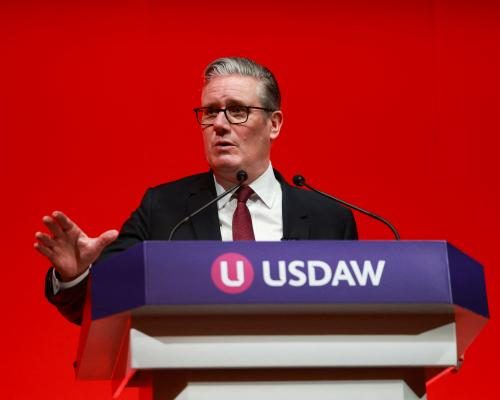
In a tumultuous week for UK politics, Prime Minister Keir Starmer finds himself under intense scrutiny following a challenging session in the House of Commons. As MPs continue to question his judgment regarding the appointment of Peter Mandelson as US ambassador, the Labour leader's future hangs in the balance, particularly with local and parliamentary elections looming.
Starmer's Leadership on the Line
Keir Starmer's leadership is increasingly viewed as precarious after he narrowly avoided an inquiry into allegations of misleading Parliament during a recent key vote. While nearly all Labour MPs rallied behind him, the atmosphere in Westminster suggests that his position is more fragile than ever. With the upcoming elections set for next week, Starmer faces the daunting challenge of addressing public dissatisfaction, which has placed him among the most unpopular prime ministers recorded. Originally reported by The Guardian.
One government minister candidly remarked, "He's in last chance saloon," a sentiment reflecting the urgency within the party to assess its future direction. Starmer, who celebrated a remarkable victory in the 2024 general election, now finds himself grappling with the fallout of his decisions, particularly regarding Mandelson, a figure tied to controversy.
Controversy Surrounding Mandelson's Appointment
The controversy erupted after reports revealed that Peter Mandelson, a close associate of convicted sex offender Jeffrey Epstein, had failed security vetting during the ambassadorial appointment process. Starmer has denied knowledge of these vetting failures, asserting that he would never have proceeded with Mandelson's appointment had he been aware. He maintains that the hiring process adhered to proper protocols, but skepticism among MPs is growing.
In a tense exchange in Parliament, opposition leaders Kemi Badenoch and Ed Davey criticized Starmer's handling of the situation, accusing him of attempting a "cover-up." The situation became more complex when Morgan McSweeney, Starmer's former chief of staff, admitted to his role in recommending Mandelson, expressing deep regret upon discovering the former ambassador's connection to Epstein. He described the revelation as akin to "having a knife through my soul." This admission has only intensified the pressure on Starmer.
Impending Local Elections Complicate Matters
As local and parliamentary elections approach, the pressure on Starmer escalates. Analysts predict that these elections could serve as a critical indicator of public sentiment towards his leadership. Kiran Stacey, the Guardian's policy editor, emphasized that Labour MPs are concerned about entering the next election cycle with Starmer at the helm, noting that many feel he is not the right leader to guide them through potential electoral challenges.
"Labour MPs are very depressed," Stacey stated. "They have mostly decided that they can't go into the next election with him as their leader and would like somebody else to do the job by then." The party is reportedly struggling to find consensus on how and when to initiate a leadership change, as well as who might succeed Starmer.
Public Sentiment and Starmer's Stubbornness
Starmer's popularity has plummeted, with polls indicating that around half of the electorate believes he should resign. While these numbers may not reach the lows seen at the end of Boris Johnson's tenure, the situation is still dire. Despite this, Starmer has shown a reluctance to bow to external pressures. Those familiar with him describe him as "extremely stubborn" and suggest that he may not be swayed by declining approval ratings.
Yet, the potential for a significant electoral defeat could alter his resolve. Historical trends suggest that poor performances in elections often lead to leadership changes within parties, and Starmer's fate may hinge on the outcomes of the upcoming local elections.
The stakes are high for Starmer as he navigates this tumultuous period. With the combined pressures of internal party dissent, public discontent, and the scrutiny surrounding Mandelson, the Labour leader must act decisively to stabilize his position as Prime Minister. The coming weeks will be crucial not only for Starmer but for the future of the Labour Party as it grapples with its identity and direction ahead of pivotal elections.
Originally reported by The Guardian. View original.