
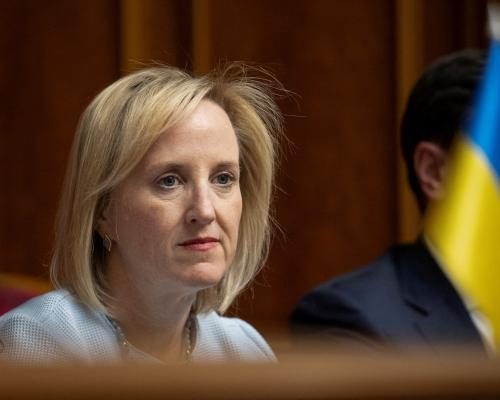
In a significant shift in U.S. diplomatic representation, Julie Davis, the acting U.S. ambassador to Ukraine, is set to resign after less than a year in her role. The announcement comes amid a stagnation in peace talks aimed at resolving the ongoing conflict between Ukraine and Russia, which has escalated since the latter's invasion in 2022. The State Department confirmed her departure but characterized it as a planned retirement rather than a response to internal disagreements.
Frustrations with Presidential Support
Reports indicate that Davis has been increasingly frustrated with former President Donald Trump's approach to Ukraine. According to unnamed sources cited by the Financial Times, her concerns were primarily centered on Trump's lack of substantial support for Ukraine during a critical period. Trump has faced scrutiny for pressuring Kyiv to negotiate a peace deal with Russia that could involve territorial concessions, a stance that many critics see as an act of appeasement. Originally reported by The Guardian.
Despite these allegations, State Department spokesperson Tommy Pigott stated, "It is false to suggest Ambassador Davis is resigning 'over differences with Donald Trump.'" He emphasized that she would continue to uphold Trump's policies until her official departure from Kyiv, which is expected in June 2026. However, the political environment surrounding Ukraine and the U.S. administration's shifting focus may have played a role in her decision to step down.
Davis's Dual Role and Diplomatic Background
Julie Davis has served as the top U.S. official in Ukraine, holding the title of chargé d'affaires, but has not been a Senate-confirmed ambassador. Since May 2022, she has also been juggling responsibilities as the U.S. ambassador to Cyprus. Her appointment by the Trump administration came after the resignation of Bridget Brink, who had been named to the position by President Joe Biden.
Brink's tenure was marked by alarm over Trump's handling of the Ukraine situation. She expressed concerns regarding Trump's "appeasement" of Russia and his tendency to put pressure on Ukraine, the victim in the conflict. The shift from Brink to Davis has highlighted the contrasting approaches of the two administrations toward Russian aggression and support for Ukraine.
The Broader Context of U.S.-Ukraine Relations
Since taking office in January 2025, Trump has maintained a contentious relationship with Ukrainian President Volodymyr Zelenskyy, often assigning blame to Ukraine for the war that began over four years ago. This narrative has raised eyebrows among U.S. allies and has sparked debates about the U.S.'s role in supporting Ukraine in its fight against Russian aggression.
As the conflict drags on, U.S.-brokered ceasefire talks have largely stalled, with Washington redirecting its focus towards other international conflicts, including tensions in Iran. The lack of progress in negotiations has left many observers questioning the effectiveness of the U.S. strategy in the region.
Implications of Davis's Departure
Davis's resignation may signal a deeper rift in U.S. diplomatic strategy concerning Ukraine, particularly as the Trump administration grapples with its foreign policy direction. As the situation in Ukraine remains fluid, the absence of a stable U.S. diplomatic presence could complicate efforts to mediate a resolution to the conflict.
As the U.S. seeks to navigate its relationship with Ukraine amidst ongoing Russian aggression, the implications of Davis's departure could resonate beyond just diplomatic circles. The evolving dynamics could influence how both nations approach future negotiations and their interactions on the global stage.
While the State Department insists that her resignation is not indicative of broader issues within the administration, observers remain cautious. The effectiveness of U.S. foreign policy in Ukraine will continue to be scrutinized, particularly as the conflict enters a new phase with significant geopolitical ramifications.
Originally reported by The Guardian. View original.