
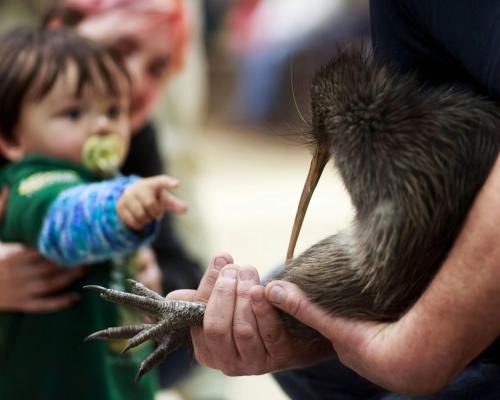
In a historic moment for conservation, five kiwi birds were introduced to New Zealand's parliament on Tuesday, marking their first appearance in the building and symbolizing a significant victory for the nation's biodiversity efforts. The event, attended by around 300 individuals including politicians, children, iwi, and environmental groups, celebrated the culmination of a six-year initiative aimed at re-establishing a kiwi population in Wellington after a century-long absence.
As handlers carefully carried the fluffy, flightless birds through the banquet hall, attendees were visibly moved. Gasps filled the room as some audience members wiped away tears. One young boy even collected a fallen feather, a tangible reminder of the moment. While images of the kiwi, New Zealand's beloved national bird, are omnipresent, actual sightings are rare. Paul Ward, the founder of the Capital Kiwi Project, articulated the significance of this occasion, stating, "This is our manu [birds] coming home to the place they have inhabited for millions of years but which they had a brief exile from." Originally reported by The Guardian.
Reviving a Treasured Species
The kiwi is emblematic of New Zealand, yet its population has drastically declined due to habitat loss and the introduction of predators. Once numbering around 12 million, the kiwi population has plummeted to approximately 70,000 according to the latest estimates. Ward emphasized the cultural importance of the kiwi, saying, "Kiwi have been a part of who we are and our sense of identity as long as people have been here." He noted the need for New Zealanders to honor the relationship they have with this unique species.
Conservation efforts led by the Capital Kiwi Project have begun to reverse this downward trend. The project began in November 2022 when the first group of 11 kiwi were released into a sprawling area of farmland in Mākara, located 25 minutes west of Wellington's city center. Since then, an additional 232 kiwi have been released, producing dozens of chicks in the process. Remarkably, the project has achieved a staggering 90% chick survival rate, far exceeding the Department of Conservation's requirement of a 30% survival rate.
A Community-Led Initiative
The recent introduction of the seven kiwi to parliament included the last group of birds to be added to the project, bringing the total number of kiwi released in Wellington to 250. This initiative has made Wellington the city with the largest population living alongside wild kiwi globally. Residents in Mākara have reported hearing kiwi calls in their gardens at night, while mountain bikers have encountered these unique birds on local trails.
Wellington's mayor, Andrew Little, lauded the project, stating, "It's demonstrating that even for a concentrated urban environment like Wellington city, we can restore biodiversity." The project's success stems from widespread community engagement, according to Ward. He humorously remarked, "Arguably there have been more Wellingtonians involved in this [project] than were extras in Lord of the Rings," which elicited laughter from the audience.
Over 100 landowners have granted permission for the installation of 4,600 stoat traps across the kiwi's new 24,000-hectare habitat, creating the largest intensive stoat trapping network in New Zealand. Schools, iwi, volunteers, and mountain bikers have all contributed to the project through advocacy, trapping, and fundraising efforts. Ward emphasized the importance of community ties, stating, "It's a network of traps, but it is a network of relationships.. and what that has enabled is the restoration of a taonga [treasured] species to that landscape."
Kiwi Set Free in Their New Home
Following the historic presentation at parliament, the kiwi were transported to Terawhiti station-a historic sheep station on the Mākara coast-for their release. As the birds emerged from their boxes under the expansive ridges overlooking the Cook Strait, the audience held their breath, witnessing the kiwi take their first steps into the wild. With gentle encouragement, the kiwi hopped into the night, marking a new chapter in their journey.
The atmosphere was reminiscent of the earlier quiet in the banquet hall, as attendees reflected on the magnitude of this conservation achievement. Ward concluded, "That work to return kiwi is a shared purpose that is extremely powerful. What's incredibly satisfying about tonight is that it's working, it's showing what's possible when people work together." This event not only celebrated the return of kiwi to their natural habitat but also underscored the collective effort required to protect New Zealand's unique wildlife.
Originally reported by The Guardian. View original.