
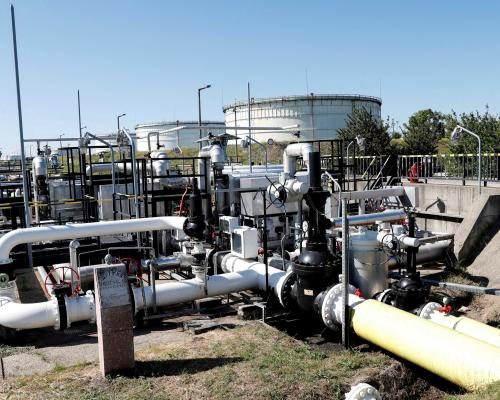
A diplomatic row between Ukraine and Hungary intensified on Wednesday as Budapest announced the dispatch of a delegation to discuss the reopening of the Druzhba pipeline, which transports Russian oil to Hungary and Slovakia. However, Ukraine quickly refuted Budapest's claims, asserting that the delegation lacks official recognition. The situation has escalated as both countries offer conflicting accounts regarding the pipeline's operational status.
Pipeline Dispute Escalates
The Druzhba pipeline, a critical conduit for Russian oil to landlocked Hungary and Slovakia, has become a focal point of contention between Kyiv and Budapest. Hungary, along with Slovakia, has accused Ukraine of intentionally stalling the pipeline's reopening, which has been shut down since January due to alleged damage inflicted by Russian strikes. Ukraine maintains that the infrastructure was compromised during the conflict, and has pointed to ongoing military actions as a justification for the delay. Originally reported by The Guardian.
Hungary's Energy Minister, Gabor Czepek, confirmed that the delegation, which includes representatives from Slovakia, aims to engage in talks about the pipeline's future. Czepek expressed frustration over the lack of progress, emphasizing the importance of resuming oil deliveries for both nations.
Ukraine's Countermeasures and Regional Security
As tensions over the pipeline grow, Ukraine's President Volodymyr Zelenskyy announced that Ukrainian anti-drone experts have begun collaborating with three Gulf states facing threats from Iranian drone attacks. This initiative demonstrates Ukraine's commitment to sharing its expertise in counteracting drone warfare, a tactic that has been prevalent in its ongoing conflict with Russia.
During a visit to the Gulf, Zelenskyy highlighted the similarity between the Iranian-designed Shahed drones targeting Gulf nations and the drones used against Ukraine. This strategic partnership aims to bolster regional security and enhance the capabilities of the Gulf states in countering drone threats.
International Response and Economic Implications
On the international front, the Group of Seven (G7) countries reaffirmed their stance against easing sanctions on Russia despite the ongoing turmoil in the Middle East. French President Emmanuel Macron stated that the G7 leaders are committed to maintaining punitive measures in response to Russia's invasion of Ukraine, which continues to have far-reaching consequences on global oil markets.
In Ukraine, Russian forces have intensified their assaults, reportedly targeting oil pumping stations in the southern Odesa region for the second consecutive day. Serhiy Koretskyi, CEO of Ukraine's state oil and gas firm Naftogaz, revealed that these attacks aim to disrupt alternative non-Russian oil supplies to Europe. Notably, Naftogaz has faced over 30 attacks on its infrastructure this year alone, underscoring the persistent threats posed by Russian military operations.
Escalating Violence and Diplomatic Tensions
The conflict between Ukraine and Russia remains fraught with violence, as evidenced by a recent deadly strike in the western Russian city of Bryansk. Russia's foreign ministry condemned the attack as a "terrorist act" and accused the UK of complicity, claiming British missiles were used in the assault. The strike resulted in seven fatalities and left 42 others Injured, further inflaming tensions amid the ongoing war.
In a separate development, U.S. negotiators met with a Russian envoy in Florida for discussions that marked their first formal talks since the onset of the U.S.-Israeli conflict involving Iran. The U.S. had recently lifted some sanctions on Russian oil, aiming to stabilize prices amid the escalating situation in the Middle East, further complicating the geopolitical landscape.
Meanwhile, the Ukrainian National Paralympic Committee has publicly criticized the International Paralympic Committee and Winter Paralympics organizers, claiming systemic pressure to diminish Ukraine's visibility at the upcoming Milano Cortina Games. Allegations of mistreatment of Ukrainian athletes and attempts to remove national flags from the team base have put additional strain on international relationships, showcasing the broader implications of the ongoing conflict.
The situation surrounding the Druzhba pipeline and the escalating tensions between Ukraine and Hungary serve as a microcosm of the larger geopolitical struggles influenced by the ongoing war. With both countries entrenched in their positions, the path forward remains uncertain, highlighting the intricate interplay between energy security and international diplomacy as the conflict continues.
Originally reported by The Guardian. View original.