
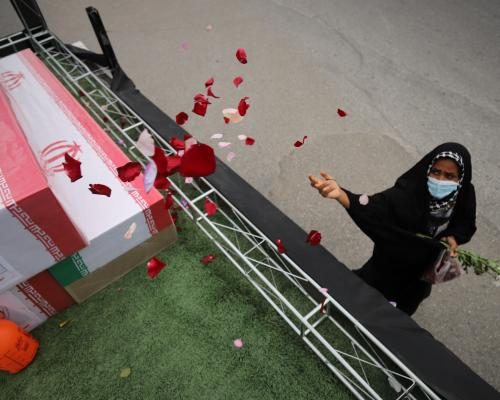
A preliminary investigation by the U.S. military has concluded that a deadly Tomahawk missile strike on an Iranian elementary school in February was the result of a targeting error, resulting in significant civilian casualties, including the deaths of numerous children. The strike occurred on February 28 at the Shajarah Tayyebeh elementary school in Minab, where Iranian officials have reported at least 175 fatalities, predominantly among schoolchildren. This incident marks one of the most devastating American military actions leading to civilian casualties in recent history.
Details of the Investigation
The New York Times reports that unnamed U.S. officials, familiar with the ongoing inquiry, indicated that U.S. Central Command officers relied on outdated data from the Defense Intelligence Agency when setting the target coordinates for the missile strike. This miscalculation led to a tragic attack on a structure that had clear visual indications of being an educational institution, adorned with colorful murals and sports facilities, as confirmed by satellite imagery. Originally reported by The Guardian.
Despite the Pentagon's acknowledgment of an investigation into the bombing, the Trump Administration has maintained a policy of evasion regarding responsibility for the attack. While some independent analysts had pointed towards U.S. culpability, President Donald Trump suggested that Iran was to blame for the bombing, claiming, "In my opinion, based on what I've seen, that was done by Iran.. They're very inaccurate, as you know, with their munitions." However, no evidence was provided to support his assertion, and U.S. military spokespeople have refrained from echoing his claims, simply stating that the incident is under investigation.
Evidence of Targeting Errors
Iranian officials produced video footage of the missile strike, which included debris from U.S.-made missiles, corroborating their account of events. The evidence suggests that while the school was indeed near facilities used by Iran's Islamic Revolutionary Guards Corps (IRGC), the building had been distinctly marked as a civilian educational site for at least nine years prior to the attack.
Historic satellite imagery shows that the school had been walled off from the IRGC compound, reinforcing the argument that it was not being used for military purposes at the time of the strike. The imagery also depicted the colorful artwork and sports fields characteristic of a school environment, further emphasizing its civilian nature.
Following the bombing, Iranian social media circulated various videos verifying the location and damage, with some showing thick smoke rising from the direction of the IRGC base, indicating that the missile strike was part of a broader operation targeting the military facility alongside the school.
Analysis of the Missile Type
On March 8, Iranian state media released footage geolocated by the investigative group Bellingcat, which confirmed that the missile striking the Minab area was indeed a Tomahawk missile. This weapon is exclusively used by the U.S., as Israel is not known to possess it. NR Jenzen-Jones, director of Armament Research Services, pointed out that the missile's characteristics ruled out claims of it being an Iranian Soumar missile, which has distinct features not present in the weapon used.
With the missile's identification pointing towards U.S. involvement, the tragedy of the school strike raises serious questions regarding the protocols followed by military planners and the grave consequences of operational errors. The ongoing inquiry is expected to delve deeper into the operational decisions that led to such a catastrophic incident.
Implications of the Findings
The preliminary findings of this investigation not only highlight the tragic loss of life but also underscore the complexities and risks of military engagements in contested regions. As the U.S. military continues to investigate this incident, the ramifications of the findings could affect U.S.-Iran relations and broader geopolitical dynamics in the region.
As the world watches the unfolding aftermath, the need for accountability and clarity in military operations remains paramount. The incident has ignited discussions about the necessity of improved targeting protocols and the urgent need to differentiate between military and civilian sites in conflict zones.
Originally reported by The Guardian. View original.