
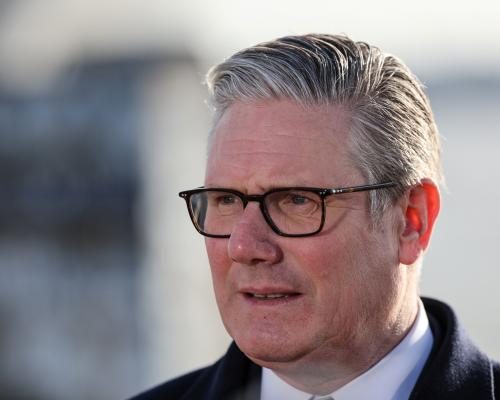
Keir Starmer has pledged to address the "addictive" nature of social media platforms, following a recent setback for the government in the House of Lords. This comes as Steve Reed, the local government secretary, announced plans to create 15 new councils in southern and eastern England, a move that has drawn sharp criticism from the opposition.
Government's Local Council Reorganization Faces Backlash
On March 28, 2023, Steve Reed unveiled a significant local government reorganization plan that involves the establishment of 15 new councils in the south and east of England. The initiative aims to streamline local governance but has been met with accusations of gerrymandering from the opposition. James Cleverly, the shadow local government secretary, condemned the proposal, stating, "This is outright gerrymandering from a Labour government desperate to shore up its collapsing support. Reorganisation should be bottom-up, informed by and reflecting local priorities and voices." The Conservatives argue that the reorganization will extend the boundaries of Labour-run local authorities in Portsmouth, Southampton, and Brighton and Hove, undermining the legitimacy of the changes. Originally reported by The Guardian.
Starmer's Commitment to Tackle Social Media Addiction
While in Helsinki for a Joint Expeditionary Force meeting, Keir Starmer discussed the urgent need to regulate social media platforms, especially concerning their impact on children. He criticized existing platforms for their "addictive features," emphasizing the necessity for more stringent controls. Starmer remarked, "Obviously we'll study that ruling very carefully, but I'm absolutely clear that we need to go further. The status quo isn't good enough. We need to do more to protect children." This statement comes in the wake of a Los Angeles court ruling that found Meta and YouTube liable for knowingly designing products that encourage addictive use.
Starmer's comments indicate a shift in Labour's approach to internet regulation, as he expressed a commitment to consulting on potential measures, including the possibility of banning social media access for children under 16. He stated, "That's why we're consulting about issues such as banning social media for under-16s." However, he also hinted at exploring alternative solutions to address the Challenges posed by social media, stating, "The question is, how much and what are we going to do? And that's what we're working on. I'll be saying some more about this tomorrow."
Government's Legislative Challenges Intensify
The political landscape is becoming increasingly contentious as the government prepares for the Easter recess. March 28 marked the last day of parliamentary sessions before the break, leading to what some have termed "take out the trash day." During this time, the government typically releases announcements that it wishes to report to Parliament before the recess, often involving less favorable news. A total of 24 written ministerial statements were expected to be released, although few are anticipated to make significant headlines.
Adding to the government's troubles, the House of Lords voted again to include a clause in a bill that would mandate an Australian-style ban on social media for under-16s. The government has already initiated a consultation on this issue and has included provisions in the upcoming children's wellbeing and schools bill to expedite the implementation of such a ban. This puts the government in a precarious position, as it must reconcile its proposed measures with the demands of the Lords.
Reactions and Future Prospects
The political ramifications of the current climate are becoming evident. The Labour government is grappling with accusations of undermining local priorities while attempting to implement sweeping changes to local governance. Meanwhile, Starmer's position on social media regulation highlights a growing recognition of the need for greater accountability among tech companies.
As the government faces scrutiny over its legislative agenda, the outcome of consultations regarding social media regulation will be pivotal. With Starmer promising a more robust approach to tackling social media addiction, the public and political stakeholders will be closely watching the developments in these discussions. The next few weeks could prove critical in shaping both Labour's and the Conservative Party's strategies leading into the next electoral cycle.
Originally reported by The Guardian. View original.