
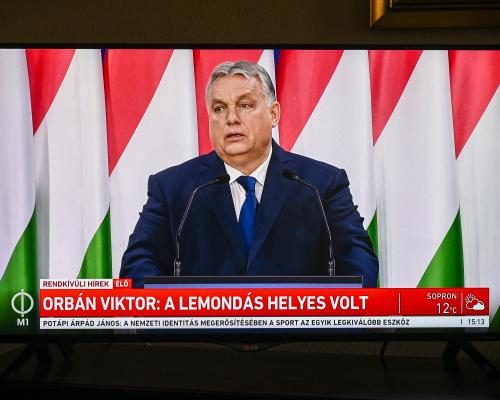
When it comes to ‘factory of lies’: what will péter magyar do about hungary’s state media?, hungary's state media, long seen as a tool for government propaganda under Viktor Orbán, now faces a tumultuous transition as Péter Magyar assumes leadership. Following his inauguration, which marks the end of Orbán's 16-year reign, the future of state media appears uncertain, raising questions about editorial independence and the possibility of reform.
Understanding ‘Factory Of Lies’: What Will Péter Magyar Do About Hungary’s State Media?
For over a decade, Hungary's state media operated as a mouthpiece for the ruling Fidesz party, amplifying Viktor Orbán's message while disparaging rivals. This strategy not only bolstered the government's position but also vilified perceived enemies, including philanthropist George Soros and Ukrainian President Volodymyr Zelenskyy. As Péter Magyar takes office, the landscape is shifting. A state radio employee expressed concern, stating, "Everyone is afraid. How far will this purge go? And to what extent?" Another employee echoed uncertainty, saying, "Nobody knows what's going to happen." Such sentiments reflect the apprehension within the media landscape as Magyar's Tisza party prepares to implement changes following their significant electoral victory. Originally reported by The Guardian.
Calls for Editorial Autonomy
In the wake of Magyar's election victory, over 90 journalists from MTI, one of the oldest state news agencies, signed a letter urging for the restoration of editorial autonomy. This call for change signals a growing desire among media professionals to escape the narrative control that defined state media under Orbán. Krisztina Balogh, a former state media employee, described the situation, stating, "Public media was not about informing - it was about constructing narratives." She recounted how scripts for live state events were often pre-approved, dictating the language and themes that could be used, reinforcing fear-based messaging. Reports were frequently revised to align with government narratives, illustrating the extent of control exercised over media content during Orbán's tenure.
Magyar's Vision for Reform
Péter Magyar has characterized the previous state media as a "factory of lies," drawing parallels to North Korean propaganda and the narrative control seen in Nazi Germany. He has pledged to suspend existing state media coverage and work towards passing a new press law that would establish a media authority aimed at restoring credibility and integrity to state media operations. "This is our best chance in Hungary's history," stated Gábor Polyák, a media law professor at Eötvös Loránd University. The need for reform is pressing, as the previous regime's tactics have driven press freedom rankings into a nosedive. Reporters Without Borders noted earlier this year that Orbán achieved significant control over independent journalism without resorting to imprisonment or violence.
The Future of Independent Media
The resilience of Hungary's independent media has been evident, particularly during the recent electoral campaign. Despite facing ongoing smear campaigns and bureaucratic obstacles, independent journalists have continued to expose government corruption and cronyism. As the country confronts rising living costs and deteriorating social services, the public has shown increasing receptiveness to hard-hitting reporting. Magyar incorporated independent journalists' findings into his campaign, reaching audiences that had largely been exposed only to Fidesz-controlled narratives. While some Fidesz-linked private media entities may survive the political transition due to their popularity, the overall media landscape is expected to shrink. Polyák noted, "In the end, it will be a smaller empire," suggesting that the loyalty of these outlets to Orbán may depend on the shifting political tides.
As Magyar's administration begins to take shape, the eyes of Hungary and the world will be on the state media's transformation. The potential for a more transparent and accountable media landscape has sparked hope among journalists and citizens alike, who are eager for a departure from the oppressive tactics of the past. The challenge ahead is monumental, but it represents a crucial opportunity for Hungary to redefine its media landscape, reclaim journalistic integrity, and foster an environment where diverse voices can thrive.
Originally reported by The Guardian. View original.