
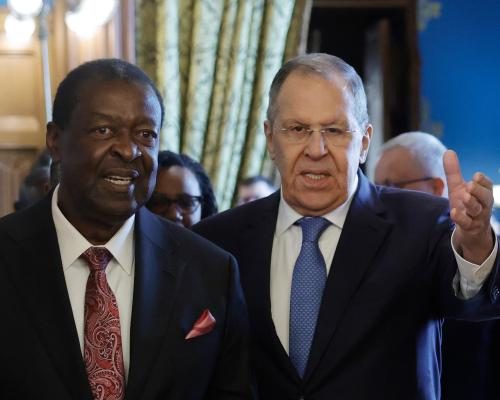
In a significant development, Russia has agreed to stop recruiting Kenyan citizens to fight in Ukraine, as confirmed by Kenya's Foreign Minister Musalia Mudavadi following talks with his Russian counterpart, Sergei Lavrov, in Moscow on Monday. This decision comes amid concerns over the involvement of foreign nationals in the ongoing conflict, which has seen over 1,780 individuals from 36 African countries reportedly participating alongside Russian forces in Ukraine.
According to estimates from Kenya's intelligence services, more than 1,000 Kenyans have been sent to join the Russian military efforts, raising alarms about the recruitment practices employed by Russia since its military actions in Ukraine began in 2022. Mudavadi stated, "We have now agreed that Kenyans shall not be enlisted," highlighting a new commitment from Moscow in response to diplomatic discussions. Originally reported by The Guardian.
Concerns Over Foreign Recruitment
The recruitment of foreign fighters by Russia has drawn widespread criticism, with several nations voicing their concerns over the ethical implications and the risks posed to their citizens. Lavrov indicated that the Kenyans who had joined the Russian military did so voluntarily, having signed contracts to fight. However, this assertion has been questioned, particularly in light of reports from individuals like Evans Kibet, a long-distance runner who was captured by Ukraine. Kibet described how he was misled into signing an army contract under the pretense of attending a sporting event in Russia.
As the conflict continues, the involvement of foreign nationals has become a contentious issue, with many families in Africa and beyond worried about their loved ones being sent into dangerous combat situations. The Kenyan government's diplomatic efforts to halt these recruitment practices reflect a broader concern about safeguarding its citizens from being drawn into the war.
Political Implications and Ongoing Conflict
The announcement of Russia's agreement comes at a time of heightened tension in international relations, particularly as Ukraine continues to defend its sovereignty against Russian aggression. The situation is further complicated by geopolitical dynamics involving other nations, including the United States and Israel, as well as the looming threat of an expanding conflict. Keir Starmer, the British opposition leader, emphasized the importance of preventing the ongoing US-Israeli war on Iran from benefiting Russia, underscoring the interconnectedness of global conflicts.
On the battlefield, recent reports indicated that Russia has made advances in eastern and southern Ukraine, having taken control of 12 settlements in just the first two weeks of March. General Valery Gerasimov, a top Russian military leader, noted that forces are "actively moving towards Sloviansk," a strategic town in the Donetsk region. This military push reveals the ongoing intensity of the conflict and the challenges faced by Ukrainian forces.
Escalating Attacks and Human Impact
The humanitarian impact of the war continues to grow. Ukrainian officials reported drone attacks targeting Kyiv, marking an unusual daytime assault that resulted in three casualties. The Ukrainian air force claimed that their defense units managed to shoot down 194 out of 211 Russian drones launched in a recent attack, highlighting the ongoing threat posed by aerial assaults. The situation in Ukraine remains dire, with civilians bearing the brunt of the violence.
Moreover, the aftermath of the war has extended beyond the battlefield. A Russian gas tanker, the Arctic Metagaz, has been left drifting in the Mediterranean with 700 tonnes of fuel on board, following an attack that forced its crew to evacuate. This incident, linked to Ukrainian sea drones, further complicates the maritime security landscape in the region and raises concerns about environmental impacts.
As the war continues, the international community watches closely. Ukrainian President Volodymyr Zelenskyy is set to engage in diplomatic discussions with European leaders, including a meeting with Spain's Prime Minister Pedro Sánchez, as part of ongoing efforts to unify support against Russian aggression. The urgency for a resolution remains critical, with the global ramifications of this conflict influencing energy markets, security policies, and humanitarian aid efforts.
The decision to halt the recruitment of Kenyans marks a noteworthy shift in Russia's approach to foreign enlistment, but it raises questions about the future of foreign involvement in the conflict and the broader geopolitical implications of ongoing hostilities.
Originally reported by The Guardian. View original.