
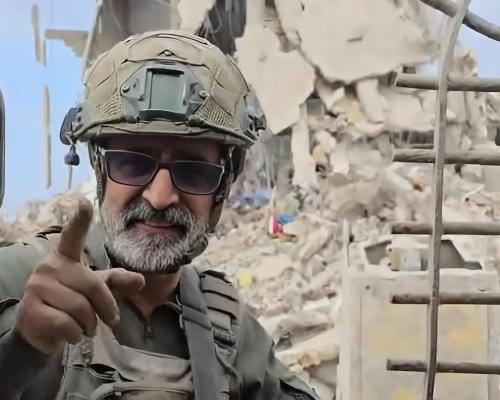
Avraham Zarbiv, an extremist rabbi known for his role in demolishing Palestinian homes in Gaza, is set to light a torch at Israel's Independence Day celebration on Tuesday. His selection has drawn sharp criticism from human rights campaigners, who argue it symbolizes an official embrace of policies they describe as genocidal. Zarbiv is one of 14 individuals recognized for their 'extraordinary contributions' to society, which also include a prominent scientist, a Michelin-starred chef, and high-ranking members of the security forces.
Zarbiv has gained notoriety for his activities operating an armored bulldozer, participating in actions that have resulted in extensive destruction of civilian infrastructure in Gaza. In videos documenting his work, he can be heard declaring, 'You will have nothing left,' while showcasing the remnants of buildings he has razed. This rhetoric has resonated so widely that his name has been co-opted into Hebrew slang; 'to Zarbiv' now means to destroy. Originally reported by The Guardian.
Human Rights Concerns Raised
The decision to honor Zarbiv at such a significant national event has alarmed organizations like B'tselem, which has condemned the act as a clear endorsement of the dehumanization of Palestinians. They stated, 'This selection sends a clear message to the citizens of Israel and the entire world - in Israel, genocide, ethnic cleansing and war crimes are the "spirit of the nation."'
Critics argue that Zarbiv's recognition undermines Israel's defense against international accusations of human rights violations. Haaretz, a prominent Israeli newspaper, echoed these sentiments in an editorial, stating, 'A country that chooses to honour and esteem someone who has become a symbol of the flattening of Gaza is telling the world that it sees him and his values as deserving respect.' They concluded that Zarbiv's selection highlights a troubling moral decline within Israeli society.
Official Rationale for Selection
Cabinet minister Miriam Regev defended Zarbiv's selection, describing him as an 'inspirational' figure who embodies the dual roles of a rabbi and soldier, representing the 'book and the sword.' This justification has drawn further ire, with many asserting that it reflects an alarming normalization of extremist views within Israeli politics.
Despite the backlash, Zarbiv has continued to receive praise from certain segments of Israeli society. His actions in Gaza, where he has claimed to demolish '50 homes a week,' are seen by some as a necessary measure for national security. In his own words, 'They have nothing to return to in Rafah and Jabalya.. tens of thousands of families have no papers, childhood photos, ID cards, no homes. They have nothing.'
Controversy Over Military Associations
While Zarbiv has served as a reservist operating a D9 armored bulldozer, Israeli military officials have attempted to distance themselves from him. Brigadier General Effie Defrin stated that Zarbiv was not selected in coordination with the Israel Defense Forces and does not represent the military at the ceremony. This distancing reflects the complexities of public perception surrounding Zarbiv's actions and the military's role in the ongoing conflict.
In addition to his military service, Zarbiv is a rabbinical judge in civilian life. However, he has faced censure from Israel's judicial ethics committee for extremist statements. Earlier this year, Commissioner Asher Kula ruled that Zarbiv had violated the code of ethics for judges, highlighting a growing concern over the blurring of lines between religious authority and state-sanctioned violence.
Wider Implications of Zarbiv's Recognition
The implications of Zarbiv being honored on Israel's Independence Day extend beyond national borders. The United Nations has reported that approximately 90% of homes in Gaza have been destroyed or damaged, and civilian infrastructure continues to be targeted. The destruction has reached such levels that some experts are calling for recognition of a new war crime termed 'domicide,' which refers to the widespread targeting of civilian homes.
As Israel prepares to celebrate its Independence Day, the choice to honor a figure like Zarbiv raises critical questions about the values being upheld and the messages being sent both domestically and internationally. With ongoing conflicts and humanitarian crises, the implications of these decisions will likely resonate far beyond the boundaries of the nation.
Originally reported by The Guardian. View original.